


Introduction:
Virtual Reality (VR) has come a long way since its inception. From science fiction fantasies to groundbreaking technological innovations, VR is now an integral part of various industries, including entertainment, healthcare, education, and even real estate. As technology continues to evolve, the possibilities of VR seem endless. In this blog, we’ll take a journey through the history of VR, explore its current state, and discuss its future prospects.
H2: The Early Beginnings of Virtual Reality
The concept of virtual reality isn’t as modern as many might think. In fact, the roots of VR can be traced back to the 1960s. In 1965, computer scientist Ivan Sutherland developed the first head-mounted display (HMD) system known as “The Sword of Damocles,” which was a primitive version of the VR systems we see today. While the technology was bulky, expensive, and limited, it marked the first step toward creating immersive environments that users could interact with.
During the 1980s, VR began to gain more attention in both the academic world and the entertainment industry. However, the technology faced significant limitations, including high costs, poor resolution, and slow processing power. This made VR systems impractical for mass use, keeping it largely within research labs and niche applications.
H2: The Rise of Consumer VR in the 21st Century
The real breakthrough for VR came in the 2010s, with companies like Oculus, HTC, and Sony pushing the boundaries of what was possible in consumer-grade virtual reality. Oculus Rift, launched in 2016, helped usher in a new era of VR, providing a high-quality experience at an affordable price point. The Oculus Rift was a game-changer, as it offered a true immersive experience with 360-degree visuals, hand tracking, and spatial audio.
Following the Oculus Rift’s success, HTC launched its Vive platform, which included room-scale VR—allowing users to physically move around a space and interact with the virtual environment. Sony’s PlayStation VR system followed shortly after, bringing VR to the PlayStation console, further expanding the accessibility of VR technology to a broader audience.
H2: The Current State of Virtual Reality Technology
Today, VR has evolved beyond entertainment and gaming. The technology is being used across a variety of industries, revolutionizing how businesses operate, train employees, and engage with customers. Let’s look at some key sectors where VR is making an impact:
H3: Healthcare
In the healthcare industry, VR is being used to enhance surgical training, improve patient care, and help individuals cope with mental health issues. Surgeons use VR simulations to practice complex procedures, allowing them to gain experience without the risk of harming patients. Additionally, VR therapy is being employed to treat PTSD, phobias, and anxiety disorders by immersing patients in controlled virtual environments to confront and overcome their fears.
H3: Education
VR has tremendous potential in the education sector by offering immersive learning experiences that textbooks simply can’t match. Students can explore historical sites, experience scientific concepts in 3D, or travel to outer space—all within a virtual classroom. VR-based learning can cater to different learning styles, making education more engaging and accessible for all.
H3: Real Estate and Architecture
In the real estate industry, VR is transforming property tours and home design. Potential buyers can take virtual tours of properties, experiencing every detail as if they were physically present. For architects and builders, VR enables them to visualize and modify building designs in real-time, streamlining the development process and reducing costly mistakes.
H2: The Future of Virtual Reality: What’s Next?
As VR continues to mature, the possibilities for its future applications are endless. But what can we expect from this technology in the coming years? Let’s explore some of the key trends and innovations on the horizon.
H3: More Realistic Experiences with Improved Hardware
One of the major challenges facing VR today is the need for better hardware. Current VR headsets, while impressive, still face limitations like bulky designs, low-resolution displays, and limited field-of-view. However, advancements in display technology and hardware miniaturization are expected to make VR devices more comfortable and immersive. The future of VR will likely see ultra-high-definition displays, lighter headsets, and longer battery life, all of which will help provide a more seamless experience.
H3: Integration with Augmented Reality (AR)
The line between virtual reality and augmented reality is becoming increasingly blurred. While VR immerses users in entirely virtual worlds, AR overlays digital elements onto the real world. The future of immersive experiences may involve a combination of both technologies, offering mixed-reality environments that can adapt to real-world settings. This integration could revolutionize industries such as gaming, retail, and even tourism, where users could interact with both the virtual and physical worlds simultaneously.
H3: Virtual Workspaces and Remote Collaboration
One of the most exciting prospects for VR is its ability to transform remote work. With the rise of hybrid and remote work models, VR could offer fully immersive workspaces where employees can collaborate in virtual offices, attend meetings, and interact with colleagues as if they were in the same room. This could help bridge the gap between remote work and in-person collaboration, fostering better communication and productivity.
H3: VR in Entertainment and Social Media
The entertainment industry is already making strides in integrating VR into movies, gaming, and live events. However, VR has the potential to take this even further by enabling users to become part of the experience rather than just passive viewers. Imagine attending a live concert in VR, where you can look around and see the audience and performers in 360-degree detail. VR could also become a dominant platform for social media, offering users the ability to interact with friends and share experiences in fully immersive environments.
Conclusion: The Sky’s the Limit
Virtual reality has come a long way since its humble beginnings, and its evolution is far from over. With advancements in hardware, software, and applications across various industries, VR is poised to continue transforming how we live, work, and play. The future of VR looks incredibly promising, and we’re only scratching the surface of its potential. As technology progresses, we can expect even more innovative uses for VR, bringing us closer to a fully immersive digital world.
Caption:
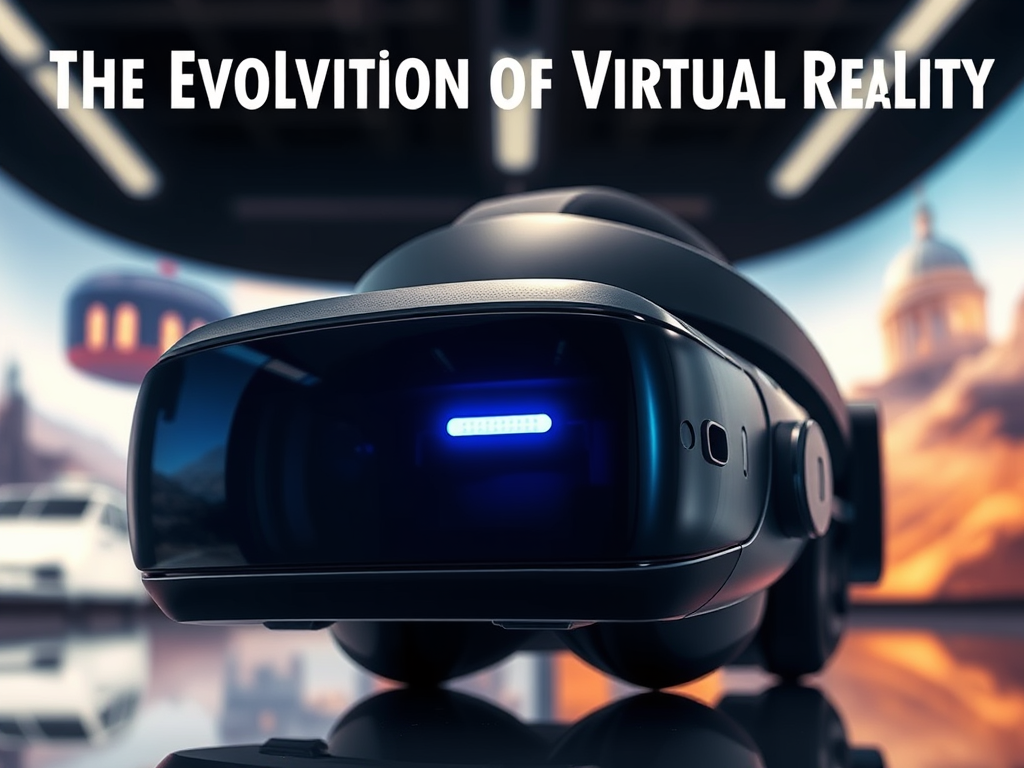
Virtual reality has evolved from a sci-fi concept to a transformative technology, impacting industries from healthcare to entertainment. Discover the future prospects of VR in our latest blog.
#VirtualReality #FutureOfVR #TechnologyInnovation #ImmersiveTech #AugmentedReality #HealthcareTech #VRinEducation #RealEstateTech #VirtualWorkspaces #MixedReality #FutureTech #VRGaming #TechTrends #DigitalInnovation #VRRevolution #Anslation #Carrerbook #Heloies
Disclaimer:
This blog is intended for informational and educational purposes only. The views expressed are personal opinions or general insights, not professional or legal advice. Readers should do their own research or consult relevant professionals before taking action based on this content.




Leave a Reply