

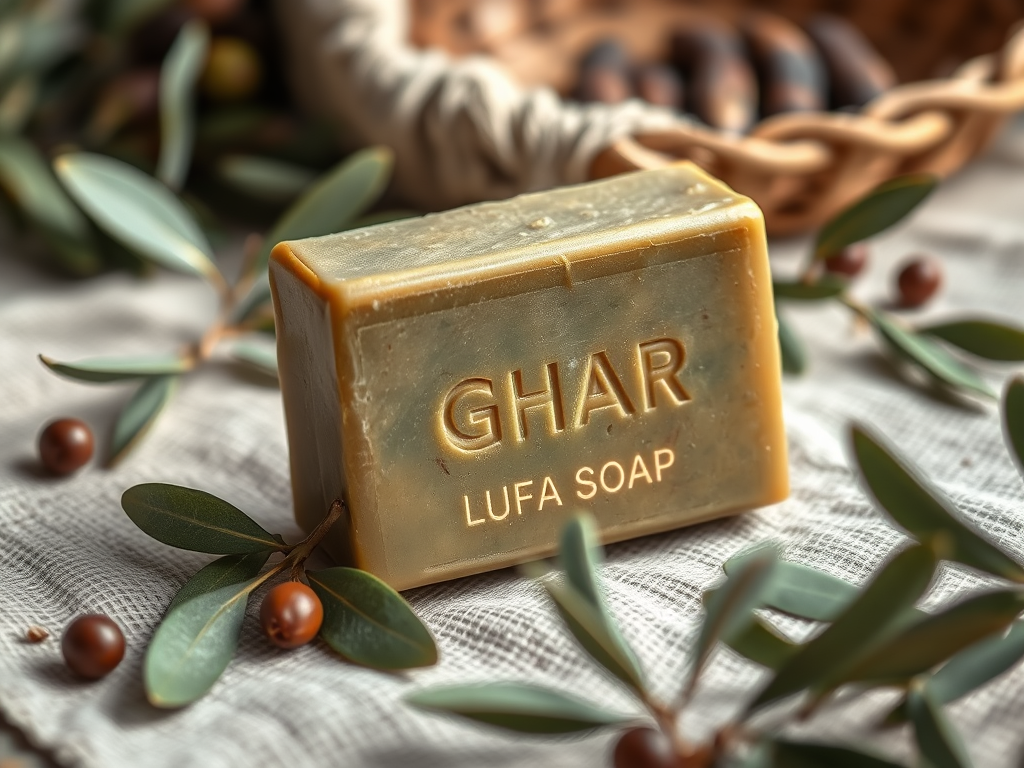

If you’ve been exploring natural skincare options, chances are you’ve come across Ghar Soap, also known as Aleppo soap. This centuries-old soap has been treasured for its gentle cleansing and skin-soothing properties — and it’s making a comeback in modern beauty routines.
Let’s dive into what makes ghar soap so special, its benefits, and how you can use it for healthier, glowing skin.

What Is Ghar Soap?
Ghar soap (from the Arabic word ghar, meaning laurel) is a traditional soap that originated in Aleppo, Syria. It’s made from just a few simple ingredients:
- Olive oil – deeply moisturizing and nourishing
- Laurel (bay) oil – antibacterial, antifungal, and soothing
- Water and lye – used in the natural soap-making process
The soap is then aged for months to harden and develop its signature earthy scent. This process also makes the bar last longer and become milder on the skin.
Key Benefits of Ghar Soap

Ghar soap isn’t just a cleanser — it’s a multi-tasking beauty product. Here are its top benefits:
1. Gentle, Natural Cleansing
Because it’s free from synthetic chemicals and harsh detergents, ghar soap is ideal for people with sensitive skin.
2. Deep Moisturization
Olive oil in the formula helps keep skin soft and hydrated without stripping away natural oils.
3. Soothes Skin Conditions
Laurel oil is known for its antibacterial and antifungal properties, making this soap helpful for acne-prone skin, eczema, and psoriasis.
4. Eco-Friendly and Sustainable
It’s biodegradable and traditionally handmade, which means you’re choosing a product that’s good for your skin and the planet.
5. Long-Lasting Bar
The aging process creates a dense, hard soap that doesn’t melt away quickly, so one bar can last for weeks or even months.
How to Use Ghar Soap
You can use ghar soap just like any regular soap — but here are some popular ways to get the most out of it:
- Face Wash: Perfect for daily cleansing, especially for oily or acne-prone skin.
- Body Soap: Use it in the shower for a gentle, all-natural clean.
- Shampoo Bar: Some people use it as a solid shampoo for a natural hair wash.
- Shaving Soap: Its creamy lather works well for smooth, irritation-free shaving.
Tips for Choosing a Quality Ghar Soap

When buying ghar soap, check for:
Handcrafted origin: Authentic soaps often mention “made in Aleppo” or follow the traditional process.
Ingredient list: Look for olive oil and laurel oil as main ingredients.
Laurel oil percentage: Higher percentages (20–40%) are more luxurious but also more expensive.
Color and scent: Natural ghar soap is usually greenish-brown with a mild, herbal scent.
Final Thoughts
Ghar soap is more than just a bar of soap — it’s a piece of skincare history that still works wonders today. Whether you’re looking for a gentle face wash, a natural body cleanser, or an eco-friendly alternative to regular soap, ghar soap is worth adding to your beauty routine.
#GharSoap #AleppoSoap #NaturalSkincare #SkinCareTips #HealthySkin #GlowingSkin #EcoFriendlyBeauty #SkincareRoutine #OrganicSoap #BeautyTips #SustainableLiving #HolisticBeauty #NaturalBeauty#Anslation#carrerbook




Leave a Reply