

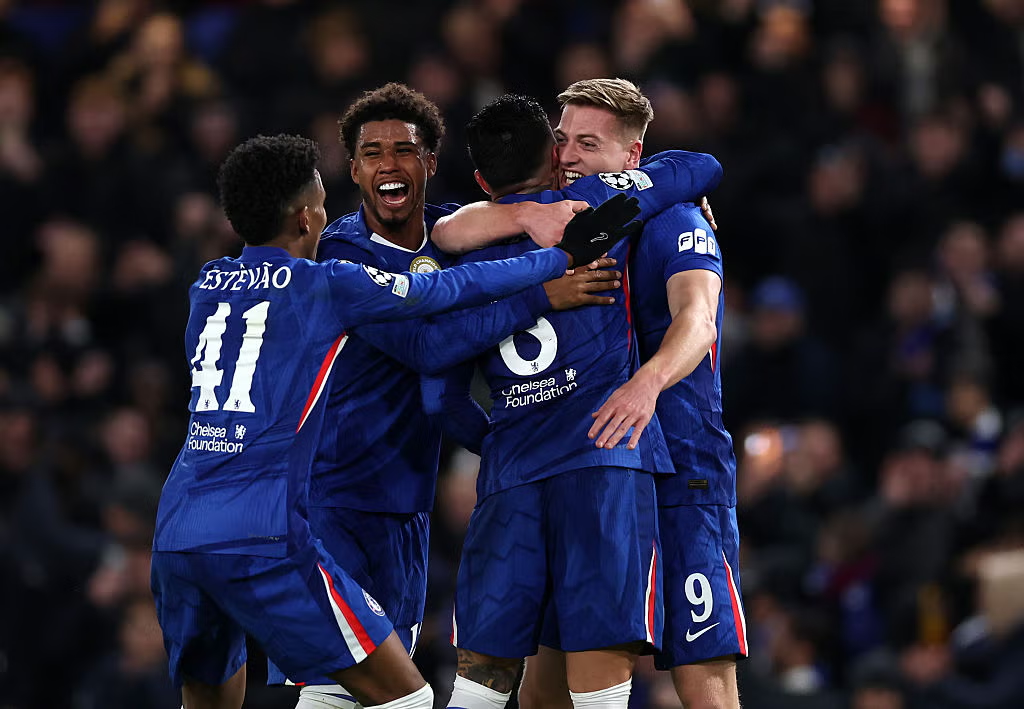

The recent Chelsea vs Barcelona clash turned out to be one-sided, but tactically the match had a lot more depth than the scoreline suggests. Chelsea dominated the night with a 3–0 win, controlling the rhythm, pressing intelligently, and breaking Barcelona’s structure at the right moments. Here’s a detailed tactical breakdown that shows how everything unfolded.
1. Chelsea’s High-Intensity Start and Early Pressure

Chelsea started the match with high energy and pressed Barcelona’s defenders aggressively.
Key tactical points:
- Chelsea’s wingers pushed Barcelona’s fullbacks deep into their own half, leaving them no room to build up.
- The midfield trio supported the press, forcing Barca into rushed long balls.
- This pressure directly caused mistakes — including the first goal, which came from a forced defensive error that resulted in an own goal.
- Chelsea’s shape was compact, meaning the team moved as a unit and didn’t allow Barcelona any free pockets to play into.
This early momentum set the tone. Barcelona struggled to breathe, and Chelsea sensed vulnerability right away.
2. Midfield Battle: Chelsea’s Physical Edge
Midfield is usually Barcelona’s strength, but Chelsea turned it into their winning zone.
Here’s how:
- Chelsea’s midfielders played with physicality — strong tackles, clean interceptions, and tight marking.
- They didn’t allow Barcelona to rotate the ball smoothly or execute their usual one-touch combinations.
- Whenever Barcelona tried to push forward, Chelsea’s midfield cut passing lanes quickly.
- Chelsea’s midfield also made smart forward runs, pulling Barcelona’s shape out of balance.
Overall, Chelsea controlled the central area so well that Barcelona couldn’t transition into attack confidently.
3. False-Nine Movement That Confused Barcelona’s Defense
Chelsea used a false-nine setup instead of a traditional striker.
This approach worked brilliantly because:
- The central forward frequently dropped deep, pulling Barcelona’s centre-backs out of position.
- Wingers made diagonal runs into these empty spaces, creating dangerous chances.
- Barcelona’s defensive line kept hesitating because they couldn’t figure out whom to mark.
- This constant movement disrupted their structure and opened channels for Chelsea’s attackers.
The fluidity up front was one of the biggest tactical wins for Chelsea on the night.
4. Exploiting Wide Areas with Precision
Chelsea kept attacking from the wings, and this was part of a clear plan.
Why the wings?
- Barcelona’s fullbacks were pushed high during build-up, leaving space behind them.
- Chelsea’s wide players were faster and more direct.
- Crosses and cutbacks caused Barcelona’s defense to panic multiple times.
This strategy also led to the second goal — a brilliant individual run from the right side ending in a cool finish.
5. Barcelona’s Red Card and How It Changed the Game
A crucial moment came when Barcelona went down to 10 men after a reckless challenge.
What changed after the red card?
- Chelsea increased their intensity instead of becoming passive.
- Barcelona shifted to a more defensive shape but still couldn’t close the spaces.
- Chelsea’s midfield and forwards took advantage of the extra player, passing quickly and dragging defenders out.
- The third goal came from patient build-up that stretched Barcelona completely.
The red card didn’t create Chelsea’s dominance — it only amplified it.
6. Chelsea’s Defensive Compactness and Stability
Even after scoring multiple goals, Chelsea didn’t switch off.
Tactical defensive highlights:
- The back line stayed narrow, blocking central chances.
- Midfielders tracked Barcelona’s creative players closely.
- The team defended in a 4-4-2 shape when off the ball, leaving no gaps between lines.
- Barcelona were forced to shoot from tough angles, which rarely troubled the keeper.
Chelsea’s defensive discipline showed that the win was about tactics, not luck.
7. Key Players Who Influenced the Tactical Flow
• Estêvão (Chelsea)
- His goal was pure skill: pace, tight control, and powerful finishing.
- Created problems every time he ran at the defense.
• Chelsea Midfield
- Dominated duels.
- Broke Barcelona’s rhythm.
- Controlled transitions.
• Barcelona Defense
- Struggled with movement between lines.
- One own goal + a red card summed up their tough evening.
Chelsea’s tactical plan was clear, intelligent, and perfectly executed.
They pressed high, dominated the midfield, disrupted Barcelona’s build-up, and used wide areas to launch threatening attacks. Barcelona, on the other hand, lacked sharpness, struggled under pressure, and lost composure after going a man down.
This match shows how far Chelsea have come in terms of structure and adaptability — and how much Barcelona still need to improve in handling physically strong and tactically fluid teams.
This blog is based on publicly available match information, tactical patterns, and professional match observations. Individual interpretations may vary depending on personal analysis or future detailed data releases.
#Chelsea #Barcelona #ChelseaVsBarcelona #ChampionsLeague #Carrerbook #Anslation #FootballAnalysis #TacticalBreakdown #SoccerInsights #CFC #FCB #MatchReview




Leave a Reply