

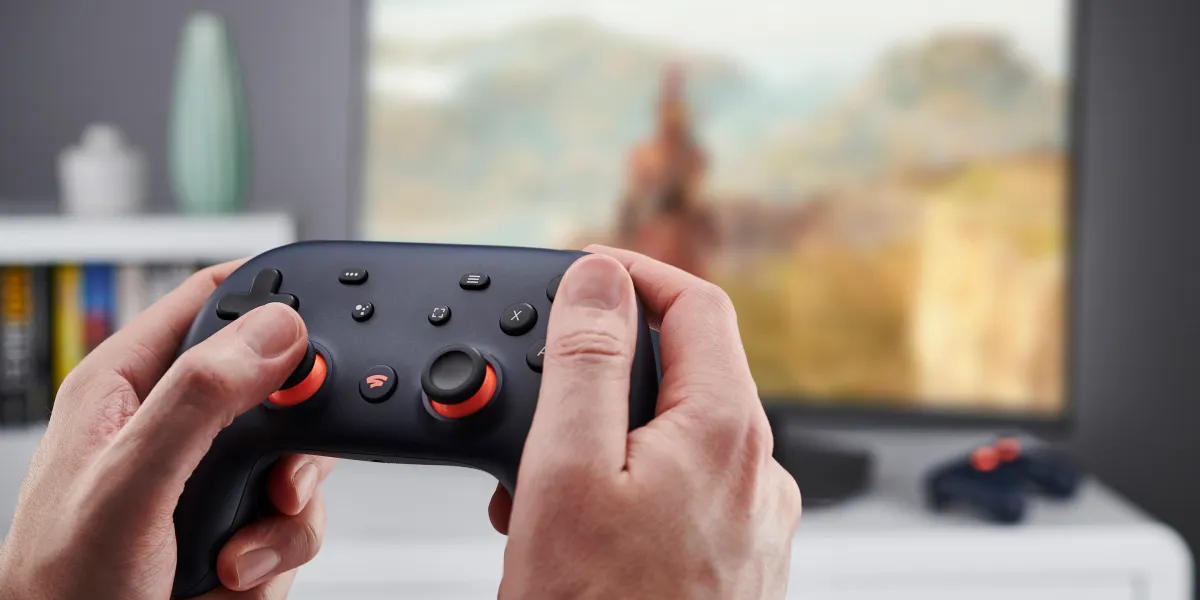

Every now and then, I find myself thinking about how much the world has changed since I was a kid. If you grew up anywhere near a video game console a couple of decades ago, you probably remember the stigma. Gaming was that quiet, slightly lonely hobby. It was the thing you did in a dimly lit basement or a messy bedroom, usually under the gentle scolding of a parent telling you that staring at a glowing box would melt your brain.
Fast forward to today, and that entire narrative feels like ancient history.
What started as a niche escape for a handful of tech-minded enthusiasts has blossomed into arguably the most dominant cultural force on our planet. It’s a massive, living ecosystem. Just look around on your morning commute—the person in the business suit next to you is likely tapping away at a mobile puzzle game. Your teenage nephew isn’t watching traditional television; he’s watching a live stream of an esports professional. Big-budget tech companies are pouring billions into virtual real estate.
It’s an unbelievable transformation. Over the last ten years, this digital landscape has moved at a pace that honestly feels breathtaking. I like to think of it like a river cutting through a valley—it doesn’t just pass through; it permanently alters the terrain. Technology and widespread internet access haven’t just changed how games are built; they have fundamentally rewired how we share our lives with one another. We are no longer just looking through a glass screen at a fictional story. We are stepping inside it.
The Natural Widespread of Play
If we look at this growth closely, it’s clear that it didn’t happen by accident. It happened because the barrier to entry was completely shattered.
In the old days, gaming was exclusive. It was a gated community. If you didn’t have hundreds of dollars to spend on a dedicated console or a beast of a custom-built PC, you were left out in the cold. But then, almost overnight, smartphones happened. They became the seeds that allowed gaming to take root in every single corner of the globe.
[The Shift in the Player Base]Old Model: [Expensive Console/PC] ---> Limited to EnthusiastsNew Reality: [Universal Smartphone] ---> Open to Billions Worldwide
Mobile gaming did something beautiful: it democratized play. People who would never in a million years identify as a “gamer” are now deeply invested in complex strategy titles or daily word puzzles during their lunch breaks. It reminds us that the human urge to solve problems, explore, and be challenged isn’t a youth trend—it’s a universal human trait.
At the same time, physical media has slowly faded away like autumn leaves. We don’t really line up outside retail stores at midnight to buy plastic discs anymore. Instead, experiences flow directly into our living rooms over the air. It’s a borderless setup. A small development team in an apartment in Sweden can release a game that instantly touches the lives of a million people in Japan and Brazil. Even when we are physically sitting alone in our rooms, we are reaching out for a shared digital ecosystem.
The Social Thread: Finding Our Tribe Online

There’s a deep psychological reality to why we play, and it boils down to a simple truth: as human beings, we are completely hardwired for connection. We cannot survive without it. That is why the era of solitary single-player gaming has naturally expanded into something much more social. We don’t just want to be entertained by an author’s script; we want to interact, test our mettle against others, and ultimately find our tribe.
Online multiplayer spaces have effectively become our modern digital campfires.
“Whether you are working late into the night with a group of close friends to survive a brutal virtual wilderness, or testing your quick reflexes against a rival across the ocean, it’s the human element that makes it addictive.”
We keep coming back because human behavior is beautifully spontaneous and unpredictable. A computer program will always follow its code, but a human opponent will surprise you, make mistakes, or pull off something brilliant.
This has allowed incredibly tight, fiercely loyal communities to grow organically. People are building genuine, lifelong friendships, meeting their spouses, and forming support systems inside these spaces. Supported by voice chat apps and community forums, these games function as the new town squares. They are places where people go not just to high-score hunt, but to feel like they truly belong.
Esports: From Local Arcades to Sold-Out Arenas
It is wild to sit back and reflect on how competitive play has grown up. I remember when “competitive gaming” meant standing around a crowded arcade cabinet, putting your quarter on the glass to claim the next match, and arguing over who was the best player in the neighborhood. Today, that local argument has evolved into esports—a highly professionalized, multi-million-dollar global industry.
The stereotype of the unmotivated gamer has been thoroughly obliterated. Modern esports professionals are treated like elite athletes. They endure grueling, highly structured training regimens. They have dedicated nutritionists, tactical analysts, and sports psychologists whose entire job is to keep their mental focus razor-sharp.
          [ The Growth of the Competitive Arena ]

  +------------------+     +------------------+     +------------------+
  |  Neighborhood    | --> | Global Streaming | --> | Massive Stadiums |
  | Arcade Cabinets  |     | Twitch & YouTube |     | Sold-Out Arenas  |
  +------------------+     +------------------+     +------------------+
When you see a major tournament completely fill a massive physical sports stadium—with tens of millions of people tuning in online—you realize that society’s perception of what constitutes “entertainment” has fundamentally shifted. It is now a highly respected, deeply lucrative career path. Streaming platforms have acted as a powerful wind beneath its wings, allowing regular fans to pull back the curtain, watch their heroes practice in real-time, and feel like they are actively part of the journey.
The Technology Giving Life to the Illusion

None of this magic would be possible without the quiet, relentless march of technological innovation. Every time a new microchip or piece of software is developed, it gives creators a broader, more vibrant canvas to paint on.
Graphics have reached a point where the line between an animated world and reality is melting away. We are seeing character models that display subtle human expressions—a flicker of doubt in the eyes, a slight tightening of the jaw. We see complex weather systems where raindrops realistically pool on pavements, and lighting that flawlessly mimics how sunbeams filter down through a dense forest canopy.
When you pair that visual fidelity with fast solid-state drives that eliminate those long, painful loading screens, the immersion becomes seamless. It feels natural.
Even sound design has evolved. High-fidelity spatial audio lets you hear the distinct rustle of grass right behind your left shoulder or the distant, low rumble of thunder over a hill. It anchors your senses, tricking your brain into feeling entirely present in a space made of code.
And then there’s the quiet revolution happening in Artificial Intelligence. AI is no longer just about giving an enemy character a predictable path to walk. It’s about building highly responsive, organic worlds that listen to what you do and react to your choices, making your specific journey feel intensely personal.
Virtual Reality and Shifting Horizons
If you really want to see the bleeding edge of where our minds are heading, look at Virtual Reality (VR). For decades, we have experienced media by looking at it—staring through a flat glass window at a character moving around. VR smashes that window and places your consciousness directly inside the body of the protagonist.
We are finally moving past the early, clumsy era of heavy headsets and motion sickness. The tech is becoming lighter, crisper, and far more intuitive.
Traditional Gaming: [Player] -----------> Looks At -----------> [Screen]Virtual Reality: [Player's Senses] <=== Immersed Inside ===> [Virtual World]
At the same time, Cloud Gaming is working from the opposite end to break down the final economic barriers of the medium. By moving all the heavy, expensive computational processing away from your living room and onto giant remote servers, it streams high-end games directly to your screen over the internet. You don’t need a thousand-dollar gaming computer anymore. Your basic tablet or phone suddenly has the power of a supercomputer. It’s a massive paradigm shift that ensures top-tier creative experiences will eventually be available to anyone, anywhere, regardless of wealth.

The Creator Economy and the Long Road Ahead
We missed half the story if we only talk about the people holding the controllers. A massive chunk of the modern gaming community spends their time simply watching. The rise of the content creator economy is one of the most uniquely human developments in modern entertainment. We don’t just tune in to see a game; we tune in for the person playing it. We want their humor, their authentic reactions, their frustrations, and their triumphs.
This human connection has turned independent creators into massive cultural tastemakers. An indie developer working out of a spare bedroom can have their game discovered by a popular streamer, and by the next morning, their life is changed forever because a viral wave of human interest swept across the internet.
Looking forward, the horizon feels wide open. We are moving toward a future where AI will help generate endless, beautifully unpredictable worlds that adapt to our unique playing styles in real-time. Cross-platform play will inevitably become the absolute baseline, allowing people to play together seamlessly, completely ignoring what brand of hardware they bought.
FAQ’s
1. What is the gaming industry?
The gaming industry includes game development, esports, streaming, and gaming hardware.
2. Why is gaming growing so fast?
Because of better technology, internet access, and mobile gaming.
3. What technologies are shaping gaming?
AI, virtual reality, cloud gaming, and advanced graphics.
4. What is esports?
Esports is professional competitive gaming with tournaments and prize money.
5. What is the future of gaming?
Gaming will become more immersive, social, and technology-driven.



Leave a Reply