


et’s be completely real for a second. Trying to figure out what to put on your plate these days feels less like taking care of your health and more like managing a complicated, high-stress project. You open any social media app, and within five minutes, you are bombarded with intense, conflicting rules. This week, a specific oil is labeled a toxic hazard; next week, some rare, expensive root powder is praised as the ultimate cure-all. If you aren’t drinking a neon-green beverage that tastes like liquid lawn clippings by 6:00 AM, the internet subtly tries to make you feel like you’re failing at life.
It is exhausting. Honestly, it’s enough to make any normal person throw their hands up in sheer frustration, close the browser, and order a greasy pizza out of pure spite.
But if we intentionally strip away the clever marketing campaigns, the hyper-aesthetic glass jar packaging, and the exhausting buzzwords, eating well isn’t some ancient, gatekept secret. Our bodies aren’t demanding absolute perfection from us; they just need real, recognizable fuel to keep us moving, thinking, and not feeling entirely like garbage by 3:00 PM.
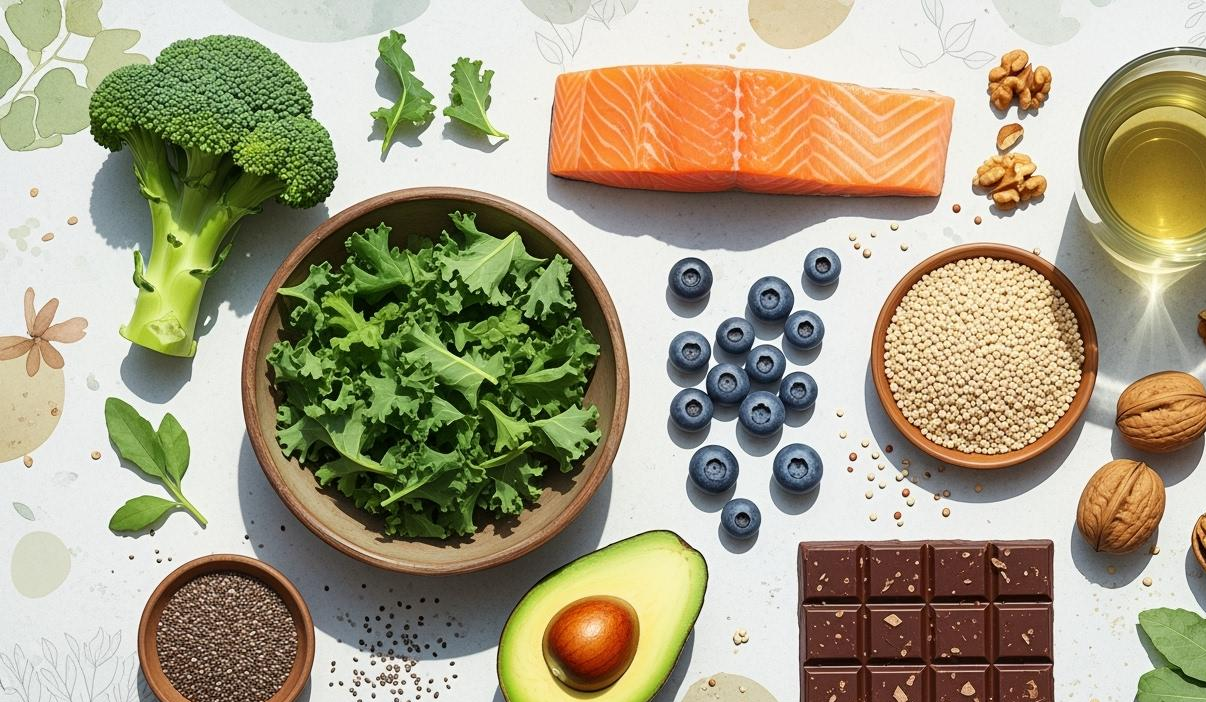
We use the word “superfoods“ as if it’s a strict medical classification stamped with scientific authority. Let’s bust that myth right now: it’s not. It’s essentially a marketing term, but it does happen to represent a group of genuinely fantastic, ordinary whole foods that pack a massive nutritional punch for their size. If you want to cut through the digital noise and simply make better choices for your body, here is a down-to-earth, realistic look at ten kitchen staples that actually deserve the real estate in your fridge—along with an honest take on how a normal person can handle them without losing their sanity.
1. Blueberries: The Low-Maintenance Brain Booster
There is a very practical, non-magical reason these little blue spheres show up on literally every single health list compiled in the last decade. They taste great, they require zero peeling or chopping, and they give you a burst of sweetness without triggering a massive sugar crash an hour later.
- The Actual Science: Blueberries are practically bursting at the seams with antioxidants, specifically a group called anthocyanins (which give them that deep, gorgeous color). Think of antioxidants as an internal cleanup crew. Every day, your body deals with oxidative stress and minor inflammation from everyday pollution, poor sleep, and life stress. These berries help mop up that cellular mess. Some genuinely fascinating studies also suggest they help keep your memory sharp by improving blood flow to the brain.
- The Real-World Reality: Look, fresh berries are wonderful, but they have a bad habit of growing a coat of fuzzy white mold approximately twelve minutes after you bring them home from the store, and they cost a fortune out of season. Do yourself a massive favor: buy a giant bag of frozen blueberries. They are usually cheaper, they are frozen at the absolute peak of their nutritional value, and they won’t rot in your crisper drawer. Toss a handful directly into your morning oatmeal, dump them into a blender, or stir them into yogurt. They thaw in seconds and require zero emotional energy.
2. Avocados: Embracing the Good Fats


For a long time, old-school diet culture drilled a terrible narrative into our collective heads: fat makes you fat. Thankfully, we have mostly grown past that collective delusion. Your brain is made up of mostly fat, your joints need lubrication, and your hormones literally cannot function without dietary fat.
- The Actual Science: Avocados are uniquely loaded with monounsaturated fats—the heart-healthy, smooth kind of fat that actually signals to your brain that you are full. Instead of finishing a meal and immediately hunting through the pantry for a snack twenty minutes later, avocado anchors your appetite. Even cooler? These healthy fats act like a delivery vehicle. A lot of key vitamins in other vegetables (like vitamins A, D, E, and K) are “fat-soluble,” meaning your body literally cannot absorb them unless fat is present in the stomach at the same time.
- The Real-World Reality: Yes, avocado toast has become an absolute meme of our generation, but honestly, it’s popular because it is delicious and it works. Mash half an avocado onto a piece of toasted whole-grain bread, hit it with a generous amount of salt, black pepper, and maybe a squeeze of lime juice if you’re feeling fancy. It takes all of two minutes, tastes incredible, and provides a sustained release of energy that will carry you through a chaotic morning.
3. Salmon: The Ultimate Anti-Inflammatory Protein
If you eat seafood, salmon is pretty much the undisputed heavyweight champion of making you feel clear-headed, energized, and physically fluid.
  Traditional Protein:   Provides basic building blocks for muscles.

  Salmon Upgrade:        Provides high-quality protein + Omega-3s
                         (Essential brain fuel & inflammation tamer).
- The Actual Science: The true magic of salmon lives in its exceptionally high concentration of Omega-3 fatty acids (specifically EPA and DHA). Our bodies are biologically incapable of manufacturing these essential fats from scratch, meaning we must get them directly from our diet. Omega-3s act like oil for a creaky machine—they lower the risk of cardiovascular issues, support cognitive function, and actively work to reduce the baseline inflammation that makes your joints ache after a long week.
- The Real-World Reality: Cooking fish at home intimidates a lot of people because nobody wants their entire apartment to smell like a fish market for three days straight. Keep it simple. Stop trying to pan-sear it like a professional chef. Just rub a nice piece of salmon with a little olive oil, salt, garlic powder, and paprika. Pop it into an air fryer or onto a baking sheet in the oven at 400°F (200°C) for exactly 10 to 12 minutes. It comes out perfectly flaky, requires almost no supervision, and doesn’t leave a lingering aroma that haunts your living room.
4. Spinach: The Ultimate Camouflage Vegetable


We all know we need to eat our leafy greens. We’ve known it since we were children. But knowing you need to eat a massive bowl of raw, slightly bitter leaves when you are exhausted after an eight-hour workday is a completely different story. That is exactly why spinach is the ultimate hack for people who secretly hate salads.
- The Actual Science: Spinach is a quiet powerhouse, loaded with vitamins A, C, and K, alongside iron, potassium, and magnesium. It supports everything from your eye health to your bone density.
- The Real-World Reality: If the thought of chewing through a cold spinach salad makes you sad, stop making yourself eat them. The absolute beauty of spinach is its structural weakness: it wilts down to practically nothing when it hits heat. When you are cooking a hot pasta sauce, a rich soup, a curry, or even scrambling some morning eggs, throw two massive, comical handfuls of spinach into the pan at the very last minute. Within sixty seconds, those giant leaves shrink into tiny, completely tasteless ribbons. You get all the micronutrients and fiber, but your brain won’t even register that you’re eating a vegetable.
5. Chia Seeds: The Unsung Heroes of Gut Health
These tiny, speckled black dots look remarkably like something you would buy at a pet store to feed a parakeet. Because of that, they get ignored by a lot of everyday cooks. But if you give them a chance, they are an incredible tool for stabilizing your daily energy.
- The Actual Science: Chia seeds are absolute monsters when it comes to soluble fiber. When these seeds come into contact with moisture, they absorb up to ten times their weight in liquid, swelling up and creating a thick, gel-like texture. When this happens inside your digestive tract, it acts like a speed bump for your digestion. It slows down the absorption of carbohydrates, which is exactly what you want because it prevents your blood sugar from spiking wildly and then plunging into a miserable afternoon crash.
- The Real-World Reality: You do not need to spend your Sunday evenings creating elaborate, layered, Pinterest-perfect chia seed puddings in mason jars. Just buy a bag, keep it in your pantry, and mindlessly stir a single tablespoon into your morning yogurt, your protein shake, or even just a tall glass of water with a squeeze of fresh lemon. They have virtually zero flavor of their own, so they will effortlessly mimic the taste of whatever fluid you drop them into.
6. Greek Yogurt: Your Protein Shortcut


If you are someone trying to hit a decent protein goal every day but you are completely, thoroughly sick of drinking chalky, chemical-tasting protein powders and chewing on dense, artificial bars, real Greek yogurt is going to save your life.
- The Actual Science: Because traditional Greek yogurt is strained to remove the liquid whey, the remaining product is thick, creamy, and contains roughly double the protein concentration of regular yogurt. More importantly, it is teeming with probiotics. These are live, friendly bacteria that migrate to your gut, colonize your microbiome, and help manage your digestion, your immune health, and even your serotonin production (the chemical responsible for stabilizing your mood).
- The Real-World Reality: You have to play defense in the grocery store dairy aisle. A massive percentage of “fruit-on-the-bottom” or flavored Greek yogurts are secretly trojan horses packed with as much refined sugar as a glazed donut. Skip those entirely. Buy a large tub of plain, unsweetened Greek yogurt. If the tart, tangy flavor is too intense for you at first, sweeten it yourself. A small drizzle of real honey and a handful of those frozen blueberries we talked about will make it taste like a dessert while keeping it incredibly clean.
7. Nuts: Your 3:00 PM Sanity Anchor
We have all hit that inevitable afternoon wall. It’s a specific time of day where your brain feels like wet cement, your focus is entirely gone, and your feet naturally want to walk you over to the vending machine for a candy bar or a bag of processed chips. This is exactly where keeping a jar of nuts nearby saves your productivity.
+--------------------------------------------------------------------------+| THE MID-AFTERNOON FORK |+------------------------------------+-------------------------------------+| VENDING MACHINE ROUTE | THE HANDFUL OF NUTS ROUTE || • Quick hit of simple sugar | • Healthy fats + plant protein || • 30-minute burst of hyper energy | • Steady, slow-release brain fuel || • Major crash & brain fog at 4 PM | • Fullness that lasts until dinner |+------------------------------------+-------------------------------------+
- The Actual Science: Whether your preference runs toward almonds, walnuts, pecans, or cashews, nuts provide a brilliant, natural combination of plant protein, healthy fats, and dietary fiber. Walnuts are especially cool—if you look at a walnut half, it literally looks like a tiny human brain. Amusingly, biology backs up that visual pun: walnuts are incredibly high in alpha-linolenic acid (ALA), a specific plant-based omega-3 fat that supports cognitive performance and protects neurological pathways.
- The Real-World Reality: The only real hazard with nuts is that they are structurally designed to be addictive. They are crunchy, salty, and highly calorie-dense. If you sit at your computer desk with a massive 2-pound bag resting on your lap, you will inevitably look down forty minutes later and realize you mindlessly consumed 700 calories without even enjoying it. Don’t eat out of the bag. Pour a modest handful into a small bowl, seal the main container, put it back in the cabinet, and walk back to your desk.
8. Sweet Potatoes: Carbs That Work For You
Let’s clear the air: carbohydrates are not evil. They are your body’s preferred source of immediate fuel. The trick to navigating carbs isn’t avoiding them completely; it’s simply picking the ones that burn slowly like a thick oak log, rather than the ones that flare up and burn out instantly like a dry piece of paper.
- The Actual Science: Sweet potatoes are complex carbohydrates structurally bound with a high volume of dietary fiber. This means your body has to work hard and take its time breaking down the chains of glucose, giving you a steady, reliable stream of physical energy. They are also packed to the brim with beta-carotene, a powerful antioxidant that your body smoothly converts into Vitamin A to keep your vision sharp and your skin clear.
- The Real-World Reality: People think cooking potatoes requires a whole elaborate roasting process. It doesn’t. If you’re short on time, take a clean sweet potato, poke it five or six times with the prongs of a fork, wrap it loosely in a damp paper towel, and microwave it on high for 5 to 7 minutes. It steams itself perfectly inside its own skin. Split it down the middle, drop a tiny pat of grass-fed butter, a pinch of salt, and some cinnamon on top, and you have a deeply comforting, rich side dish with exactly zero pots or pans to scrub afterward.
9. Green Tea: The Art of Calm Focus


If your current lifestyle requires you to chug four or five mugs of black coffee just to survive the workday, only to find yourself feeling jittery, anxious, and staring wide awake at your bedroom ceiling at 2:00 AM, green tea is a much kinder alternative for the second half of your day.
- The Actual Science: Green tea contains a highly unique amino acid called L-theanine. When L-theanine enters your system, it actively crosses the blood-brain barrier and triggers the generation of alpha brain waves, which are associated with a state of relaxed alertness. When it combines with the naturally low dose of caffeine present in the tea leaves, it creates a beautiful synergy. You don’t get the jagged, nervous spikes and heart palpitations of coffee; instead, you get a clean, sustained state of “calm focus.”
- The Real-World Reality: Treat brewing green tea as a brief, intentional mental circuit-breaker. When you feel your stress levels rising, physically step away from your computer screen. Walk to the kitchen, boil some water, and let a tea bag steep for three minutes. That tiny, five-minute ritual forces you to pause, slow your breathing, hydrate, and clear your head. Just don’t defeat the entire biochemical purpose of the drink by dumping three tablespoons of refined white sugar into the mug.
10. Quinoa: The Foolproof Grain Upgrade
If your default dinner routine is stuck on a predictable, boring loop of white rice, instant noodles, or plain pasta, quinoa is an incredibly low-stakes upgrade that requires absolutely zero new cooking skills but significantly levels up your nutrition.
- The Actual Science: Quinoa is historically fascinating because it isn’t technically a grain—it’s actually a seed. Because of this classification, it is one of the exceptionally rare plant foods that qualifies as a “complete protein.” This means it naturally contains all nine of the essential amino acids that the human body cannot synthesize on its own. For anyone looking to cut back on their meat consumption, or for strict vegetarians and vegans, quinoa is an absolute lifesaver for muscle repair and immune function.
- The Real-World Reality: Do not let the fancy, wellness-blog aura of quinoa intimidate you. It cooks exactly like standard white rice. You take two parts water or vegetable broth, add one part quinoa, bring it to a boil, drop the heat to a simmer, cover it, and leave it alone for 15 minutes. When you take the lid off and fluff it with a fork, it has this wonderfully light, slightly nutty texture. It holds up beautifully for weekly meal prep and acts like a culinary sponge, soaking up the flavor of whatever spices, sauces, or dressings you throw at it.
The Big Human Picture: Why Consistency Will Always Destroy Perfection
Here is the ultimate piece of truth that a lot of self-proclaimed health gurus, supplement companies, and fitness influencers will never admit to you: no single food is going to magically save your health, and no single food is going to completely ruin it.
  The Overhaul Trap:   Drastic Restrictions ──> Intense Cravings ──> Total Burnout

  The Realistic Way:   80% Whole Foods      ──> 20% Flexibility    ──> Long-term Consistency
You could realistically eat the most immaculate diet imaginable—chock full of wild salmon, organic spinach, and pristine quinoa—but if you are simultaneously only sleeping four hours a night, drowning in toxic work stress, never moving your muscles, and generally feeling miserable, those foods cannot perform miracles. Health is not a math equation with a single variable; it is a big, messy, cumulative picture of how you treat yourself.
Real health is built out of the boring, small, quiet choices we make day after day, week after week. It is not about a radical, sudden lifestyle overhaul that leaves you feeling starved, isolated, and resentful of your diet.
Don’t try to wake up tomorrow morning and completely transform into a different person. Pick one tiny, incredibly low-stakes change. If you normally reach for a bag of chips during your afternoon meetings, try swapping it out for a small handful of almonds a few days this week. If you realize you haven’t eaten a piece of fruit in a month, buy some frozen blueberries and let them melt into your morning breakfast.
Be remarkably kind to your own mind. Focus your energy on adding nutrient-dense, real foods to your plate rather than punitively punishing yourself by cutting out everything you love. At the end of the day, being beautifully consistent with a decent diet will always matter infinitely more than being perfectly strict with an impossible one.
FAQ’s
1. What is a superfood?
A superfood is a nutrient-rich food that offers significant health benefits.
2. Which superfood is best for heart health?
Salmon is one of the best superfoods for supporting heart health due to its omega-3 fatty acids.
3. Are superfoods good for weight management?
Yes, many superfoods are high in fiber and protein, which can help you feel full longer.
4. Can I eat superfoods every day?
Yes, most superfoods can be included in a balanced daily diet.
5. Do superfoods replace a healthy diet?
No, superfoods work best as part of an overall healthy and balanced diet.




Leave a Reply