


The late afternoon heat on August 15 in Midtown Manhattan carries a very specific weight. It is that thick, humid air that bounces off asphalt and glass, trapping the hum of idling taxis, yellow buses, and late-summer tourist crowds. But as the sun began to dip behind the Hudson, casting long blue shadows down 34th Street, the atmosphere around the Empire TV Shows State Building shifted into something far livelier than the usual rush-hour shuffle.
On the sidewalk outside the landmark’s Fifth Avenue entrance, people were not just passing through—they were lingering. Families in vibrant silk kurtas, elders wrapping shawls against the evening air, and second-generation kids holding miniature paper flags were all looking up. They were waiting for a specific transformation: the moment when one of the most recognized silhouettes in western architecture would swap its standard white floodlights for saffron, white, and emerald green.
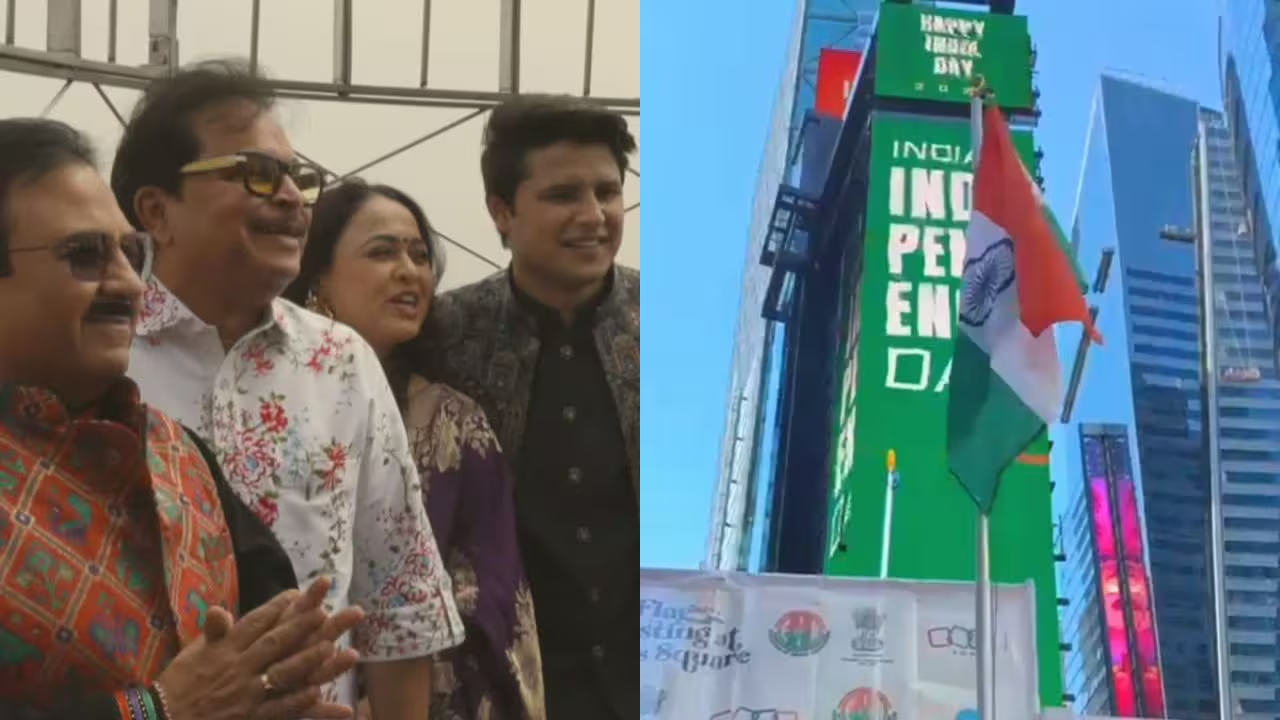
The lighting of the Empire State Building for Indian Independence Day is not brand new, but this year’s event—framed around the theme “Harmony in Heritage” and organized with the Federation of Indian Associations (FIA)—felt distinct. It was not just a corporate photo-op or a routine nod to international diplomacy. The real pulse of the evening came from a surprisingly grounded cultural crossover. Standing in the lobby alongside community organizers and diplomats were the creators and cast members of Taarak Mehta Ka Ooltah Chashmah, a television show that has quietly served as the background soundtrack to Indian family life for well over a decade.
The Art of a Skyline Gesture TV Shows

New York City knows how to put on a spectacle, yet the tower lightings at 350 Fifth Avenue remain special because of their sheer visibility. Long before LED screens wrapped around every corner of Times Square, the top of the Empire State Building served as a city-wide barometer for celebration, grief, and solidarity.
Changing the lights is a surprisingly intimate process. Down in the concourse, far below the spire, sits the master control area. To turn the tower lights on, guests press a heavy, symbolic replica lever. On this particular evening, the group gathered around that lever included show producer Asit Kumar modish, actors Dilip Joshi, Mandar Chandwadkar, and Sonalika Joshi, alongside film actor Adivi Sesh.
When the countdown hit zero and hands pressed down on the lever, the reaction inside the room was mirrored almost instantly on the streets outside. From Herald Square down to Madison Square Park, people walking home from work paused, pulled out their phones, and looked up. The top thirty-some floors of the skyscraper had bloomed into bold, crisp bands of green, white, and orange.
For those standing on the street, the sight carries a genuine emotional punch. There is something deeply validating about seeing your childhood colors, or the colors of your parents’ home, thrown across the clouds of the world’s most famous skyline. It is a quiet declaration that says: We are here, we belong here, and our story is part of this city’s fabric.
Why a Sitcom Matters on 34th StreetTV Shows

For immigrants who left India twenty or thirty years ago, the show is a comforting warmth—a reminder of the chaotic, deeply connected apartment complexes they grew up in.To understand why the crowd cheered so loudly when Dilip Joshi or Mandar Chandwadkar stepped up to the podium, you have to understand what Taarak Mehta Ka Ooltah Chashmah actually represents to the global Indian diaspora.
On paper, it is a daily sitcom set in a fictitious Mumbai housing society named Gokuldham. But in practice, it functions as a social anchor. The show’s premise revolves around families from wildly different regional backgrounds—Gujarati, Marathi, Punjabi, South Indian, Bengali—living side by side, getting into absurd daily arguments, and ultimately solving their problems through compromise and neighborhood solidarity.
For their American-born children, who might speak fluent English and navigate American high schools, watching the show with their parents at dinner becomes an informal, effortless language lesson. It keeps the cadences, jokes, and cultural nuances of the subcontinent alive in living rooms from New Jersey to Texas.
When the cast arrived in Midtown wearing traditional attire—silk sherwanis and rich sarees—it did not feel like a movie star appearance. It felt like distant relatives coming to town. The formal barrier between fan and celebrity dissolved almost instantly into a warm, chaotic exchange of smiles, traditional greetings, and rapid-fire requests for photos.
High Above the City: The 86th Floor
After the official switch was thrown downstairs, the delegation moved up to the 86th Floor Observation Deck. By this point, the initial formality of the press conference had given way to pure excitement. Extended cast members—including Balwinder Singh Suri, mun-mun Dutta, and Nitish Bhaluni—joined the group outside under the open sky.
The 86th floor is almost always windy, but on August 15, the breeze carried the sound of spontaneous celebration. Regular tourists who had bought standard observatory tickets for a sunset view suddenly found themselves standing shoulder-to-shoulder with the cast of a show they watched every night on television.
It did not take long for the deck to transform. Someone started singing, a few people clapped out a rhythm, and before long, an impromptu dance broke out right against the stone balustrades. In the background, the massive tricolor spire reached straight up into the night, casting a warm orange and green haze over the crowd.
People were not just taking selfies with the Manhattan skyline; they were taking photos of each other, sharing stories about which city in India their families originally came from, and laughing about old episodes of the show. For an hour or two, 1,050 feet above the pavement, a slice of New York felt entirely like a neighborhood courtyard in India.
The Mechanics of Diaspora: How Connection Has Changed
An event like this highlights a massive shift in how immigrant communities stay connected to their roots.
A few decades ago, moving to the United States from India meant living in a state of relative cultural isolation. Overseas phone calls were an expensive luxury timed down to the minute. News arrived via airmail weeks after it happened, and video cassettes of movies or television shows were copied, recopied, and passed around local immigrant networks until the tape physically degraded. Staying in touch required immense, deliberate effort.

Because of this constant, live synchronization, figures like the Taarak Mehta cast are not viewed through the lens of nostalgia. They are active, daily participants in domestic life.
Seeing them stand in the middle of New York City does not feel like a collision of two separate worlds; it feels like the natural intersection of a life built here and a culture rooted there.
Today, technology has completely flattened that distance. A family sitting in a suburb of Queens or Edison, New Jersey, streams the exact same episode of a TV show on the exact same day as a family sitting in Ahmedabad or Mumbai. They read the same news, laugh at the same memes, and follow the same cultural moments in real-time.
When community members gather on Fifth Avenue to watch the spire turn tricolor, they are not choosing between being American and being Indian. They are celebrating the ability to be completely, comfortably both.
What “Harmony in Heritage” Actually Means
It is easy for event themes to sound like hollow marketing slogans, but “Harmony in Heritage” actually landed with genuine substance during this year’s lighting.
The Indian-American experience is far from monolithic. It encompasses dozens of languages, culinary traditions, religious practices, and regional identities. Yet, when gathered under the shadow of the Empire State Building, those internal differences recede into the background, replaced by a collective sense of pride and shared history.
The presence of a show built around neighborhood harmony served as a physical reminder of what makes diaspora communities thrive: tolerance, shared humor, and the quiet understanding that diversity is a strength rather than a point of friction.
Moreover, the lighting carries weight for the broader city of New York. Every night, millions of people look at the Empire State Building to see what the city is thinking or celebrating. When a tourist from Europe, a commuter from Long Island, or a local resident walking their dog looks up and sees saffron, white, and green, it prompts a moment of recognition. It is a public statement that the culture, economic contributions, and presence of the Indian community are a vital part of the metropolitan landscape.
A Lasting Glow Over Midtown
As midnight approached and the crowds around 34th Street slowly began to disperse into the subway stations and parking garages, the lights atop the tower remained steady. The high-altitude LEDs cut cleanly through the late-summer humidity, glowing brightly enough to be seen from the waterfront in Brooklyn, the hills of Jersey City, and the bridges spanning the East River.

For the actors, organizers, and everyday fans who gathered on Fifth Avenue, the evening was more than just a photo opportunity for social media. It was a rare, beautiful moment where two distinct worlds held hands. A legendary piece of Western architecture lent its height to an Eastern celebration, and a beloved group of television actors brought the warmth of a neighborhood housing society to the cold stone and steel of Manhattan.
Long after the cameras were packed away and the ceremonial switch was reset, that tricolor glow stayed fixed against the dark sky—a quiet, brilliant reminder that no matter how far you travel from home, culture has a way of finding its light, right where you stand.
FAQ’S
1. What is TMKOC New York Independence Day about?
The episode/storyline combines the fun and comedy of Taarak Mehta Ka Ooltah Chashmah with an Independence Day-themed setting in New York.
2. Why is Independence Day featured in the TMKOC New York storyline?
The storyline uses the Independence Day theme to create a festive setting while adding comedy, family moments, and entertaining situations involving the characters.
3. Where can I watch the TMKOC New York episode?
The episode can be watched through the official streaming or television platforms that broadcast Taarak Mehta Ka Ooltah Chashmah.
4. Who are the main characters featured in TMKOC?
The show features popular characters from Gokuldham Society, including jet-halal, Daya, Taarak Mehta, Babita, Dyer, Bhide, and Sodhi.
5. What makes TMKOC Independence Day episodes special?
These episodes usually combine patriotic celebrations with the show’s signature humor, community spirit, family interactions, and entertaining storylines.



Leave a Reply