

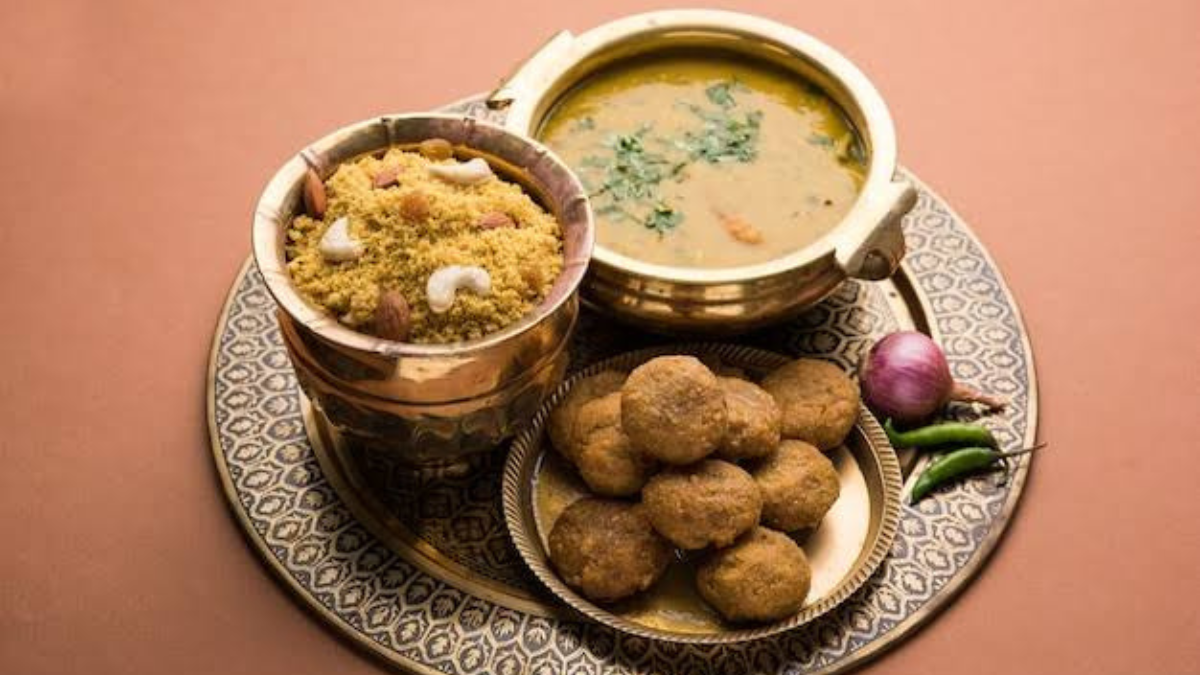

There are some dishes you eat because you’re hungry, and then there are dishes you remember because they feel like an experience. Dal Baati Churma is definitely one of those meals.A much-loved dish from Rajasthan, Dal Baati Churma brings together three simple preparations that somehow work perfectly as one. There is the comforting, spicy dal, the golden and slightly crisp baati, and the sweet, crumbly churma. Add a generous spoonful of ghee, and you have a meal that feels wonderfully rich, rustic, and satisfying
What makes this dish even more special is the story behind it. Dal Baati Churma isn’t just about a recipe. It reflects the food traditions of Rajasthan, where simple ingredients, practical cooking methods, and generous hospitality have shaped the cuisine for generations.
If you’re curious about trying it at home in 2026, you’re in the right place. This guide takes you through the history, ingredients, preparation, serving ideas, variations, and useful cooking tips for making a delicious plate of Dal Baati Churma.
What Is Dal Baati Churma?
The name itself tells you what you’ll find on the plate.
Dal is the savory part of the meal. It is generally prepared with lentils and seasoned with spices, garlic, cumin, tomatoes, and other ingredients depending on the recipe.
Baati is a round piece of wheat dough that is baked until golden and firm. Once it comes out hot, it is often cracked open and soaked with ghee. That little step makes a huge difference to the flavor.
Churma is the sweet element. Cooked baati is crushed and mixed with ghee, sugar or jaggery, and sometimes cardamom and nuts.
Individually, each component is simple. Together, they create a beautiful combination of spicy, savory, crispy, soft, rich, and sweet flavors.
The History of Dal Baati Churma

The roots of Dal Baati Churma are closely connected with Rajasthan and its traditional food culture.
Rajasthan has a dry climate, and traditional cooking naturally developed around ingredients that could be stored for longer periods and meals that were filling without being unnecessarily complicated. Wheat, lentils, spices, ghee, and other pantry staples became important parts of everyday cooking.
Baati was particularly practical. Wheat dough could be shaped into small balls and cooked over hot embers. The result was firm on the outside, hearty inside, and often carried a delicious roasted aroma. In traditional cooking, the heat from wood or charcoal could also give baati a subtle smoky character.
Dal eventually became a natural companion to baati, adding moisture and spice to the hearty wheat preparation. Churma offered another clever use for cooked baati, turning it into something sweet and comforting with the addition of ghee and sugar or jaggery.
Over time, the combination became an important part of Rajasthani food culture. What may have started as a practical meal grew into something associated with hospitality, celebrations, family gatherings, weddings, and festivals.
That’s part of the charm of Dal Baati Churma. Its history isn’t only about ingredients and cooking techniques; it’s also about how food becomes connected to people and traditions.
What Does Dal Baati Churma Taste Like?

If you’ve never had it before, don’t expect all three parts to taste alike. That’s exactly what makes the dish interesting.
Baati has a roasted, slightly crisp exterior and a hearty interior. When hot baati is broken open and covered with ghee, it becomes rich and fragrant.
The dal brings the warmth. Depending on the recipe, it can be mildly spiced or quite bold, with flavors from cumin, garlic, turmeric, coriander, and chili.
Then there is churma.
Sweet, buttery, crumbly, and sometimes fragrant with cardamom, churma provides a completely different finish. You can eat it between bites of dal and baati or enjoy it at the end of the meal.
The combination feels indulgent without needing complicated ingredients.
Ingredients You’ll Need


One of the best things about this recipe is that the ingredients are fairly easy to find.
Ingredients for Baati
- 2 cups whole wheat flour
- 2–3 tablespoons ghee
- ½ teaspoon ajwain
- Salt to taste
- Water as needed
Ingredients for Dal
- ½ cup toor dal
- ¼ cup moons dal
- ¼ cup chana dal
- 1 small onion, finely chopped
- 1 tomato, chopped
- 2–3 garlic cloves
- 1 teaspoon cumin seeds
- ½ teaspoon turmeric powder
- 1 teaspoon coriander powder
- Red chili powder according to taste
- Garam masala according to taste
- Salt
- 1–2 tablespoons ghee or oil
- Fresh coriander
Ingredients for Churma
- 4–5 cooked baatis
- 2–3 tablespoons ghee
- Sugar or jaggery according to taste
- ½ teaspoon cardamom powder
- Chopped almonds or cashews, optional
These are basic ingredients, but don’t underestimate them. With good-quality flour, fresh spices, and properly cooked lentils, you can make a wonderfully satisfying meal.
How to Make Dal Baati Churma at Home
Make the Baati Dough
Start by putting the wheat flour into a large bowl. Add salt, ajwain, and ghee.
Use your fingers to rub the ghee into the flour. The mixture should feel slightly crumbly when you press it together.
Add water little by little and knead until you have a firm dough. Baati dough should be noticeably firmer than the dough you would normally make for roti.
Cover it and let it rest for around 15–20 minutes.
Shape the Batista
Divide the dough into equal portions and roll each one into a ball.
Don’t worry if the surface isn’t perfectly smooth. A few small cracks are completely normal and give the baati its rustic appearance.
You can gently press an indentation into the center of each baati to help it cook more evenly.
Bake the Batista
Traditional baati can be cooked over hot embers, but an oven makes the process much easier at home.
Place the shaped baatis in a preheated oven and bake until they become golden and firm. Turn them during cooking so they brown evenly.
Once they’re done, take them out while they’re still hot. Crack them open and drizzle generously with ghee.
This is one step you don’t want to rush. The hot baati absorbs the ghee beautifully.
Prepare the Dal
Wash the lentils well and cook them with turmeric and enough water until they become soft.
For the tempering, heat ghee or oil in a pan. Add cumin seeds and allow them to crackle.
Add garlic and onion, then cook until the onion becomes lightly golden. Add tomato, coriander powder, chili powder, and the remaining spices.
Cook until the tomato softens and the mixture becomes fragrant.
Add the cooked lentils and adjust the consistency with water. Let the dal simmer for a few minutes so the flavors come together.
Finish with fresh coriander.
Make the Churma
Take a few cooked baatis and break them into smaller pieces.
Crush them into a coarse mixture. It should have some texture rather than becoming a completely smooth powder.
Add melted ghee, sugar or jaggery, and cardamom powder.
Mix everything thoroughly. If you enjoy nuts, add chopped almonds or cashews for a little crunch.
That’s it—your churma is ready.
How to Serve Dal Baati Churma

There is something particularly satisfying about serving this meal fresh and hot.
Place the baatis on a plate and break them open. Add a generous amount of ghee and serve them alongside hot dal.
Keep the churma separately so its sweetness doesn’t mix completely with the savory dal.
For an even more enjoyable meal, serve it with:
- Garlic chutney
- Green chutney
- Pickle
- Sliced onions
- Buttermilk
- Roasted papad
- Fresh coriander
The meal is filling on its own, so you don’t need a huge number of side dishes.
Simple Tips for Perfect Baati

Getting baati right is mostly about patience.
Keep the dough firm. Soft dough can make the baati lose its characteristic texture.
Don’t skip the ghee. A little ghee in the dough helps create a richer result.
Make evenly sized baatis. This helps them cook at roughly the same speed.
Don’t rush the baking. The outside can brown quickly while the inside is still undercooked.
Serve them hot. Freshly cooked baati absorbs ghee much better than cold baati.
And if your first batch isn’t perfect, don’t worry. Like many traditional recipes, baati gets easier with practice.
Dal Baati Churma Variations

There are plenty of ways to give this traditional meal your own touch.
For the dal, you can use a combination of lentils such as toor, moons, and chana dal. Some versions use panchmel dal, a flavorful combination of five lentils.
Baati can also be stuffed with spicy potatoes, onions, peas, or other fillings.
Churma can be made with sugar or jaggery and enhanced with cardamom, nuts, coconut, or dry fruits.
Modern cooks sometimes experiment with unusual flavors, including chocolate churma. These versions are not necessarily traditional, but they can be fun when you’re looking for something different.
Traditional Cooking vs Modern Cooking

Traditionally, baati was cooked over hot embers, which helped create its characteristic roasted flavor.
Today, most home cooks prefer ovens because they’re convenient and easier to control. Air fryers can also be useful when preparing a smaller batch.
The equipment may have changed, but the basic idea remains the same: make a firm wheat baati, cook it thoroughly, add ghee, and serve it with flavorful dal and sweet churma.
In other words, modern convenience doesn’t have to mean giving up the soul of the recipe.
Is Dal Baati Churma Healthy?

Dal Baati Churma contains wholesome ingredients such as lentils and whole wheat. Lentils provide protein and fiber, while wheat forms the main base of the baati.
At the same time, traditional preparations can be quite rich because ghee is an important part of the dish, while churma usually contains sugar or jaggery.
If you prefer a lighter meal, you can simply adjust the portions. Use less ghee, make smaller baatis, serve a little more dal, and reduce the sweetness of the churma.
There’s no need to completely change a traditional dish to enjoy it in a way that suits you.
When Is Dal Baati Churma Served?
Dal Baati Churma is ideal for occasions when food is meant to be shared.
It can be enjoyed during:
- Weddings
- Festivals
- Family celebrations
- Weekend lunches
- Traditional Rajasthani meals
- Dinner gatherings
- Cultural food events
It is also a great choice when you’re having guests over and want to serve something that feels distinctly Indian and memorable.
A big plate of baati with bowls of dal and churma in the middle of the table naturally encourages everyone to sit together and eat.
Why Dal Baati Churma Remains Popular in 2026

Food trends come and go, but traditional Indian dishes continue to hold a special place at the table.
In 2026, there is plenty of interest in regional Indian cuisine, homemade recipes, traditional cooking, and foods with a story behind them. Dal Baati Churma fits perfectly into that picture.
It also proves that memorable food doesn’t require an endless list of ingredients. Wheat, lentils, spices, ghee, and a little patience can create a meal that feels incredibly satisfying.
Modern kitchens may have ovens and air fryers instead of traditional cooking fires, but the flavors and traditions can still be carried forward.
More Than Just a Rajasthani Recipe

The real beauty of Dal Baati Churma is that it brings together food, history, and hospitality.It reflects the practical nature of traditional Rajasthani cooking while also showing how simple ingredients can become something worthy of a celebration.There is generosity in the way the dish is served. There is comfort in the dal, richness in the baati, and sweetness in the churma.And perhaps that’s why the dish continues to connect with people. You don’t simply eat Dal Baati Churma—you experience a little piece of Rajasthan through the food.
Quick Recipe at a Glance

Prep time: 30–40 minutes
Cooking time: 40–50 minutes
Serves: 4
Baati: Mix wheat flour, ghee, salt, and ajwain. Knead into a firm dough, shape into balls, and bake until golden.
Dal: Cook mixed lentils until soft. Prepare a tempering with cumin, garlic, onion, tomato, and spices, then combine it with the dal and simmer.
Churma: Crush cooked baatis and mix them with ghee, sugar or jaggery, cardamom, and optional nuts.
To serve: Break the hot baati, add ghee, serve with warm dal, and enjoy churma on the side.
Frequently Asked Questions
1. What is Dal Baati Churma?
Dal Baati Churma is a traditional Rajasthani dish made with three main components: flavorful dal, baked or roasted baati, and sweet churma. Together, they create a satisfying mix of spicy, savory, crispy, and sweet flavors.
2. Which state is famous for Dal Baati Churma?
Dal Baati Churma is especially associated with Rajasthan and is one of the state’s most well-known traditional foods.
3. What are the main ingredients in Dal Baati Churma?
The main ingredients include wheat flour, semolina, ghee, lentils, spices, jaggery or sugar, and nuts. The exact ingredients can vary depending on the recipe and region.
4. Is Dal Baati Churma difficult to make at home?
Not at all. It takes some time because the dal, baati, and churma are prepared separately, but the basic techniques are quite simple. With a little patience, you can make a delicious homemade version.
5. Why is ghee important in Dal Baati Churma?
Ghee adds richness, aroma, and the traditional flavor that makes Dal Baati Churma so special. Baati is often dipped in or generously served with ghee before eating.



Leave a Reply