

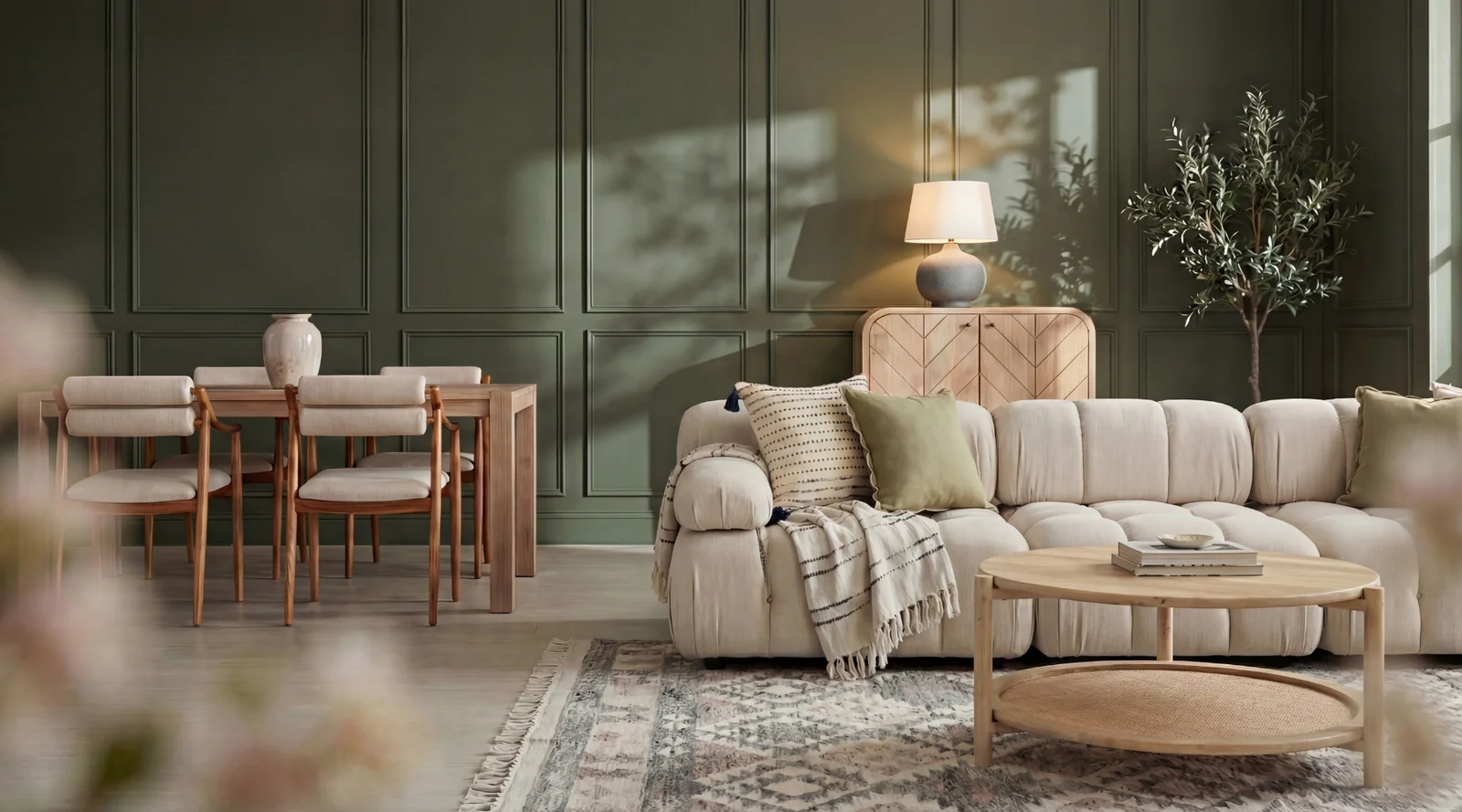

Let’s step back and take a breath. If you’ve spent any time on the internet over the last few years, you’ve probably noticed a common theme: life feels fast. We are constantly inundated with new gadgets, shifting workplace trends, evolving home decor aesthetics, and complex productivity hacks. We buy things to save time, only to spend more time managing the things we bought.Home We download apps to keep us focused, only to spend hours configuring settings and managing notifications.
In 2026, the real luxury isn’t owning more stuff or optimizing every single minute of your morning routine. The real luxury is intentionality.
Intentional living means taking control of your daily environment, your time, your money, and your physical space rather than letting algorithms, social pressure, or passive habits dictate how you live. It’s about trimming away the fluff—the useless smart gadgets, the cluttered home decor, the overwhelming schedules—so you can focus on what actually moves the needle for your happiness and productivity.
Whether you are looking to overhaul your home, rethink your career productivity, update your personal space on a budget, or build a lifestyle that feels grounded rather than chaotic, this ultimate master guide covers the practical strategies you need to thrive this year.
Part 1: The Smart Home Audit — Tech That Serves You (Not the Other Way Around)

For a long time, tech companies tried to make everything “smart.” We saw smart salt shakers, smart hairbrushes, and smart water bottles that beeped at you if you didn’t drink every 20 minutes.
Most of these turned out to be expensive clutter. They added app management fatigue without solving any real daily frustration. In 2026, the smart home market has matured. We have entered the era of passive utility—technology that operates quietly in the background without needing constant attention.
The Real-World Utility Breakdown
Before spending money on new home technology, run it through this assessment matrix to determine if it’s genuinely useful or just a future piece of e-waste:
| Tech Category | Real Daily Benefit | High-Value Features | What to Avoid | True Value Rating |
| Self-Emptying Robot Vacuums | Saves 2–3 hours of weekly manual cleaning | Hot-water pad washing, LiDAR 3D obstacle avoidance | Older bump-and-turn models without mapping | (Essential) |
| Smart Thermostats | Lowers monthly power bills automatically | Room temperature sensors, geofencing presence detection | Systems requiring proprietary hub hardware | (Pays for itself) |
| On-Device AI Phones | Instant offline translation and task automation | Real-time transcription, local photo processing | Cloud-only AI features that require high-speed internet | (High Utility) |
| Smart Rings & Trackers | Screen-free health monitoring & sleep analysis | Continuous HRV tracking, 7-day battery life | Subscriptions that lock basic health metrics behind paywalls | (Great for Sleep) |
| Smart Kitchen Displays | Hands-free recipe guidance & central calendar | Matter protocol support, physical camera shutters | Models that run persistent banner ads on the home screen | (Niche Utility) |
| Connected Appliances | Remote status updates for laundry and dishwashers | Delayed start scheduling, energy peak-hour avoidance | Ovens or fridges that require an app for basic manual tasks | (Over-engineered) |
The Three Golden Rules of Smart Home Tech

To keep your living space from turning into an endless maze of disconnected software updates and forgotten passwords, stick to these core principles:
- Prioritize Matter and Thread Protocols: Ensure every smart device you purchase supports cross-platform compatibility. The goal is to control your home smoothly whether you use Apple, Google, or alternative systems, rather than locking yourself into one brand.
- Eliminate Micro-Transactions: Watch out for hardware that requires a recurring $10/month cloud subscription to unlock basic hardware features (like saving security camera clips or viewing sleep scores). Always factor lifetime software costs into your purchase.
- Hardware Privacy Must Be Physical: Microphones and cameras in your personal space should always feature physical disconnect switches or physical sliding shutters. Never rely solely on software toggles for room privacy.
┌───────────────────────────────────────────────────────────┐│ THE BALANCED TECH ENVIRONMENT │├───────────────────────────────────────────────────────────┤│ PASSIVE AUTOMATION ──> Robovacs, Thermostats, Lighting ││ SCREEN-FREE DATA ──> Health Rings, Environmental Sensors││ HIGH-INTENT DEVICES ──> Work Laptops, Focused Audio ││ ││ RESULT: A home that works for you without demanding focus │└───────────────────────────────────────────────────────────┘
Part 2: Reclaiming Your Daily Focus — A Modern Approach to Time & Attention

If you find yourself finishing an eight-hour workday completely drained without having accomplished your main priorities, you aren’t alone. Modern digital work is packed with context switching—the mental tax paid when you constantly switch between chat apps, email, video calls, and project boards.
Research shows it takes up to 23 minutes to regain full cognitive focus after a single interruption. If you get pinged every 10 minutes, your brain never reaches a state of deep, creative flow.
  WITHOUT FOCUS SYSTEMS:
  [Task A] ──(Ping)──> [Slack] ──(Email)──> [Task B] ──(Interruption)──> [Task A]
  Result: High fatigue, low output.

  WITH TIME BLOCKING:
  [ 2-Hour Deep Work Block ] ──> [ 30-Min Admin Block ] ──> [ 1-Hour Focus Block ]
  Result: High clarity, real progress.
Finding Your Ideal Time Tracking System
A time tracker isn’t meant to micro-manage your life—it is a tool to measure where your mental energy goes so you can protect your calendar.
| Tool | Approach | Best For | Key Advantage |
| Toggl Track | One-Click Manual Timer | Freelancers & Solopreneurs | Zero setup clutter; clean visual breakdown of weekly hours. |
| RescueTime | Automatic Background Logging | Eliminating Online Distractions | Runs silently; provides an accurate “Pulse Score” of daily focus. |
| Harvest | Integrated Timer & Billing | Agencies & Client Consultants | Converts tracked project hours directly into client invoices. |
| EARLY (Timeular) | AI Context + Tactile Hardware | People who forget manual timers | Uses physical desk dice and AI auto-tagging to log activities. |
| TrackingTime | Visual Calendar Overlay | Visual Planners & Time Blockers | Maps tracked time onto your calendar to compare plans versus reality. |
The Attention Protection Strategy
To take back control of your schedule, implement these three workplace habits starting this week:
- Batch Your Communication Windows: Instead of leaving chat apps and email open all day, check them at three specific times: 9:00 AM, 1:00 PM, and 4:00 PM. Turn off desktop notifications outside those windows.
- Build a “Shutdown Routine”: Spend the final 10 minutes of your workday organizing tomorrow’s top three priorities. When you close your laptop, your brain can fully disconnect because it knows tomorrow is already planned.
- Treat Energy, Not Just Time, as a Resource: Schedule your hardest, most creative tasks during your peak energy hours (usually early morning), and save administrative chores (like filing expense reports or responding to low-priority emails) for your afternoon energy dip.
Part 3: High-End Home Styling on a Real-World Budget

Creating a beautiful, inviting home doesn’t require an enormous budget. High-end interior design relies far more on visual balance, intentional lighting, and rich textures than on high price tags.
Most people make the mistake of buying cheap, matching furniture sets or filling empty spaces with small trinkets. This leads to a home that feels cluttered rather than curated.
┌───────────────────────────────────────────────────────────┐│ THE 60-30-10 RULE │├───────────────────────────────────────────────────────────┤│ 60% DOMINANT COLOR ──> Walls, large sofas, main area rug││ 30% SECONDARY COLOR ──> Curtains, accent chairs, wood ││ 10% ACCENT COLOR ──> Cushions, artwork, indoor plants │└───────────────────────────────────────────────────────────┘
The Save vs. Splurge Framework
Use this cheat sheet to balance your home budget effectively:
| Interior Feature | Where to Save | Where to Invest | High-End Design Secret |
| Room Lighting | Simple ceramic or glass lamp bases | Warm LED bulbs (2700K color temp) | Layer light across 3 heights (floor, table, accent). |
| Window Drapes | Off-the-shelf linen-blend curtain panels | Quality heavy curtain rods | Hang rods high (near ceiling) and wide (past frames). |
| Wall Art | Digital downloads or thrifted art prints | Large custom frames with wide mats | Use wide white mat boards to give small prints weight. |
| Living Room Seating | Existing couch framework | High-texture cushion covers (linen/bouclé) | Combine varying cushion shapes rather than matching sets. |
| Floor Covering | Neutral jute or sisal base rugs | Accent wool runner rugs | Layer a smaller patterned rug over a large neutral base. |
Simple Weekend Home Upgrades

If you want to transform a room over a single weekend without spending a fortune, focus on these five high-impact moves:
- Mount Curtains High and Wide: Hanging curtain rods near your ceiling line creates an optical illusion that makes ceilings feel taller and windows larger.
- Eliminate Harsh Overhead Lighting: Avoid using main ceiling lights during the evening. Use a combination of floor lamps, table lamps, and soft accent lighting to create a warm, layered environment.
- Group Accessories in Odd Numbers: When styling a coffee table or shelf, group decorative items in sets of three (e.g., a vase, a wooden bowl, and a small stack of books). Odd numbers feel more natural to the human eye.
- Pull Furniture Away From Walls: Avoid pushing every couch and chair flat against the walls. Pulling seating even three inches away from the wall creates breathing room and an inviting conversation area.
- Introduce Natural Textures: If a room feels cold, add three distinct natural materials: raw wood (side tables), natural fiber (woven baskets), and live greenery (foliage plants).
   WRONG: Curtains Low & Tight           RIGHT: Curtains High & Wide
┌──────────────────────────┐         ┌──────────────────────────┐
│   ══════ ROD ══════      │         │ ═════════ ROD ═════════  │
│  ┌────────────────────┐  │         │                          │
│  │    Window Glass    │  │         │  ┌────────────────────┐  │
│  └────────────────────┘  │         │  │    Window Glass    │  │
└──────────────────────────┘         │  └────────────────────┘  │
                                     └──────────────────────────┘
Part 4: Sustainable Living & Smart Consumption
Intentional living also means re-evaluating our consumption habits. The modern goal isn’t absolute perfection or zero waste overnight—it’s about making smarter, more durable choices that cut down on unnecessary waste and save money in the long run.
The Lifetime Cost Calculation

When evaluating a new purchase, look beyond the initial price tag. Calculate the Cost Per Use (CPU):
$$\text{Cost Per Use} = \frac{\text{Purchase Price} + \text{Maintenance Costs}}{\text{Estimated Total Uses}}$$
A $40 pair of fast-fashion shoes that wears out after 10 uses costs $4.00 per wear. A $180 pair of well-crafted boots that lasts for 300 wears over five years costs $0.60 per wear. Investing in quality for items you use daily is almost always the more economical choice over time.
┌───────────────────────────────────────────────────────────┐│ THE SUSTAINABLE SHOPPING FILTER │├───────────────────────────────────────────────────────────┤│ 1. Can this item be repaired if it breaks? ││ 2. Does it perform its function without a subscription? ││ 3. Is it versatile enough to use in multiple scenarios? ││ 4. Do I already own something that fulfills this role? │└───────────────────────────────────────────────────────────┘
Simple Shifts for a Sustainable Home

- Upgrade to Repairable Hardware: Support manufacturers that supply modular replacement parts, user-replaceable batteries, and public repair manuals.
- Reduce Single-Use Plastics in Cleaning: Swap liquid cleaning supplies for concentrated refill tablets and glass spray bottles. This cuts down on plastic shipping waste and saves storage space.
- Audit Energy Leaks: Install draft seals on exterior doors and use smart plugs to cut power to entertainment centers or home office setups when they aren’t in use.
Part 5: The Master Intentionality Checklist
To pull all these ideas together into a clear, actionable plan, use this simple checklist to audit your living and working environment:
[ ] DIGITAL AUDIT ├── Turn off non-essential smartphone notifications ├── Consolidate chat tools and schedule 3 communication windows └── Review recurring app subscriptions and cancel unused plans[ ] WORKSPACE REPAIR ├── Set up a dedicated time-blocking system ├── Clear desk surface of all non-daily tools └── Position work display perpendicular to windows to eliminate glare[ ] HOME ENVIRONMENT ├── Swap cold overhead lightbulbs for warm 2700K LEDs ├── Lift curtain rods high and wide above window frames └── Clear floor clutter to let automated cleaning devices run smoothly[ ] CONSUMPTION HABITS ├── Apply the Cost-Per-Use formula before major purchases ├── Check hardware for Matter/Thread standard support └── Choose modular, repairable items over disposable alternatives
Frequently Asked Questions
1. How do I start living more intentionally without getting overwhelmed?
Pick a single area to address first. Spend one weekend organizing your digital workspace, fixing your home lighting, or setting up a clean schedule. Trying to overhaul your entire life overnight usually leads to burnout. Small, steady adjustments produce lasting change.
2. Is a smart home setup worth the investment for renters?
Yes, as long as you choose non-permanent hardware. Focus on smart plugs, smart light bulbs, portable table lamps, desktop displays, and battery-powered sensors. These items require no rewiring or wall alterations and move easily to your next home.
3. What is the easiest way to improve home lighting on a small budget?
Swap your existing LED lightbulbs for soft warm white options (labeled 2700K). Avoid cool white or daylight bulbs in bedrooms and living rooms. Adding two inexpensive table lamps at eye level instantly softens a room’s atmosphere.
4. How can I stay productive when working remotely without working late?
Set a strict “end-of-day” boundary. Create a physical ritual that signals the end of work—such as closing your laptop, turning off your desk lamp, or going for a 10-minute walk. Once your shutdown routine is complete, step away from your work devices for the evening.




Leave a Reply