


Every year, about ten days before Diwali, my house turns into a mess, and I love it. There are boxes of old lights on the sofa, a bag of marigolds in the kitchen, and my mother’s voice in my head saying, “Start cleaning early.” And every year I start late. This year, with Diwali only days away, I’m doing the same thing again.
Still, after many Diwalis of trying, failing, and trying again, I’ve learned what makes a home feel festive without costing a fortune or burning me out. This isn’t a designer guide. It’s what I’ve actually done in my own home, with my own budget, and a lot of mistakes. Take what works for you.
Start with cleaning, because Diwali decoration comes second

I used to skip this part and go straight to buying decor. Big mistake. Fairy lights on a dusty wall just look like fairy lights on a dusty wall.
In our family, we clean before Diwali because it’s said that Goddess Lakshmi visits a clean home. Whether you believe that or not, I can tell you it works. When the house is clean, even simple decoration looks beautiful.
I do it room by room instead of in one crazy weekend. One day for the kitchen, one for the bedroom, and one for the living room. I also use this time to give away things we don’t need. Old clothes, extra steel containers, books the kids outgrew. Clearing the clutter makes space for decoration, and honestly it makes the house feel lighter.
Rangoli: the first thing everyone sees In Diwali

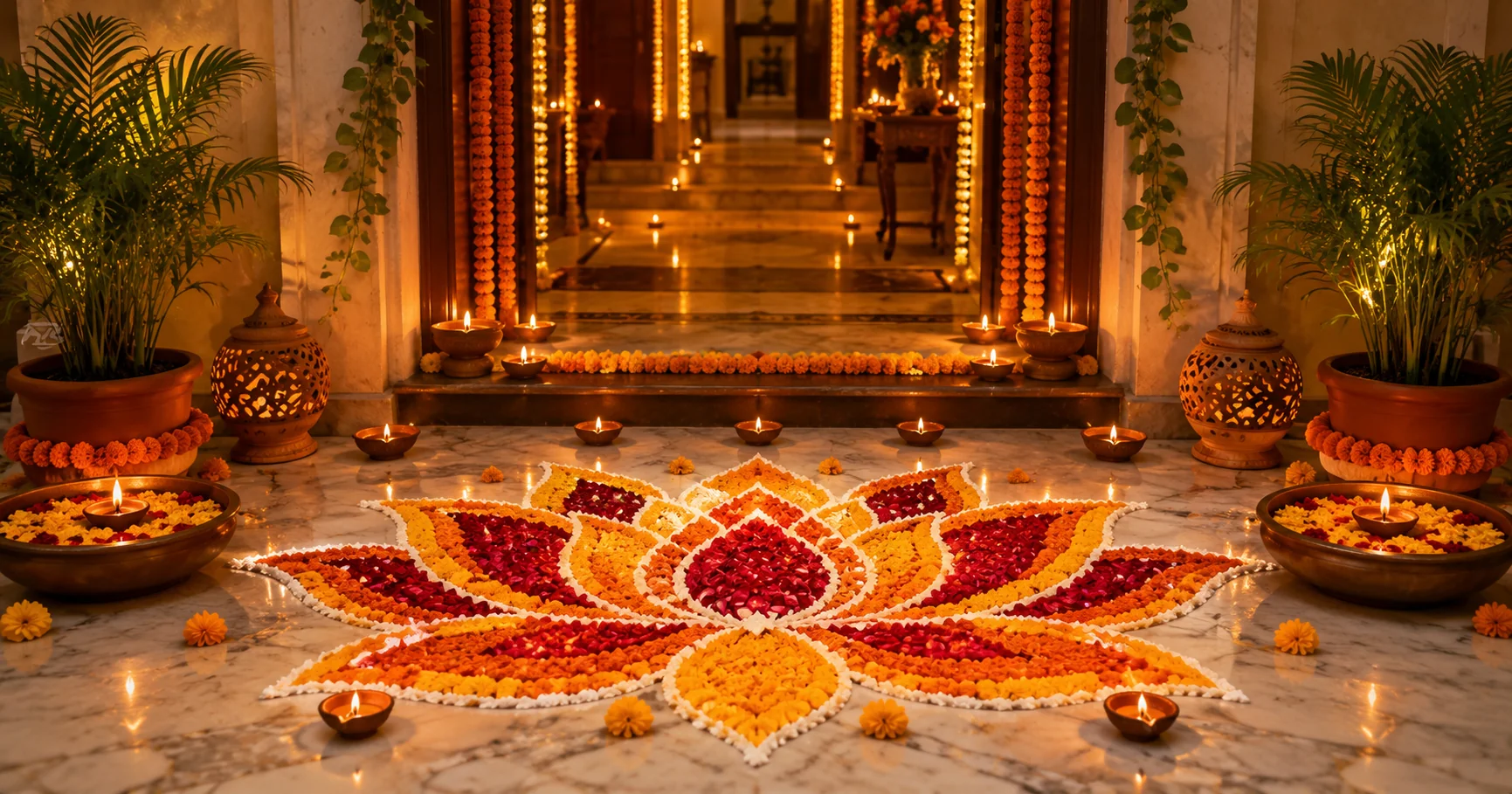
If I could only do one thing for Diwali, it would be rangoli. It changes the whole mood of the entrance.
I’m not an artist. My first few rangolis looked like confused spiders. What helped me was starting small. A simple circle with a flower pattern, a few dots joined together, or a border with diya shapes. Nothing fancy.
A few things I’ve learned:
- Use colored powder, flower petals, or both. Petals look soft and fresh. Powder gives bold color. I mix them.
- Use stencils if you’re nervous. There’s no shame in it. Good stencils are cheap and they make clean shapes.
- Make it with rice flour if you have pets or kids. It’s safe and it looks lovely.
- Put a diya in the center. This one small thing makes even a basic rangoli look finished.
This year I want to try a floral rangoli using only marigold, rose petals, and a few green leaves. I saw something similar at my neighbor’s house last year and couldn’t stop looking at it.
| 🪔 |
Diwali Rangoli
Easy & Beautiful Designs for Your Home Light up your doorstep with colours and joy. ✨ |
🌸 SEE RANGOLI IDEAS → |
Diyas, the real heart of Diwali


You can have all the lights in the world, but nothing beats the glow of a real diya. Electric lights are pretty, but diyas feel warm.
I keep a mix of classic clay diyas and a few painted ones. A few years ago I started painting plain diyas with my niece. We used acrylic paints, gold and red mostly, with tiny dots and lines. Some came out beautiful and some looked like a toddler did them, but that’s the fun of it. We kept the best ones and placed them near the main door.
Where I like to place diyas:
- Along the entrance and near the rangoli
- On windowsills, where the light shows from outside
- On the stairs, one on each step if the space allows
- Near the puja corner
- On the balcony railing, if it’s safe and away from curtains
One tip that saved me a lot of trouble: soak new clay diyas in water for a few hours before using them. Dry clay soaks up the oil quickly and the diya burns out fast. After soaking, dry them, and they hold the oil much better.
If you have small kids or pets at home, you can use flameless LED diyas in some corners. I use a mix. Real ones outside and near the puja, LED ones inside where little hands might reach.
Fairy lights: easy, but do it with a plan In Diwali

Fairy lights are the quickest way to make a home look festive. But I’ve made many mistakes here.
The first year, I bought cheap lights and half of them stopped working in two days. Now I test every string before putting it up. I plug them in at home, check each one, and throw away the ones that blink weirdly. It sounds boring but it saves a lot of frustration on the day of Diwali.
Here’s where I use them:
- On the balcony or window. Warm white lights look more classy than multicolor ones, in my opinion. But my kids love the colorful ones, so we compromise and use warm white outside and colors in their room.
- Behind curtains. This is my favorite trick. Lights behind a sheer curtain give a soft glow that looks lovely at night.
- Around mirrors or photo frames. It adds a gentle sparkle without being too much.
- In glass jars. Small fairy light strings inside a transparent jar look like little lamps. They’re also safe.
A small safety note I learned the hard way: don’t overload one socket. Use an extension board with a proper cut-off switch, and never leave decorative lights on all night.
Flowers and torans for the main door On Diwali
When I think of Diwali, I think of marigolds. Their smell, their orange color, all of it.
Every year I hang a fresh marigold toran on the main door. You can make one at home with a thick thread, a needle, and a lot of patience. I sit with my mother or a friend and string flowers while we gossip. It takes about an hour for one long toran. If I don’t have time, I buy one from the local flower market. They cost very little.
Some ideas I like:
- A mix of marigold and mango leaves. This is traditional and it looks fresh.
- Artificial torans with beads and mirror work. These last for years and you can reuse them. I have one that’s been with me for almost six years, and I just wash the beads gently each time.
- Small flower garlands on the pillars or the sides of the door.
Fresh flowers don’t last long, so I buy them one day before Diwali, keep them in a damp cloth in the fridge, and put them up in the morning. This keeps them looking nice.
The puja corner On Diwali

The puja space is the most special part of my home during Diwali, so I try to make it a bit extra without making it crowded.
I put a clean cloth in red or yellow, place the idols or pictures of Lakshmi and Ganesh, and decorate around them with flowers. I like having a few diyas, a small bowl of rangoli colors, and a brass or copper plate for the aarti items.
You don’t need a big setup. One year we lived in a small rented flat, and our puja corner was just a small wooden stool with a cloth. It still felt just as sacred. What matters is that it’s clean and lit well, and that the family sits together.
Using what I already have
This is my favorite part of decorating, because it’s free.
Every Diwali I look around my house and try to reuse things instead of buying new:
- Old sarees and dupattas. I use them as table runners, wall drapes, or a backdrop for the puja. A silk saree with a zari border looks stunning.
- Brass and copper pots. I fill them with water and floating flowers and candles. They glow beautifully.
- Glass bowls and bottles. I fill them with water, petals, and a floating candle.
- Mirrors. Placing diyas near a mirror doubles the light. It’s a very simple trick that always works.
- Cushion covers. I switch to red, mustard, or maroon covers for the festival. It changes the whole room without spending much.
I also keep a box of decor I’ve collected over the years. Some pieces are from trips, some are gifts, and some I made. Opening that box every year feels a little like meeting old friends.
Decorating the balcony and outdoor space

Our balcony is small, but I try to make it count. It’s what neighbors and people passing by can see, and I like when it feels welcoming.
Hanging paper lanterns or fabric lanterns works well in a small space. I also like to hang a few small brass bells and place two or three potted plants with fairy lights wrapped around them.
If you have a wall or railing, a string of lights with a few diyas on the floor below gives a nice layered look.
A tip: don’t put diyas too close to anything that can catch fire, like curtains or dry plants. I keep a small bucket of water nearby, just in case. It’s a habit my father taught me and I’m glad I follow it.
Eco-friendly ideas I’m trying more each year
I’ve been trying to make my Diwali kinder to the environment, bit by bit. I’m not perfect at it. But small changes add up.
- Natural colors for rangoli. Turmeric, rice flour, and flower petals instead of chemical colors.
- Clay diyas instead of plastic or wax ones. They’re reusable in some cases, and they go back to the earth.
- Fewer disposable items. I use cloth torans and reusable decor instead of plastic.
- Less plastic wrapping for gifts. I now use cloth bags or old newspapers with a ribbon.
- Skipping or reducing crackers. Honestly, the air in many Indian cities is already heavy in November, and my family now prefers lights and sweets over loud crackers. Our pets also thank us.
None of this feels like a sacrifice. It actually makes the festival feel calmer.
Setting a budget (and sticking to it)
I used to spend way too much on decor and then feel bad about it. Now I decide a number before I step into the market. Then I divide it: some for flowers, some for lights, some for diyas, and a small amount for one new decor item I really love.
Some places I like for shopping are the local street markets, where clay diyas and torans are cheap, and small neighborhood shops that sell handmade items. Buying from local makers also feels good because the money goes to people who depend on this season.
If you’re on a tight budget, you can still decorate beautifully. Flowers, diyas, and a clean home are enough. I’ve seen houses with very little decor that felt magical because the family put effort and love into them.
Mistakes I’ve made, so you don’t have to

Here’s my honest list.
- Buying decor too late. The good stuff sells out, and prices go up in the last two days.
- Not testing the lights. I told you this already, but it’s worth repeating.
- Placing diyas near curtains. A small scare taught me this one.
- Too many colors. One year I mixed red, green, blue, pink, and gold everywhere. It looked chaotic. Now I pick two or three colors and stick to them.
- Leaving decoration for the last day. I get stressed, and then I don’t enjoy the festival. Now I spread it over three or four days.
- Forgetting to take photos. After all that work, I forgot to take any picture for two years. Now I take a few photos before the guests arrive and the house gets busy.
A simple plan if you’re short on time
If you’re reading this a few days before Diwali, don’t panic. Here’s a quick plan I’d follow.
Two to three days before: Clean the house, buy diyas, lights, and any decor you need.
One day before: Put up the lights, set up the puja corner, and prepare your torans.
Diwali morning: Make the rangoli, hang the fresh flowers, and arrange the diyas.
Evening: Light the diyas, do the puja, and then just enjoy it.
That’s really all you need.
|
|
||||||||||||
|
🪔 ✨ 🎆 ✨ 🪔 ✨ 🎆 ✨ 🪔 🎇 FESTIVAL OF LIGHTS SPECIAL 🎇
The Best Diwali Decoration
|
||||||||||||
|
||||||||||||
| 🪔 Light Up Your Home ✨ Spread Happiness 🌸 Colourful Rangoli 🎆 Shine Bright This Diwali 🪔 Happy Diwali 2026 💖 Love, Light and Joy | ||||||||||||
|
Ready to decorate your home this Diwali?
|
||||||||||||
| 🪔 Happy Diwali! May your home glow with joy all year 🪔 |
FAQ’s
1. What are the best Diwali decoration ideas for home?
Decorate your home with diyas, fairy lights, fresh flowers, colorful rangoli, and decorative lanterns.
2. How can I decorate my home for Diwali on a budget?
Use homemade rangoli, reusable lights, paper lanterns, and DIY decorations to create a festive look affordably.
3. Which colors are best for Diwali decorations?
Gold, red, orange, yellow, and pink are popular festive colors that create a warm and traditional atmosphere.
4. How can I decorate my living room for Diwali?
Add warm fairy lights, cushions in festive colors, flower arrangements, decorative candles, and a beautiful centerpiece.
5. How can I decorate my home entrance for Diwali?
Create a colorful rangoli, place diyas near the entrance, hang a flower toran, and add warm lighting to welcome guests.



Leave a Reply