

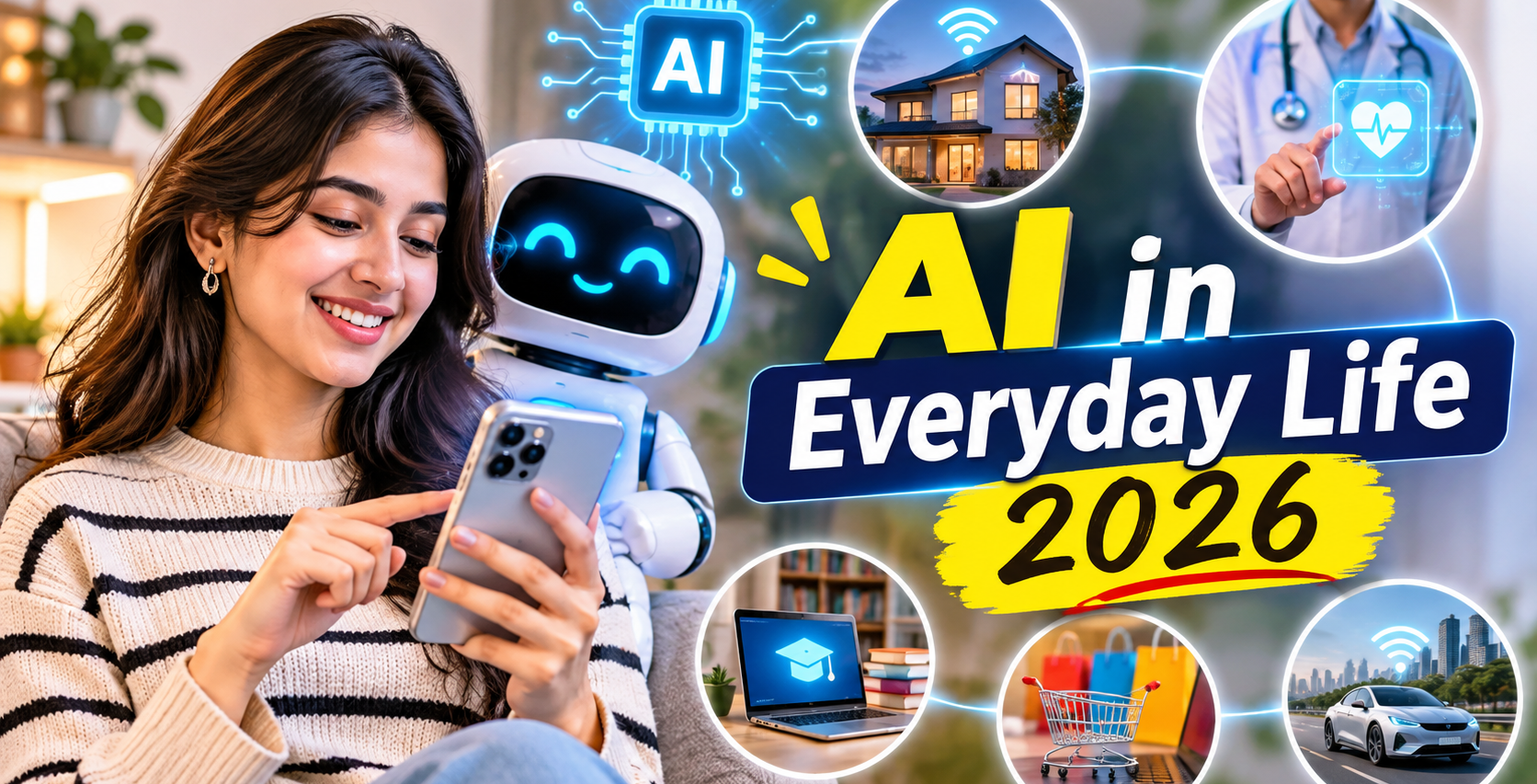

Just a few years ago, whenever someone talked about Artificial Intelligence, my mind immediately jumped to sci-fi movies, bulky humanoid robots, or complicated lines of computer code that only Silicon Valley engineers understood. I honestly used to think AI was something distant—a flashy tech buzzword meant for big corporations, not something that would quietly weave itself into my morning tea routine or the way I run errands on a Thursday afternoon.
Sitting at my kitchen table this November in 2026, looking around at how I actually move through a normal day, I realize how wrong I was. AI didn’t arrive with a dramatic sci-fi announcement. Instead, it slipped into my life quietly, almost invisibly, taking over the tiny, repetitive headaches I didn’t even notice were draining my energy.
From the moment my alarm goes off to the second I finally turn off the bedside lamp at night, smart technology has become less like a gadget I have to “operate” and more like a thoughtful, silent helper sitting in the background. Here is an honest, personal look at how Artificial Intelligence has actually reshaped my everyday routine—and the real-world ways it is changing daily living right now.
1. My Mornings Are Finally Calm Instead of Chaotic

I am not naturally a morning person. For years, my mornings were a frantic blur of hitting snooze four times, standing in front of my closet wondering if I needed a jacket, and rushing out the door with half-cold coffee because I misjudged traffic.
┌────────────────────────────────────────────────────────┐| HOW MY MORNING ROUTINE SHIFTED |├────────────────────────────────────────────────────────┤| • Sleep Tracking ➔ Wakes me during light sleep || • Smart Home Sync ➔ Adjusts lights & room warmth || • Predictive Commute ➔ Alerts me to traffic early |└────────────────────────────────────────────────────────┘
Today, my wake-up routine feels completely different. My bedside ring and phone don’t just blare an alarm at a rigid 7:00 AM anymore; they track my sleep cycles and gently wake me up within a 20-minute window when I am already in light sleep. Instead of waking up groggy and disoriented, I actually feel rested.
As soon as I step out of bed, my room lights gradually brighten to mimic natural morning sunlight, and my phone already has a quiet summary waiting for me—not a noisy flood of notifications, just the three things I actually need to know before leaving the house:
- Micro-Weather Adjustments: Rather than giving me a generic temperature chart, my assistant tells me, “It’s chilly right now, so grab a light sweater, but it will warm up by noon.”
- Dynamic Commute Alerts: Before I even pick up my car keys, it checks live road blockages and local weather delays, nudging me ten minutes earlier if there is unexpected congestion on my usual route.
2. AI in Grocery Shopping and Kitchen Planning


If there is one chore that used to exhaust me every week, it was meal planning and grocery shopping. I would stand in front of an open fridge at 6:30 PM, staring at three random vegetables, a half-used jar of sauce, and expired yogurt, completely out of ideas—and end up ordering expensive takeout out of sheer frustration.
+-------------------------------------------------------------------+| SMART KITCHEN WORKFLOW || || [Snap Photo of Fridge] ➔ [AI Suggests 3 Real Recipes] || │ || ▼ || [Auto-Builds Grocery List] ➔ [Zero Food Waste & Saved Money] |+-------------------------------------------------------------------+
Now, my kitchen feels way more organized without me having to maintain complicated spreadsheets. Whenever I am stumped about dinner, I literally snap a quick photo of whatever is left inside my refrigerator shelves. Within seconds, my kitchen app identifies the ingredients and suggests three practical recipes I can actually make with what I already have on hand—complete with step-by-step voice instructions so I don’t have to touch my phone screen with messy, flour-covered hands.
Even better, my grocery list builds itself throughout the week. When I scan a receipt or speak out loud while cooking (“Hey, I just used the last of the olive oil and cumin”), it automatically adds those items to my weekend shopping list, grouped by supermarket aisle. My food waste has dropped dramatically, and my monthly grocery bill is noticeably lower.
3. AI in Healthier, Less Stressful Approach to Personal Wellness
For a long time, fitness trackers stressed me out. If I didn’t hit an arbitrary 10,000 steps every single day, I felt like I had failed. Health apps felt rigid, robotic, and completely disconnected from how my body actually felt on a tired Tuesday versus an energetic Saturday.
In 2026, personal health tech has become remarkably empathetic and adaptive. Instead of barking rigid targets at me, my wearable monitors subtle shifts in my heart rate variability, skin temperature, and recovery levels.
| Old Fitness Trackers | Today’s Adaptive AI Wellness |
| Pushes the exact same intense workout every day regardless of fatigue | Suggests a gentle 20-minute stretch or walk when recovery scores dip |
| Requires tedious manual logging of every single gram of food | Estimates balanced nutrition from a quick casual photo of your plate |
| Sends generic, repetitive reminders to “stand up” | Notices elevated stress patterns and prompts a 2-minute breathing pause |
Last month, before I even felt a scratchy throat coming on, my health app flagged that my resting heart rate was slightly elevated and suggested I skip my evening run, hydrate, and go to bed an hour early. Catching those quiet physical cues early helped me bounce back in two days instead of spending a week sick on the couch.
4. Work Feels Less Like Busywork and More Like Real Thinking

At my job, AI hasn’t replaced what I do—it has cleared away the clutter that used to stop me from doing my best work. I used to spend hours every week transcribing messy meeting notes, formatting repetitive emails, hunting through buried folders for a single PDF from three months ago, and organizing schedules across different time zones.
┌────────────────────────────────────────────────────────┐| HOW WORKFLOWS HAVE CHANGED |├────────────────────────────────────────────────────────┤| • Meeting Summaries ➔ Action items captured live || • Smart Search ➔ Finds context, not just words || • Draft Assistance ➔ Turns rough thoughts into clear|| outlines in seconds |└────────────────────────────────────────────────────────┘
Today, my workspace acts like a sharp, reliable research partner:
- No More Scrambling During Calls: During video meetings, I can actually look people in the eye and listen to the conversation instead of frantically typing notes. Afterward, I get a clean summary with clear action items and deadlines assigned to the right people.
- Finding Things Naturally: Instead of remembering the exact file name of a document I saved six months ago, I can just ask my laptop, “Pull up that budget proposal where we discussed November marketing costs,” and it opens the exact page immediately.
- Beating Blank-Page Syndrome: When I have scattered thoughts for a presentation or report, I can voice-record a messy two-minute ramble while walking my dog, and by the time I sit back at my desk, those rough ideas are structured into a neat outline ready for my personal touch.
5. Shopping, Travel, and Errands Have Gotten Smarter

Even the way I shop and plan weekend trips feels noticeably smoother. Online shopping used to mean scrolling through hundreds of confusing reviews and ordering three different sizes of the same jacket because sizing charts never matched reality.
Now, virtual fit tools look at my past purchases and measurements to tell me accurately how a fabric will drape or whether a shoe runs narrow—cutting my return trips to the post office down to almost zero.
When planning a short family getaway recently, I didn’t spend four evenings with thirty browser tabs open comparing hotels, train timings, and local restaurants. I simply described what we wanted: “A quiet three-day trip within four hours of driving, good local street food, easy walking trails, and a budget-friendly homestay.” Within moments, I had a realistic itinerary mapped out around actual opening hours and local traffic patterns, leaving me to simply pick what sounded fun.
6. AI Staying Connected Across Languages and Generations
One of my favorite everyday uses of AI has nothing to do with productivity—it is how easily it bridges small communication gaps in daily life.
Whether I am reading a regional news update, helping my parents navigate tricky online banking settings safely, or chatting with a shopkeeper or traveler who speaks a different language, real-time voice translation and simplified explanations work seamlessly in the background.
Even scam protection has gotten dramatically better. My phone now quietly screens suspicious spam calls and flags deceptive phishing messages before they even ring, which gives me huge peace of mind—especially for older family members who used to get overwhelmed by fake delivery texts and fraudulent calls.
7. AI Keeping Human Boundaries in a Smart World
As helpful as all this technology has become, I have also learned that living well with AI requires setting intentional boundaries. When tools become too convenient, it is easy to stop exercising your own creativity, intuition, and patience.
┌─────────────────────────────────────────────────────────────────┐| MY PERSONAL RULES FOR USING AI |├───────────────────┬──────────────────────┬──────────────────────┤| ASSIST, NOT | PROTECT PRIVACY | STAY PRESENT || REPLACE | | || • Let AI handle | • Keep sensitive | • Put devices away || scheduling & | personal data off | during meals and || sorting, never | public cloud tools | family conversations|| personal voice | | |└───────────────────┴──────────────────────┴──────────────────────┘
I make a conscious effort to keep the human moments sacred:
- I Never Outsource Personal Messages: I will happily let AI organize my calendar or summarize a dry PDF, but when I write a birthday note to a close friend or send a thank-you message, I write every word myself. People can always feel genuine human warmth.
- I Double-Check Important Decisions: AI is brilliant at spotting patterns, but it isn’t infallible. Whenever it comes to medical questions, financial choices, or important news, I treat AI as a starting point—never the final authority.
- Screen-Free Windows: Every evening after dinner, I put my smart devices on silent in another room. No algorithmic recommendations, no smart summaries—just real conversation, a physical book, and quiet rest.
FAQ’s
1. How is AI changing everyday life in 2026?
AI is helping with tasks such as online searches, navigation, personalized recommendations, smart home features, and digital assistants.
2. What are some common examples of AI in daily life?
Voice assistants, Google Maps route suggestions, streaming recommendations, smart cameras, chatbots, and AI-powered translation are common examples.
3. How does AI make daily tasks easier?
AI can automate repetitive tasks, provide quick information, personalize services, and help people make everyday decisions more efficiently.
4. Is AI useful for students and professionals?
Yes. AI can help with research, writing, learning, organizing information, brainstorming, and other productivity tasks when used responsibly.
5. Will AI become more important in everyday life?
Yes. As AI technology develops, it is expected to become more integrated into areas such as education, healthcare, transportation, shopping, and smart homes.



Leave a Reply