

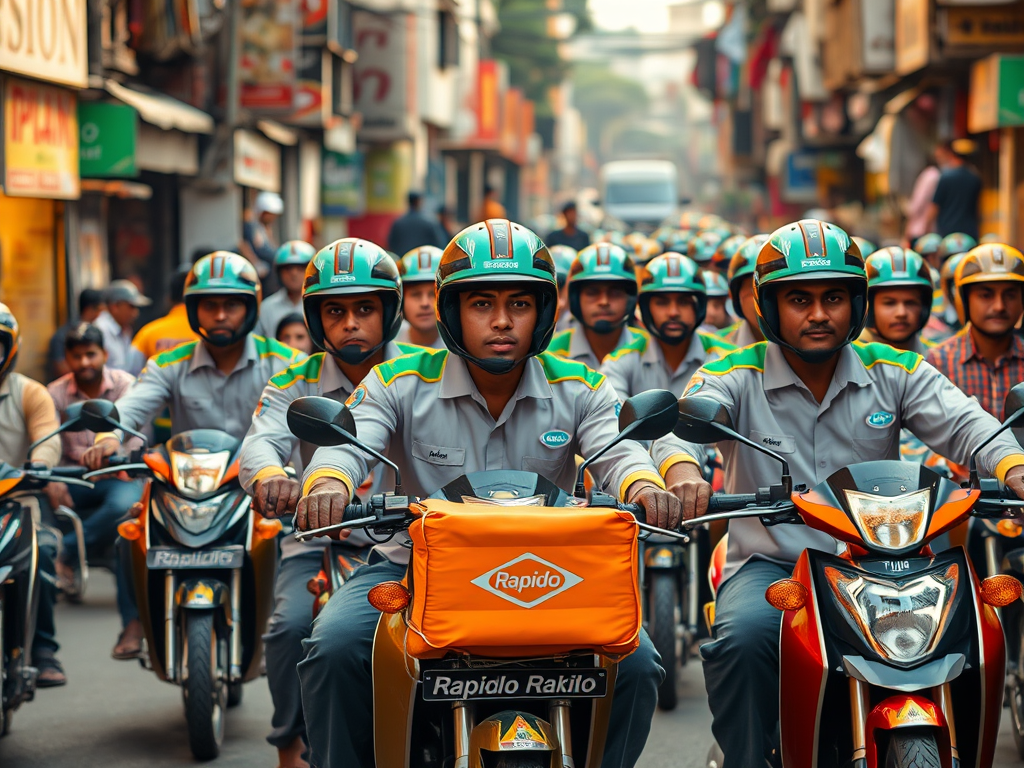

The Indian food delivery landscape has seen many players come and go — from established giants like Swiggy and Zomato to niche local platforms. But one name that’s rapidly gaining attention and reshaping the market is Rapido Food Delivery. Known initially for its bike taxi service, Rapido has swiftly entered the food tech space with an edge that’s making both consumers and restaurants sit up and take notice.
Let’s break down why Rapido Food Delivery is booming, how it’s a game changer, and what it could mean for the future of food delivery in India.
🚀 The Rise of Rapido in Food Tech
Rapido, launched in 2015 as a bike taxi platform, already had a strong logistical backbone. In 2022, it quietly piloted its food delivery service in select cities, and by 2023, the service began expanding aggressively. What sets it apart? Rapido isn’t just entering the space — it’s redefining how food is delivered.
Their approach combines hyper-local delivery, affordable pricing, and efficient last-mile logistics using their existing fleet of Rapido Captains. This model reduces delivery times, especially in congested urban areas where two-wheelers outperform four-wheelers hands down.
🏍️ What Makes Rapido a Game Changer?
1. Hyper-Local Focus
Unlike its bigger competitors that often centralize operations, Rapido’s strength lies in its hyper-local model. They are tapping into Tier 2 and Tier 3 cities that are frequently underserved by larger players.
Example: In cities like Bhopal, Vizag, and Guwahati, Rapido is becoming a preferred alternative due to faster delivery and more accessible pricing.
2. Lower Delivery Charges
Rapido often charges lower commissions to restaurants and more competitive delivery fees to customers. This dual-sided affordability appeals to small local eateries and price-sensitive consumers alike.
3. Existing Rider Network
With a large network of trained bike taxi riders (known as Captains), Rapido didn’t need to start from scratch. They were able to seamlessly integrate food delivery into their existing infrastructure, cutting down costs and speeding up deployment.
4. Tech-First Strategy
Rapido’s app integrates food and ride services in one platform — a super app strategy. With real-time tracking, dynamic pricing, and intelligent route optimization, they ensure a smoother, more predictable delivery experience.
🍲 Empowering Local Eateries
While food delivery giants often favor high-volume chains and cloud kitchens, Rapido is actively partnering with local food vendors and home chefs. This not only supports regional cuisines but also gives smaller players a shot at online visibility.
This move supports:
- Culinary diversity
- Community engagement
- Economic upliftment of micro-entrepreneurs
🌱 Sustainability and Efficiency
Another hidden gem of Rapido’s model is fuel efficiency and lower carbon footprint. By using two-wheelers:
- Deliveries are faster during rush hours
- Fuel consumption per order is lower
- Environmental impact is minimized
While Rapido hasn’t launched a full-fledged green initiative yet, this logistics model inherently aligns with eco-conscious consumer behavior.
📈 Market Impact and Consumer Shift
Consumer behavior in India is rapidly changing. People now expect:
- Quicker deliveries (under 30 minutes)
- Transparent pricing
- Support for local businesses
Rapido hits all these points while challenging the duopoly of Swiggy and Zomato. With aggressive expansion plans and investor interest, Rapido is poised to be the third big player in Indian food delivery.
🧩 Challenges Ahead
While the growth is impressive, it’s not without hurdles:
- Scaling operations without compromising quality
- Ensuring food safety and hygiene standards
- Competing with well-funded incumbents
Still, Rapido’s agility and focused approach could help it overcome these barriers and continue to thrive.
🔮 What’s Next?
Expect Rapido to:
- Expand into more Tier 2 & 3 cities
- Introduce subscription plans and loyalty rewards
- Collaborate with eco-friendly delivery partners
- Enhance its in-app UI/UX for seamless multi-service use
With India’s food delivery market expected to hit $20 billion by 2026, there’s plenty of room for innovation — and Rapido is certainly carving its niche.
🧠 Additional Insights: Why Rapido’s Food Delivery Strategy Is So Effective
1. First-Mover Advantage in Non-Metro Marke
While companies like Zomato and Swiggy have a stronghold in metro cities like Delhi, Mumbai, and Bengaluru, Rapido is aggressively expanding into smaller cities where the food delivery ecosystem is still developing. These areas often lack competition and infrastructure — something Rapido is quickly addressing.
This smart positioning allows Rapido to:
- Capture market share early
- Build local brand loyalty
- Offer jobs to local riders (Captains)
2. Multi-Service Ecosystem = Higher User Retention
Rapido is following a “super app” strategy, combining:
- Bike taxis
- Parcel delivery
- Food delivery
All in one app.
This increases app usage and retention because users can rely on Rapido for multiple daily needs, not just food. The more frequently people open the app, the more likely they are to explore and order food — giving it a major edge in app engagement.
3. Appeal to Budget-Conscious Consumers
One of the biggest pain points with food delivery in India is the rising delivery fees and platform charges. Rapido, by keeping its commissions and delivery charges lower:
- Attracts more budget-friendly customers
- Encourages more frequent orders
- Increases order volume for small restaurants
This positions Rapido as a value-for-money platform, which is a big win in price-sensitive markets.
4. Data-Driven Expansion
Rapido is using insights from its bike taxi data — including traffic patterns, high-demand areas, and delivery heat maps — to:
- Choose ideal delivery zones
- Identify restaurant clusters
- Forecast demand spikes (like weekends or festivals)
This data-driven decision-making is helping Rapido scale in a way that’s smart, not just fast.
5. Better Margins for Restaurants
One major complaint from local eateries using bigger platforms is the high commission rate, often up to 25–30%. Rapido reportedly charges lower commissions, allowing:
- Restaurants to keep more profit
- Small vendors and home chefs to join the platform
- A more diverse food offering to develop over time
This also helps micro and small businesses thrive, especially post-pandemic.
6. Localized Food Choices
Instead of pushing only big chains, Rapido promotes local food heroes — be it a dosa stall in Coimbatore or a biryani house in Hyderabad. This not only supports the local economy but also caters to authentic regional tastes.
7. Faster Deliveries = Higher Customer Satisfaction
Because of its two-wheeler-first approach and localized delivery strategy, Rapido often provides faster delivery times than traditional four-wheeler services — especially during peak traffic hours.
This leads to:
- Warmer food at delivery
- Fewer customer complaints
- Repeat orders due to satisfaction
🏁 Final Thought
Rapido’s foray into food delivery isn’t just another startup story — it’s a strategic disruption. By keeping it fast, affordable, and local, Rapido is turning challenges into opportunities, especially in underserved Indian cities. It’s not just competing with the big players — it’s reshaping the rules of the game.
✍️ Caption:
Rapido is redefining food delivery in India with faster rides, lower fees, and local love. Here’s why it’s a true disruptor in food tech. #FoodDeliveryRevolution
⚠️ Disclaimer:
This blog is intended for informational and educational purposes only. The views expressed are personal opinions or general insights, not professional or legal advice. Readers should do their own research or consult relevant professionals before taking action based on this content.
#RapidoFood #DeliveryGame #FoodTechIndia #FastDelivery #OnDemandFood #NewInDelivery #SwiggyVsRapido
#CarrerBook#Anslation




Leave a Reply