

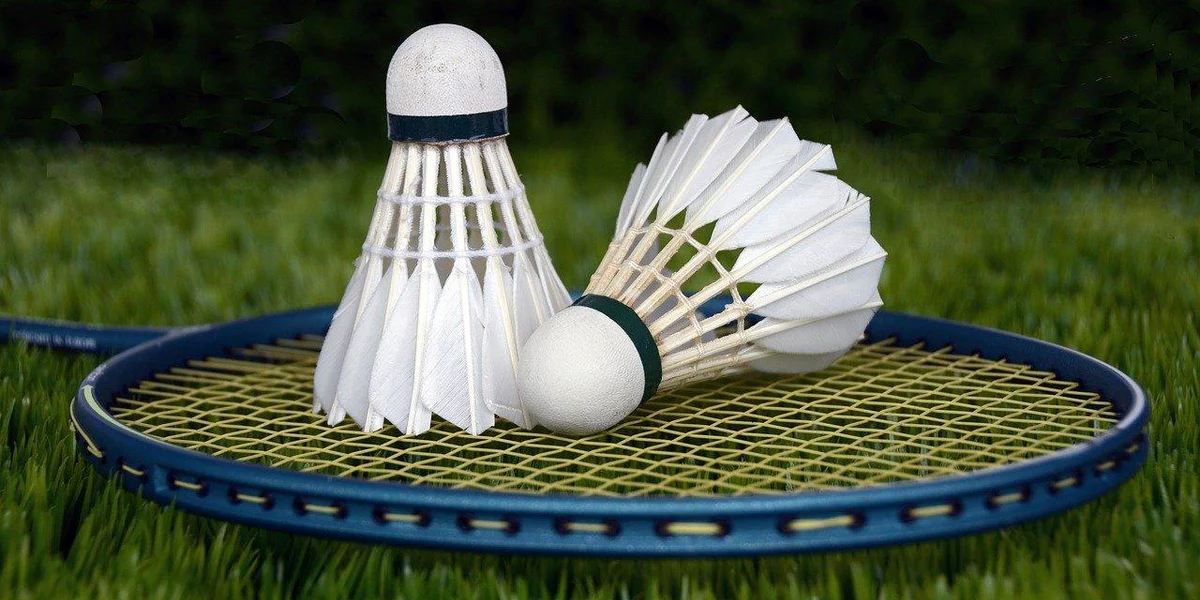

Badminton is one of the most beautifully deceptive sports on the planet. It’s got a remarkably gentle learning curve—you can bat a shuttlecock around in a backyard or at a casual park picnic without knowing a single rule. Yet, trying to actually master it is a whole different story. It’s a lightning-fast game of chess that forces you to balance split-second reflexes, intense strategy, and sudden bursts of cardio, all while trying to control a feathered projectile moving at breakneck speeds.
If you’re stepping onto a proper indoor court for the very first time, it’s completely normal to feel a bit lost looking at the grid of lines or figuring out how to swing without throwing your shoulder out. This guide is built to strip away the fluff. We are going to dive straight into the gear you actually need, the rules that matter, the four strokes that will save your life, and the footwork that keeps you from falling on your face.
Why Badminton is Worth Your Time

Unlike tennis or golf, which can require weeks of frustrating, expensive lessons just to sustain a basic back-and-forth, badminton lets you have a genuinely fun, competitive rally on day one.
But once you start playing regularly, you quickly realize it’s a massive workout in disguise. A good match is basically high-intensity interval training (HIIT). You get a serious cardiovascular workout from the constant stop-and-go movement, your hand-eye coordination gets sharper by the second, and all those deep lunges and side-shuffles build real, functional strength in your legs and core. The best part? You can easily dial the intensity up or down to match your energy level.
The Gear: What to Buy (and What to Skip) Badminton

You don’t need to spend a fortune to start playing, but picking the right tools will keep you from getting hurt and make learning a hell of a lot easier.
1. The Racket
Don’t worry about high-end brand names or what the pros are using. When you’re browsing the rack, look at the spec sheet for two specific things:
- Weight (80–90 grams): Usually labeled as 3U or 4U. A lightweight racket keeps your wrist and shoulder from getting fatigued and sore halfway through your session.
- Medium Flex Shaft: Avoid “stiff” rackets. A flexible shaft acts like a mini-trampoline. It bends easily when you swing and snaps back to give you extra power, even if your hitting form isn’t perfect yet.
2. The Shuttlecock: Nylon vs. Feather
- Plastic/Nylon: Buy these for now. They are incredibly durable, cheap, and can survive being hit completely wrong a hundred times without losing their shape. Look for medium-speed yellow ones.
- Feather: These are made from real goose or duck feathers. They fly beautifully and offer unmatched control, but they are fragile. A beginner can easily destroy a pricey feather shuttle in three hits. Save these for later.
3. Your Shoes (The Most Important Choice)
Do not wear running shoes. Running shoes are built strictly for moving forward and have thick, elevated heels that are incredibly unstable when you try to change directions quickly. Wearing them on a badminton court is a fast track to a rolled ankle.
Instead, get a pair of indoor court shoes with a flat, gum-rubber sole. They are designed for lateral support, giving you the grip you need to stop, lunge, and change direction without slipping or scuffing up the hardwood.
Understanding the Battlefield and the Rules Badminton

Let’s break down the boundaries and how the points work so you aren’t guessing whether a shot was “in” or “out.”
+-------------------------------------------------------------+| BACK BOUNDARY LINE ||=============================================================|| | | || | Left Service Box | || | | D || S |-------------------------------| O || I | Short Service Line | U || N |===============================| B || G | NET | L || L |===============================| E || E | Short Service Line | S || S |-------------------------------| || | | || | Right Service Box | || | | ||=============================================================|| BACK BOUNDARY LINE |+-------------------------------------------------------------+
The Lines Made Simple
The easiest way to read a court is to separate singles from doubles:
- Singles: The court is long and narrow. You use the inner side lines and the outer back line.
- Doubles: The court is short and wide. You use the outer side lines, but during the serve, the shuttle cannot go past the inner back line. Once the serve is returned, the entire back rectangle is fair game.
Keeping Score
Badminton uses a “Rally Scoring” system, meaning a point is scored on every single rally, regardless of who served.
- The Race to 21: You play a best-of-three-games match. The first person or duo to hit 21 points wins the game.
- The Win-by-Two Rule: If you hit a 20-20 tie, you have to win by 2 clear points (like 22-20). If it turns into a marathon and reaches 29-29, it’s sudden death: the next point wins the game instantly at 30.
The Art of the Serve
Serving isn’t like tennis—you can’t smash it overhead from the baseline.
- Underhand Only: You have to strike the shuttle below your waist, hitting it in an upward trajectory.
- Diagonal Paths: You must stand in your service box and hit it diagonally into your opponent’s box, clearing their short service line.
- Left vs. Right: If your current score is 0 or an even number, you serve from the right side. If your score is an odd number, you serve from the left side.
The Four Essential Strokes of Badminton

You don’t need a massive playbook to win rallies. You just need to master these four basic movements.
1. The Forehand Clear (Your Reset Button)
This is a high, deep overhead shot that sends the shuttle soaring to the very back line of your opponent’s court. Use this when you’re caught out of position and running out of breath. It forces your opponent deep into their corner, buying you precious seconds to run back to the center of the court.
- Pro Tip: Turn your body completely sideways, track the bird with your non-racket hand, and snap your forearm right at the peak of your reach.
2. The Backhand Clear (The Escape Hatch)
This is the bane of every beginner’s existence, used when the shuttle is fired deeply to your non-dominant side. To make it work, you have to switch your grip slightly so your thumb sits flat against the wider side of the racket handle. Turn your back to the net, step toward the shuttle with your dominant foot, and flick your thumb upward explosively.
3. The Drop Shot (The Trickster)
A soft, delicate overhead shot that just barely skims over the net and falls sharply downward. The goal here is pure deception. You want your body language and backswing to look exactly like a powerful, aggressive smash, but at the last millisecond, you gently tap the shuttle instead, catching your opponent flat-footed at the back of the court.
4. The Smash (The Finisher)
This is your heavy artillery—a powerful, downward overhead shot meant to end the rally. The trick to a great smash isn’t tensing up your muscles or straining your arm; it’s pure racket-head speed. Keep your grip totally relaxed until the exact millisecond of contact, then snap your wrist downward to drive the shuttle straight into the open floor.
Footwork: The Invisible Superpower

The secret to being good at badminton has almost nothing to do with your hands. It’s all about your feet. If you can’t get to the shuttlecock on time, the best swing in the world won’t save you.
- Home Base: Treat the exact center of your side of the court as your sanctuary. Every single time you hit a shot, immediately run or shuffle back to this spot. It keeps you exactly halfway from all four corners, making you incredibly tough to beat.
- The Split Step: Right before your opponent strikes the shuttle, do a tiny, subtle hop and land lightly on the balls of both feet. This pre-loads your leg muscles like springs, allowing you to instantly explode in whatever direction the bird goes.
- Shuffle, Don’t Jump: Avoid taking massive, awkward steps that throw you off balance. Use quick, light side-shuffles (chassé steps) where your feet slide close together but never cross over. It keeps your center of gravity low and steady.
Your First Month: A Realistic Roadmap
Real progress takes a bit of time. Here is a simple, four-week plan to help you build clean habits:
Plaintext
+-------------------------------------------------------------------+| YOUR FIRST 30 DAYS ON COURT |+-------------------------------------------------------------------+| 1 WEEK | Focus entirely on a relaxed grip, an accurate serve, and || | hitting consistent forehand clears with a friend. |+--------+----------------------------------------------------------+| 2 WEEK | Practice moving from home base to the front corners and || | recovering. Start practicing that tricky thumb grip. |+--------+----------------------------------------------------------+| 3 WEEK | Mix it up. Practice hitting two clears, then a sudden || | drop shot. Play a few casual half-court games. |+--------+----------------------------------------------------------+| 4 WEEK | Play full games. Forget about smashing hard; focus entirely || | on keeping the bird in play and running back to center. |+-------------------------------------------------------------------+
The Three Biggest Mistakes to Avoid

- The Death Grip: Do not squeeze your racket like a hammer. A tight grip stiffens your wrist and ruins both your power and control. Keep your hand loose and relaxed, only tightening it at the moment of impact.
- Standing Flat-Footed: If your heels are glued to the floor, you are stuck in wet cement. Stay light on the balls of your feet with your knees slightly bent so you can react instantly.
- Using Only Your Arm: Don’t just swing from the elbow. True power is a chain reaction that starts with your hips rotating, moves through your shoulder, transfers down your forearm, and finishes with a sharp snap of the wrist.
Keep your grip loose, protect your ankles with the right shoes, and focus on your footwork first—everything else will fall right into place.
Conclusion
Badminton is an exciting sport that combines fitness, skill, and fun, making it an excellent choice for players of all ages. As a beginner, learning the basics of the game, using the right equipment, practicing proper footwork, and improving your techniques step by step will help you build confidence on the court. Consistency is the key to progress, so focus on regular practice rather than trying to master every skill at once.
Whether your goal is to stay active, enjoy friendly matches with family and friends, or compete at a higher level, badminton offers countless physical and mental benefits. By staying patient, practicing smart, and enjoying the learning process, you’ll continue to improve your game while having fun. Pick up your racket, step onto the court, and start your badminton journey today.
FAQ’S
1.What is the best age to start badminton?
Badminton can be started at almost any age. Children, teenagers, and adults can all learn and enjoy the sport.
2.How often should a beginner practice?
Practicing 2–3 times per week is ideal for steady improvement without excessive fatigue.
3.What is the most important skill for beginners?
Footwork is the most important skill because it allows you to reach the shuttle early and play every shot more effectively.
4.Should beginners use feather or plastic shuttlecocks?
Plastic shuttlecocks are usually better for beginners because they last longer and cost less.
5.How long does it take to become reasonably good?
With regular practice, most beginners can play consistent recreational matches within 2–3 months.




Leave a Reply