

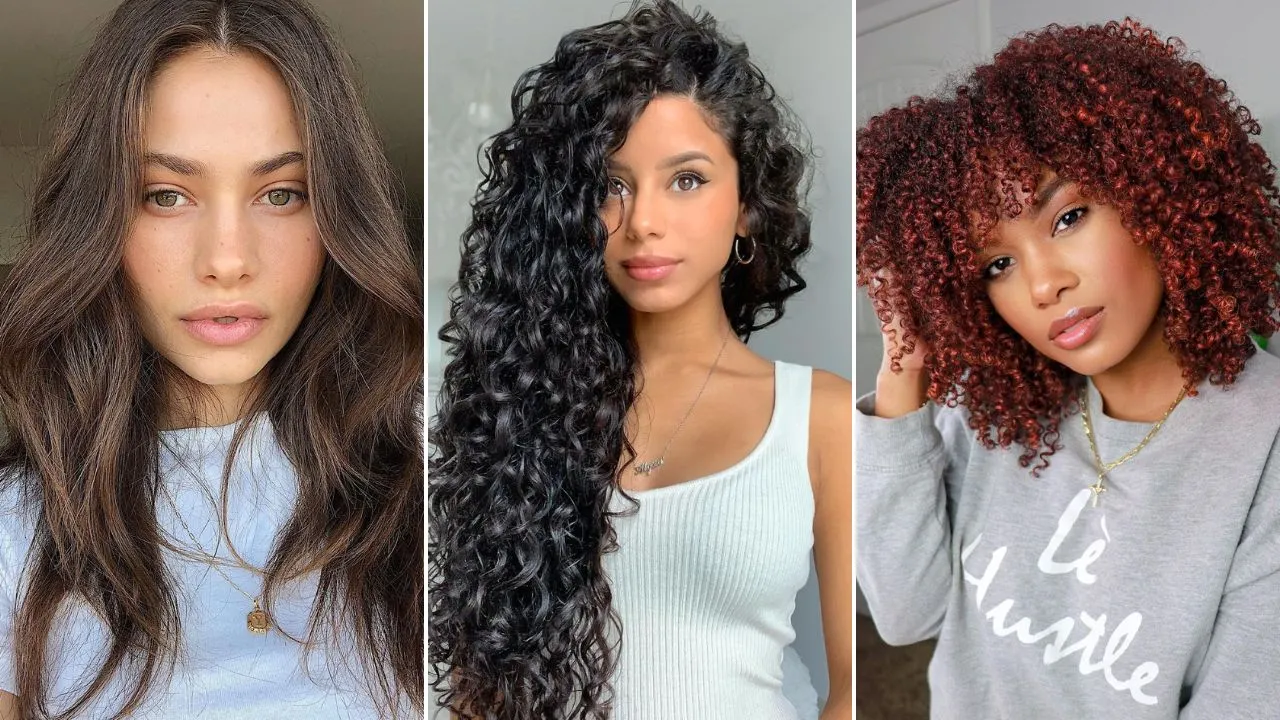

Hair can be straight, wavy, curly, coily, thick, fine, dry, oily, or a combination of several characteristics.Best Hair Types That is why a hair routine that works beautifully for one person may leave someone else with frizz, heaviness, or dryness.
Understanding your hair type is a simple way to make better choices about washing, conditioning, styling, and products.Best Hair You don’t have to follow a complicated routine. The first step is simply learning how your hair naturally behaves.
What Are Hair Types?

Hair type generally describes the natural shape or pattern of your hair strands. The most commonly used system divides hair into four broad categories:
- Type 1: Straight hair
- Type 2: Wavy hair
- Type 3: Curly hair
- Type 4: Coily or tightly curled hair
Within these groups, hair can range from fine and delicate to thick and dense. Your scalp can also be oily, dry, or somewhere in between.
Your hair may even have more than one pattern. For example, the hair around your face might be wavy while the back is curlier. That’s completely normal.
Best Hair Types at a Glance
| Hair Type | Natural Pattern | Common Characteristics | Main Care Focus |
|---|---|---|---|
| Type 1 – Straight | Little or no visible curl | Smooth, may become oily quickly | Lightweight moisture and scalp care |
| Type 2 – Wavy | Loose S-shaped waves | Can become frizzy or lose definition | Hydration and wave definition |
| Type 3 – Curly | Defined curls or ringlets | Often prone to dryness and frizz | Moisture and curl definition |
| Type 4 – Coily | Tight curls or coils | Delicate, dry, and prone to shrinkage | Deep moisture and gentle handling |
Type 1: Straight Hair

Straight hair usually falls naturally from the roots without forming a strong wave or curl. It can look smooth and shiny because natural scalp oils can travel more easily along the length of the hair.
That same feature can make straight hair appear greasy faster, especially when the scalp produces more oil.
How to Care for Straight Hair
Choose lightweight shampoos, conditioners, and styling products that don’t leave a heavy coating on the hair. Focus conditioner mainly on the mid-lengths and ends if your roots become oily quickly.
Regular brushing can help distribute natural oils, but aggressive brushing can cause unnecessary breakage.
Styling Ideas
Straight hair works well with simple styles such as:
- Sleek ponytails
- Straight layers
- Blunt cuts
- Soft waves
- Low buns
- Textured half-up styles
If you use a straightener or curling iron, use heat protection and avoid excessive heat.
Type 2: Wavy Hair

Wavy hair sits between straight and curly. It may have gentle bends, loose S-shaped waves, or stronger waves that become more visible toward the ends.
One of the biggest challenges with wavy hair is maintaining definition without making it look flat or weighed down.
How to Care for Wavy Hair
Use a moisturizing but lightweight conditioner. Applying too much heavy product can make waves lose their shape.
After washing, gently squeeze excess water from the hair rather than rubbing it vigorously with a towel. Best Hair A lightweight styling cream, mousse, or gel can help enhance natural waves.
Styling Ideas
Wavy hair can look great with:
- Layered cuts
- Beachy waves
- Half-up hairstyles
- Loose braids
- Textured ponytails
- Natural air-dried styles
The key is usually to work with the natural wave rather than constantly trying to straighten it.
Type 3: Curly Hair

Curly hair forms visible curls or ringlets.Best Hair The curl pattern can range from loose curls to tighter spirals.
Because the natural oils from the scalp don’t always travel easily through curved strands, curly hair can become dry, Best Hair especially toward the ends.
How to Care for Curly Hair
Moisture is an important part of curly hair care. Use a suitable conditioner and consider adding a hair mask when your curls feel dry or rough.
Try not to brush dry curls aggressively because this can disturb the curl pattern and create frizz. Detangling while the hair is damp and conditioned can be gentler.
Styling Ideas
Curly hair can be styled as:
- Defined curls
- Curly layers
- High ponytails
- Pineapple styles
- Half-up curls
- Loose buns
A curl-friendly styling product can help improve definition while reducing frizz.
Type 4: Coily Hair

Coily hair has very tight curls, coils, or zigzag patterns. It can have significant shrinkage, meaning the hair appears considerably shorter in its natural state than when stretched.
This hair type can be especially delicate, so gentle handling is important.
How to Care for Coily Hair
Regular conditioning and moisture can help keep coily hair manageable. Detangle carefully, Best Hair preferably in sections, and avoid unnecessary pulling.
Protective styles can reduce daily manipulation.Best Hair However, styles should not be installed too tightly because excessive tension can cause discomfort and hair breakage.
Styling Ideas
Popular options include:
- Twists
- Braids
- Bantu knots
- Wash-and-go styles
- Afros
- Protective hairstyles
- Puff hairstyles
The best routine depends on how your hair responds to moisture, products, styling, and manipulation.
Fine Hair vs. Thick Hair

Hair type isn’t only about curl pattern. Strand thickness and overall hair density also matter.
Fine hair has smaller individual strands and can become weighed down by rich products.
Thick hair has larger strands or may have greater overall density, which can make it feel fuller and sometimes more difficult to detangle or dry.
Here’s a simple comparison:
| Feature | Fine Hair | Thick Hair |
|---|---|---|
| Strand size | Smaller | Larger |
| Product needs | Usually lightweight | May tolerate richer products |
| Common challenge | Looks flat or oily | Can feel heavy or difficult to manage |
| Styling | Lightweight products work well | Stronger hold may be useful |
| Care focus | Volume and gentle handling | Moisture and detangling |
Remember that fine hair can still be very dense, and thick-looking hair doesn’t necessarily mean each individual strand is thick.
How to Identify Your Hair Type

You don’t need a professional analysis to get a general idea of your hair pattern.
Start by washing your hair and allowing it to dry naturally without straightening, curling, or applying heavy styling products.
Then look at the shape:
| What Your Hair Looks Like Naturally | Possible Hair Type |
|---|---|
| Falls mostly straight | Type 1 |
| Forms loose waves | Type 2 |
| Forms clear curls or ringlets | Type 3 |
| Forms tight coils or zigzags | Type 4 |
Also pay attention to how your scalp and ends behave. Your roots might become oily while your ends remain dry. That’s a common combination and may require different care across the hair.
How Best Hair Texture Affects Your Routine
Hair texture can influence everything from washing frequency to styling products.
For example, straight hair may need more frequent cleansing if the scalp becomes oily quickly. Curly and coily hair may benefit from a routine that focuses more heavily on moisture and gentle detangling.
This doesn’t mean everyone with the same hair type needs the same products. Your climate, scalp condition, lifestyle, coloring history, and use of heat tools all matter too.
A Simple Haircare Routine for Every Hair Type

A good routine doesn’t have to contain ten different products.
1. Cleanse the Scalp
Use a shampoo appropriate for your scalp and hair needs. Concentrate cleansing on the scalp rather than aggressively scrubbing the lengths.
2. Condition the Hair
Apply conditioner mainly through the lengths and ends. Adjust the amount according to your hair’s texture and dryness.
3. Detangle Gently
Use a suitable brush or wide-tooth comb and work through tangles carefully. Starting at the ends and moving upward can make detangling easier.
4. Protect Your Hair
Heat styling, chemical treatments, and excessive tension can contribute to damage. Use heat protection when using hot tools and give your hair breaks from intense styling.
5. Keep Your Routine Consistent
Hair usually responds better to a simple routine followed consistently than to constantly switching between products.
Common Haircare Mistakes to Avoid

Even with a good hair type, a few habits can make hair harder to manage.
- Using too much product
- Washing with extremely hot water
- Roughly rubbing wet hair
- Brushing curls aggressively when dry
- Using heat tools too frequently
- Pulling hairstyles too tightly
- Ignoring the scalp
- Choosing products only because they are trending
- Changing your entire routine every few days
Instead, watch how your hair responds and make one change at a time.
Choosing Products Based on Your Best Hair Type
Your hair type can help narrow down your choices, but it shouldn’t be the only factor.
| Hair Concern | Product Type to Consider |
|---|---|
| Oily roots | Lightweight shampoo |
| Dry ends | Moisturizing conditioner |
| Frizz | Smoothing serum or styling product |
| Wavy hair without definition | Lightweight mousse or gel |
| Dry curls | Rich conditioner or hair mask |
| Coily hair needing moisture | Deep conditioner and leave-in products |
| Heat styling | Heat-protectant product |
| Tangles | Detangling conditioner or leave-in product |
Always consider the specific condition of your hair and scalp rather than choosing a product solely because it is marketed for a particular hair type.
Does Your Best Hair Type Change?
Your natural curl pattern generally stays relatively consistent, but your hair’s appearance and behavior can change.
Age, hormones, coloring, chemical treatments, heat damage, humidity, weather, medications, and styling habits can all affect how hair looks and feels.
For example, hair that was once very curly may appear less defined after repeated heat or chemical treatments. This doesn’t necessarily mean your natural hair type has permanently changed.
Best Hair Type and Styling: Work With Your Natural Texture


One of the easiest ways to make hair styling simpler is to work with what your hair naturally wants to do.
Straight hair can be enhanced with shine and movement. Best Hair Waves can be shaped and defined.Best Hair Curls can be encouraged with moisture and gentle styling. Coily textures can be celebrated through natural and protective styles.
There is no single “perfect” hair type. Healthy-looking hair comes in many textures and patterns.
Frequently Asked Questions
1. What are the main hair types?
The four main hair types are straight, wavy, curly, and coily. Each type can have different textures, thicknesses, and care needs.
2. How can I identify my hair type?
Wash your hair and let it dry naturally without heat or heavy styling products. Observe whether your hair stays straight, forms waves, creates curls, or develops tight coils.
3. What is the best haircare routine for straight hair?
Straight hair often benefits from lightweight shampoo and conditioner, regular scalp cleansing, and products that don’t make the hair feel heavy.
4. How should I care for wavy hair?
Use lightweight moisturizing products and gentle styling techniques that help define your natural waves without weighing them down.
5. How can I keep curly hair healthy?
Curly hair often benefits from regular conditioning, gentle detangling, moisture-focused products, and limited heat styling.




Leave a Reply