

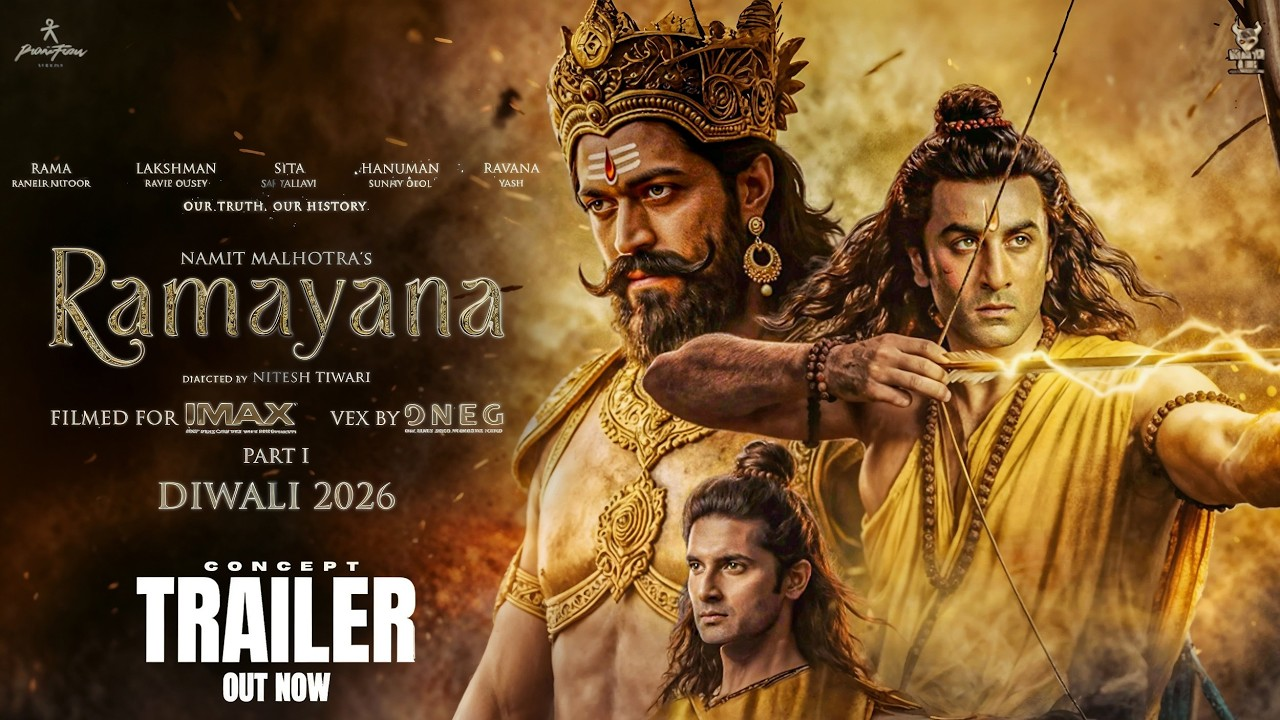

If you grew up in India or anywhere near Indian culture, the Ramayan was almost certainly part of your everyday life. You might remember listening to bedtime stories from your grandparents, watching colorful local Ramlila plays during festival season, or gathering with family during Diwali. The life and journey of Lord Rama, Sita, Lakshman, and Hanuman aren’t just ancient folklore—they are deeply woven into how people live, think, and relate to one another.
Even though it originated thousands of years ago, the Ramayan feels as fresh and relevant today as it ever did. It isn’t just an adventure story about a prince exiled to a forest or a grand war fought across the ocean. At its core, it’s a deeply human drama about difficult family choices, sacrifice, loyalty, leadership, and doing the right thing when everything around you is falling apart.
What Is the Ramayan?

At its heart, the Ramayan is an ancient Indian epic following the life, struggles, and ultimate victory of Lord Rama, the prince of Ayodhya and the seventh incarnation of Lord Vishnu. His life is portrayed as a guidebook for living with integrity, patience, and unwavering truth.
The story follows his royal childhood, his marriage to Sita, his sudden banishment to the wilderness for 14 long years, the kidnapping of Sita by the ten-headed king Ravana, and the massive search and rescue mission that followed with the help of Hanuman and the Vanara army.
While the original Sanskrit version was composed by the sage Valmiki, the Ramayan has been retold countless times across different eras, regions, and languages:
- Valmiki Ramayana: The original Sanskrit text, known for its incredible detail on duty, governance, and complex human emotions.
- Ramcharitmanas: Written in the 16th century by Goswami Tulsidas in the Awadhi dialect, bringing the story out of elite scholar circles and into everyday homes across North India.
- Kamba Ramayanam: A stunning 12th-century Tamil adaptation by the poet Kamban, celebrated for its unique regional flavor and poetic depth.
- Southeast Asian Adaptations: Versions like Thailand’s Ramakien or Indonesia’s Kakawin Ramayana show just how far this story traveled across the globe.
The Early Years in Ayodhya
The story opens in the kingdom of Ayodhya, ruled by King Dasharatha. Despite his wealth and peaceful reign, the king had no children to carry on his legacy. Desperate for an heir, he performed a grand sacred ritual called the Putrakameshti Yajna.
Soon after, four sons were born to his three queens:
- Rama (to Queen Kaushalya)
- Bharata (to Queen Kaikeyi)
- Lakshman & Shatrughna (to Queen Sumitra)
Rama grew up as a remarkable young man—he was a skilled warrior and archer, yet remained soft-spoken, humble, and deeply respectful toward everyone he met. Out of the four brothers, a particularly close bond formed between Rama and Lakshman, creating a timeless symbol of brotherly devotion.
Meeting Sita: The Swayamvara in Mithila

One of the most famous chapters of Rama’s youth is his trip to Mithila with his guru, Sage Vishwamitra. The king of Mithila, Janaka, had a daughter named Sita, who was admired everywhere for her wisdom, grace, and inner strength.
King Janaka held a public contest (Swayamvara) to find a worthy match for Sita. The challenge was nearly impossible: candidates had to lift, bend, and string the legendary bow of Lord Shiva (Pinaka), which was so heavy that dozens of strong men couldn’t even budge it.
After kings and warriors from all over failed, Rama stepped forward calmly. He lifted the bow effortlessly and pulled the string back with such strength that the bow snapped in two. Sita placed the garland around Rama’s neck, beginning a partnership built on mutual trust and shared values.
The Sudden Exile: Choosing Duty Over Comfort
Back in Ayodhya, the entire city was buzzing with excitement as preparations began for Rama’s official coronation as crown prince. But palace politics changed everything overnight.
Influenced by her maid Manthara, Queen Kaikeyi decided to claim two promises (boons) that King Dasharatha had made to her years earlier after she saved his life in battle. She demanded that:
- Her son Bharata be crowned king immediately.
- Rama be banished to the forest to live as an ascetic for 14 years.
Dasharatha was completely heartbroken, but he was trapped by his solemn promise. Seeing his father’s pain, Rama didn’t throw a fit, protest, or demand his rights. To preserve his father’s honor and word, he accepted the exile instantly without a drop of anger.
Sita refused to stay behind in a comfortable palace while her husband lived in the wild, insisting that her place was by his side. Lakshman made the same choice, swearing to guard them both. Their quiet departure into the forest remains one of the most emotional moments in the entire epic.
Life in the Wilderness and Sita’s Abduction
For over ten years, Rama, Sita, and Lakshman lived peacefully in the forest, moving through places like Panchavati. They built simple thatched huts, lived off wild fruits, visited hermitages, and protected local sages from danger.
That quiet life was shattered when Ravana, the powerful ruler of Lanka, heard about Sita’s beauty and resolved to make her his queen.
Ravana sent a demon named Maricha disguised as a golden deer to lure Rama and Lakshman deep into the woods. With the cottage unguarded, Ravana dressed up as a poor wandering monk (sanyasi) and tricked Sita into stepping past her protective boundary (the Lakshman Rekha). He grabbed her, forced her into his flying chariot, and flew across the ocean to Lanka.
Ravana kept Sita imprisoned in a garden called the Ashoka Vatika. Despite being isolated, threatened, and surrounded by guards, Sita never wavered. She completely rejected Ravana, keeping her faith strong that Rama would come for her.
When Rama returned to find the cottage empty, he was overcome with grief, but he quickly turned his heartache into a determined mission to find his wife and confront tyranny.
Enter Hanuman: Courage, Devotion, and Loyalty

Searching through the southern forests, Rama and Lakshman reached the kingdom of Kishkindha, where they met Hanuman, the minister to the monkey-king Sugriva. The moment Hanuman met Rama, he recognized his noble soul and pledged his loyalty forever.
Hanuman’s courage and selflessness drive the entire second half of the story:
- The Giant Leap: Hanuman expanded his body to giant proportions and leaped across the sea to locate Lanka.
- Finding Sita: He tracked Sita down in Ashoka Vatika, gave her Rama’s signet ring as proof, and promised that help was on the way.
- Lifting the Mountain: Later in the war, when Lakshman was mortally wounded, Hanuman flew all the way to the Himalayas. Unable to identify the healing herb (Sanjeevani), he lifted the entire mountain peak and carried it back to save Lakshman’s life before sunrise.
The Great Battle and the Victory of Good Over Evil
To march an army across the ocean to Lanka, the Vanara forces built a floating stone bridge called the Ram Setu (known geographically as Adam’s Bridge). Every member of the army helped, including a tiny squirrel that rolled in sand to drop grains into the water gaps—a story still told to remind us that no effort is too small when working for a good cause.
The war in Lanka was long, grueling, and fierce. Rama’s army faced formidable opponents like the giant Kumbhakarna and the powerful warrior Indrajit.
In the end, Rama faced Ravana himself. Ravana was a brilliant scholar and a devout worshipper, but his downfall was his massive ego (ahamkara). His stubborn pride and refusal to do the right thing ultimately destroyed him. Rama defeated Ravana, placed Ravana’s righteous brother Vibhishana on the throne, and was finally reunited with Sita.
The Homecoming: Why We Celebrate Diwali
With the 14-year banishment complete, Rama, Sita, and Lakshman made their way back home to Ayodhya. Bharata, who had refused to wear the crown and had governed purely as a caretaker by keeping Rama’s wooden sandals (padukas) on the throne, joyfully welcomed his brother back.
The return happened on a dark, moonless night (Amavasya). To light the path for their prince and banish the darkness, the people of Ayodhya lined every roof, street, and doorway with thousands of tiny clay oil lamps (diyas). That joyful homecoming is the core reason behind Diwali, the festival of lights.
Key Characters and Their Lessons for Real Life

| Character | Main Quality | What They Teach Us Today |
| Lord Rama | Dharma (Moral Duty) | Stand by your ethics and word, even when it costs you personally. |
| Sita | Resilience & Dignity | Quiet inner strength can help you survive the darkest isolation. |
| Lakshman | Unconditional Loyalty | Show up for the people you love without expecting anything back. |
| Hanuman | Devotion & Humility | True strength shines brightest when paired with modesty and service. |
| Bharata | Selflessness | Never grab power or recognition that belongs to someone else. |
| Ravana | Ego & Unchecked Desire | Intelligence and talent won’t save you if you let pride rule your choices. |
Why the Ramayan Still Matters Today

The Ramayan hasn’t survived for thousands of years just because it’s an interesting adventure. It survives because it mirrors the dilemmas we face in our daily lives:
- Making Ethical Choices: We constantly face moments where taking the easy way out is tempting. Rama’s life challenges us to think about long-term character over short-term gain.
- The Danger of Ego: Ravana is a timeless reminder that being smart or successful doesn’t make you immune to self-destruction if your ego takes over.
- Power of Community: The building of the Ram Setu teaches us that big things get done when everyone pitches in, no matter how small their role might seem.
- Living Culture: Through local Ramlila street theater, Dussehra celebrations (burning effigies of Ravana to mark the victory of good over evil), and family traditions, the Ramayan stays alive because every generation finds something new in it.
FAQs
Who is the original author of Ramayan?
The original story is written in Sanskrit by the ancient sage Valmiki. Centuries later, poets like Tulsidas wrote regional versions, such as the Ramcharitmanas, so that everyday people could read and connect with the story in their own spoken languages
Why exactly was Rama exiled for 14 years?
In ancient kingdom law , fourteen years was the legal timeframe after which a prince ‘s claim to the throne officially lapsed . Queen Kaikeyi had requested this particular time so that her own son, Bharata would have enough time to establish himself and rule, without any possibility of Rama returning early.
Did Bharata become king while Rama was in the forest?
No, he wouldn’t. His mother’s actions broke Bharata’s heart, and he did not want the crown. He put Rama’s wooden sandals (padukas) on the throne and looked after the kingdom as a mere temporary caretaker until his brother returned.
Dussehra and Diwali, what is the connection with Ramayan?
Dussehra is the day Lord Rama defeated Ravana in battle and good always triumph over evil. Diwali is 20 days away, a celebration of the happy day Rama, Sita and Lakshman walked back into Ayodhya after their 14-year exile.
Why did Sita not agree to be carried away by Hanuman to safety at once?
Hanuman found her in Lanka and offered to take her home on his back. Sita refused as she wanted Rama to fight Ravana in the open, restore his family honour and save her himself, so justice was done




Leave a Reply