

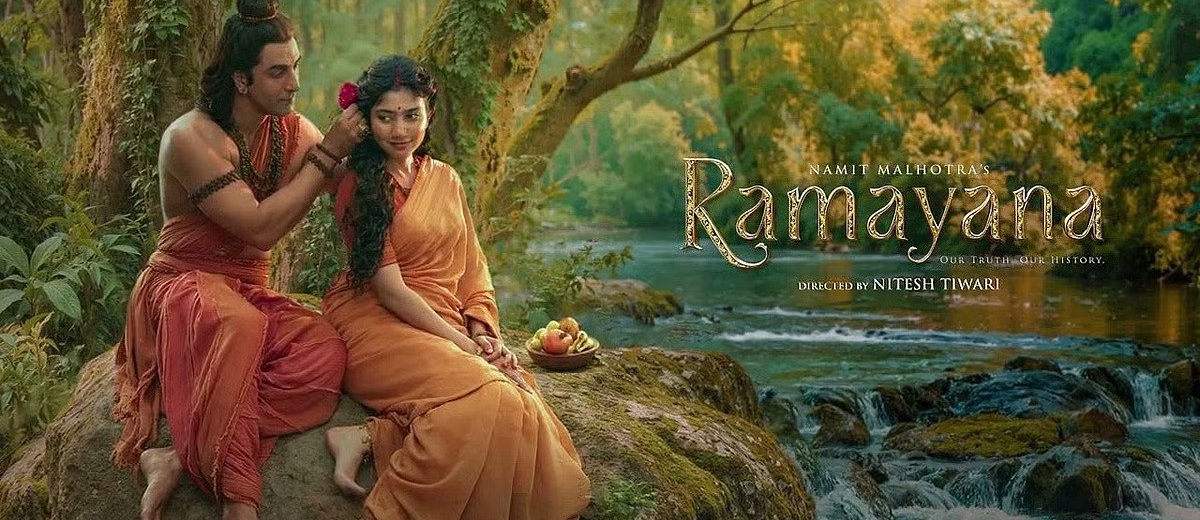

Indian cinema has always had a special connection with mythology, and few stories are as loved and respected as the Ramayana. It is more than an ancient epic; it is a story about family, loyalty, courage, sacrifice, love, and the eternal struggle between good and evil.
Whenever the Ramayana is brought to the big screen, expectations naturally become high. Audiences want to see familiar characters, powerful storytelling, beautiful visuals, and emotional moments that stay with them long after the film ends.
The upcoming Ramayana film adaptation has attracted attention because of its ambitious scale, well-known cast, and the challenge of presenting a timeless Indian epic to a modern cinema audience.
But what makes this film special? Is it the legendary story, the characters, the visual presentation, or the emotions behind the epic? Let’s explore its story, cast, cinematic appeal, and audience expectations in this detailed review.
Ramayan Movie: Basic Information

Before getting into the review, here are some important details about the film.
| Movie Details | Information |
| Movie Title | Ramayana: Rise of a Legend |
| Genre | Mythological, Action, Fantasy, Drama |
| Director | Nitesh Tiwari |
| Producer | Namit Malhotra |
| Lead Actor | Ranbir Kapoor |
| Lead Actress | Sai Pallavi |
| Main Antagonist | Yash |
| Music | Hans Zimmer and A. R. Rahman |
| Story Inspiration | The Ramayana |
| Release Date | 5 November 2026 |
| Format | Two-part cinematic adaptation |
The film is planned as a two-part cinematic adaptation, with the first instalment introducing the epic’s central characters and their journey.
1. Storyline: Bringing the Ramayana to the Big Screen

The Ramayana is a story that many Indian families have grown up hearing. It follows Lord Rama, his wife Sita, and his loyal brother Lakshmana through a journey filled with difficult choices, unexpected challenges, and powerful lessons.
The film introduces Rama as a prince of Ayodhya whose life takes an unexpected turn when he is sent into exile. Instead of accepting royal comfort, he chooses to honour his father’s promise and leaves the kingdom with Sita and Lakshmana.
Their journey through the forest becomes an important part of the story. It explores relationships, loyalty, courage, and the responsibilities that come with following one’s principles.
As the story develops, Ravana enters the picture, setting the stage for the conflict that will shape the larger epic.
What makes this storyline interesting is that it is not simply about a battle between two powerful characters. It also explores the decisions, emotions, and responsibilities that influence their lives.
2. Star Cast and Their Performances
Casting plays a major role in a mythological film because audiences already have strong expectations about these legendary characters.
The film brings together several popular actors, each taking on an important role.
| Actor | Character | Role in the Story |
| Ranbir Kapoor | Lord Rama | The central hero |
| Sai Pallavi | Goddess Sita | Rama’s wife |
| Yash | Ravana | King of Lanka |
| Ravi Dubey | Lakshmana | Rama’s loyal brother |
| Sunny Deol | Hanuman | Devoted follower of Rama |
| Arun Govil | King Dasharatha | Rama’s father |
| Lara Dutta | Kaikeyi | Queen of Ayodhya |
| Rakul Preet Singh | Shurpanakha | Ravana’s sister |
| Kajal Aggarwal | Mandodari | Ravana’s wife |
| Anupam Kher | Jatayu | The courageous bird |
Ranbir Kapoor as Lord Rama

Ranbir Kapoor takes on one of the most challenging roles of his career. Lord Rama is known for his patience, kindness, discipline, and commitment to dharma.
Rather than portraying him only as a powerful warrior, the film gives importance to his calm personality and sense of responsibility.
Published reviews have generally appreciated Ranbir’s restrained performance, although some critics felt that his portrayal takes time to settle into the character.
Sai Pallavi as Goddess Sita

Sai Pallavi plays Sita, a character associated with strength, patience, dignity, and courage.
Her role is important because Sita is not simply a supporting character in Rama’s journey. Her experiences and decisions are central to the emotional depth of the Ramayana.
Her natural acting style brings a gentle quality to the character, although some reviewers felt that the portrayal could have explored Sita’s emotional depth further.
Yash as Ravana

Yash plays Ravana, the powerful king of Lanka. This is one of the most talked-about casting choices in the film.
Ravana is a complicated character with intelligence, ambition, knowledge, and immense power. His personality makes him much more than a conventional villain.
Yash brings a commanding screen presence to the role. Several reviews have identified his performance as one of the film’s strongest attractions.
3. Direction and Cinematic Presentation
Directed by Nitesh Tiwari, the film takes on the difficult task of presenting a familiar mythological story in a large cinematic format.
The director is known for films such as Dangal and Chhichhore. With Ramayana, he moves into a completely different storytelling space, where cultural expectations and cinematic imagination need to work together.
One of the interesting aspects of the direction is the effort to balance traditional storytelling with modern filmmaking techniques.
The film includes:
- Large-scale kingdom and forest settings.
- Elaborate character costumes.
- Mythological creatures and fantasy elements.
- Dramatic action sequences.
- Emotional family moments.
- A larger cinematic world designed for the big screen.
The direction has received appreciation for its ambition and visual scale. However, some critics have also pointed out that certain dramatic moments feel excessive and that the emotional storytelling does not always match the grandeur.
4. Visual Effects and Cinematography
Visual effects are among the biggest talking points surrounding this adaptation. Creating the world of the Ramayana requires more than ordinary sets and locations. It involves bringing ancient kingdoms, forests, palaces, supernatural elements, and large battles to life.
The film’s visual effects are supported by DNEG, a studio known for its work on major international productions.

Some visual elements that make the film interesting include:
- Detailed representations of ancient architecture.
- Expansive landscapes and forest environments.
- Elaborate depictions of Lanka.
- Fantasy-inspired creatures and environments.
- Large-scale action and battle sequences.
The film has been designed for IMAX presentation, which adds to its big-screen appeal.
However, the visual experience is not equally convincing in every sequence. Some reviewers have praised the scale and production design, while others have noted that certain artificial-looking effects can interrupt the immersion.
This makes the visual presentation one of the film’s biggest strengths, but also an area where there is room for improvement.
5. Music and Background Score
Music is an important part of mythological storytelling. It helps create an atmosphere of devotion, emotion, excitement, and spirituality.
One of the most interesting aspects of this film is its musical collaboration between Hans Zimmer and A. R. Rahman.
Both composers bring different musical strengths to the project. Their collaboration creates considerable expectations, especially because the Ramayana offers so many opportunities for memorable musical moments.
The background score is designed to support:
- Emotional scenes involving Rama and Sita.
- Powerful moments featuring Ravana.
- Important mythological sequences.
- Action and battle scenes.
- Spiritual and devotional moments.
The musical ambition is impressive, although reviews have been mixed about how consistently the soundtrack connects with the story. The background score has received appreciation in several reviews, while some songs and musical moments have been considered less memorable than expected.
6. Action Sequences and Battle Scenes
A story like the Ramayana naturally includes powerful confrontations, heroic moments, and dramatic battles.
The film uses modern action filmmaking to present these moments on a much larger scale.
Some of the most interesting action elements include:
- Rama’s archery and warrior skills.
- Encounters with supernatural enemies.
- Forest battles and dangerous challenges.
- Ravana’s powerful presence.
- Mythological action and fantasy sequences.
These scenes add excitement to the narrative and help create the adventurous atmosphere expected from a large-scale epic.
The action sequences are particularly suited to theatrical viewing, where sound, screen size, and visual effects can make a difference.
7. Emotional Connection and Important Life Lessons

While visual effects and action may attract audiences, the emotional foundation of the Ramayana is what makes the story timeless.
The film explores several themes that remain meaningful even today.
| Theme | What It Represents |
| Dharma | Choosing the right path |
| Family | Love, responsibility, and relationships |
| Loyalty | Standing beside loved ones |
| Courage | Facing difficult situations |
| Sacrifice | Putting responsibilities before personal comfort |
| Devotion | Faith, dedication, and commitment |
| Good vs Evil | The struggle between righteousness and wrongdoing |
These values give the story a deeper meaning beyond entertainment.
For many viewers, watching the Ramayana is also an emotional experience because its characters and lessons are already familiar through family traditions, religious stories, books, and television.
That emotional connection is one of the biggest reasons this adaptation carries such high expectations.
8. What Makes Ramayana Different From Previous Adaptations?
The Ramayana has been presented through television serials, animated films, stage performances, and several cinematic adaptations.
So, making another version that feels fresh is not an easy task.
This adaptation attempts to stand apart through its international production approach, large-scale visual effects, modern technology, and two-part storytelling structure.
Here is a simple comparison:
| Aspect | Earlier Adaptations | New Ramayana Film |
| Presentation | Television, animation and cinema | Large-scale theatrical cinema |
| Visual Style | Traditional and varied | Modern visual effects |
| Storytelling | Different formats and lengths | Two-part cinematic journey |
| Music | Different composers and styles | Hans Zimmer and A. R. Rahman |
| Production | Varied production scales | International production collaboration |
The aim is not simply to repeat an old story but to introduce its characters and values to a new generation through a different cinematic experience.
9. What Are the Strongest Points of the Film?

After considering the film’s major elements and published reviews, several strengths stand out.
Major positives:
- A legendary story with strong cultural importance.
- An ambitious production scale.
- A popular and experienced ensemble cast.
- Yash’s commanding portrayal of Ravana.
- Ranbir Kapoor’s restrained performance as Rama.
- Impressive landscapes and visual presentation.
- A major musical collaboration.
- Large-scale action sequences.
These elements help make the film an interesting theatrical experience.
10. Areas Where the Film Could Be Better
No film is perfect, especially when it takes on a story as familiar and important as the Ramayana.
Some areas have received mixed reactions from critics.
Things that could have been stronger:
- Certain visual effects appear artificial.
- Some dramatic moments feel unnecessarily grand.
- The emotional connection between some characters could be deeper.
- The music does not feel equally strong throughout.
- Some storytelling moments could have benefited from more emotional detail.
These points are worth considering because the Ramayana is not just about spectacle. Its emotional relationships and moral questions are equally important.
11. Is Ramayana Worth Watching in Theatres?

If you enjoy mythological stories, large-scale fantasy films, and visually ambitious Indian cinema, Ramayana is worth considering for a theatrical experience.
The film offers something for different types of audiences:
- Mythology lovers: A new cinematic presentation of a familiar epic.
- Families: An opportunity to revisit a legendary Indian story together.
- Action lovers: Large-scale battles and fantasy sequences.
- Cinema enthusiasts: Ambitious production design and visual effects.
- Music lovers: An interesting collaboration between two internationally recognised composers.
However, viewers looking for a deeply emotional and detailed exploration of every character may find some parts less satisfying.
The first instalment is also part of a larger two-film journey, so audiences should keep that structure in mind.
Ramayan Movie Review:
Ramayana: Rise of a Legend takes on a huge responsibility by bringing one of India’s most recognised epics to modern cinema.
The film’s biggest attraction is its ambition. From its popular cast and large-scale environments to its visual effects and musical collaboration, it clearly aims to create an experience that feels bigger than an ordinary mythological film.
Ranbir Kapoor brings a restrained approach to Rama, Sai Pallavi adds grace to Sita, and Yash makes a strong impression as Ravana. The supporting cast also adds depth to the film’s mythological world.
At the same time, the film does not get everything right. Some visual effects feel artificial, and certain emotional moments could have been developed further.
Overall, the film is an ambitious mythological spectacle with impressive moments, strong performances, and a few storytelling weaknesses. Its biggest achievement is introducing a familiar epic through a modern cinematic approach.
For audiences who enjoy Indian mythology and grand theatrical storytelling, it offers plenty to explore.
Final Rating
Editorial assessment
3.5/5
An independent editorial assessment based on the film’s reported strengths and weaknesses, not an official critic or audience score.
| Review Factor | Assessment |
| Story | Strong foundation |
| Acting | Impressive |
| Direction | Ambitious |
| Visual Effects | Impressive but uneven |
| Music | Mixed |
| Cinematic Experience | Grand |
| Emotional Impact | Uneven |
The Ramayana is a story that has remained meaningful across generations, and presenting it through modern cinema is a significant responsibility. This film makes an ambitious attempt to combine mythology, technology, music, and powerful performances into one theatrical experience.
Although some aspects could have been stronger, its scale and familiar characters make it an interesting watch for mythology and Indian cinema enthusiasts.
Frequently Asked Questions
1. Who plays Lord Rama in the Ramayana movie?
Ranbir Kapoor plays Lord Rama in Nitesh Tiwari’s Ramayana: Rise of a Legend.
2. Who plays Ravana in the Ramayana film?
Yash portrays Ravana, the powerful king of Lanka, in this cinematic adaptation.
3. Who plays Sita in the Ramayana movie?
Sai Pallavi plays Goddess Sita, bringing her character to life on the big screen.
4. Who directed the Ramayana movie?
Nitesh Tiwari directed the film, while Namit Malhotra served as its producer.
5. Is Ramayana: Rise of a Legend a two-part movie?
Yes, it is planned as a two-part cinematic adaptation, with the second instalment expected in 2027.




Leave a Reply