

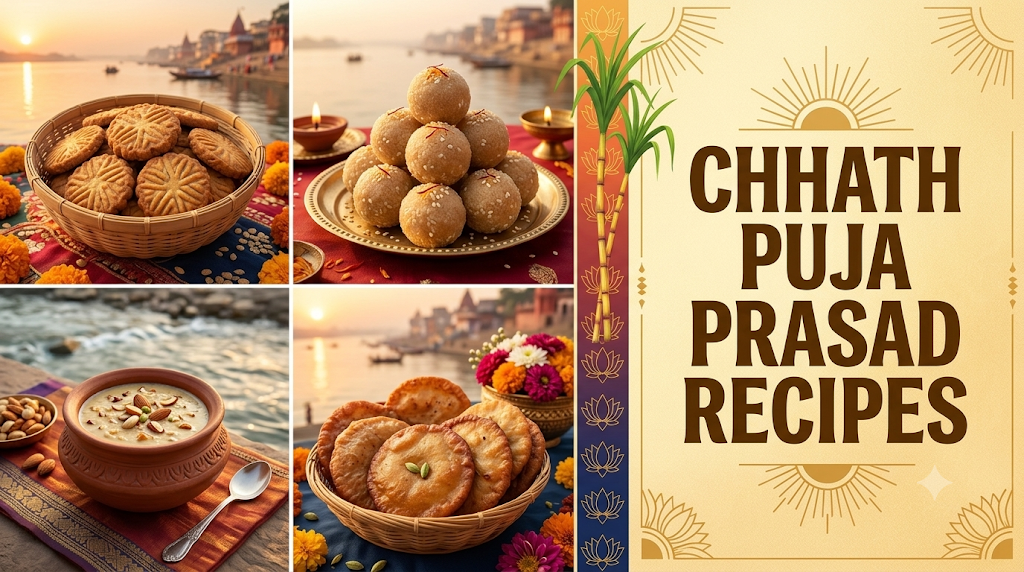

Chhath Puja is one of the most cherished festivals in India, especially in Bihar, Jharkhand and Uttar Pradesh. It is dedicated to Surya Dev, the Sun God, and Chhathi Maiya. Along with fasting and prayers, food plays a big role in the celebration. Families make special prasad at home, arrange fresh fruits and prepare traditional sweets using simple ingredients.
What makes Chhath prasad special is the care that goes into making it. From cleaning the kitchen to picking fresh ingredients, every small detail matters. Recipes are often passed down through generations, and many families still follow the same methods their parents and grandparents used.
If you are planning to celebrate Chhath Puja 2026, learning a few traditional recipes can make your preparations easier. Thekua, jaggery kheer, seasonal fruits and rice-based sweets are among the most popular offerings. Let’s look at how to make these Chhath Puja special recipes at home.
Importance of Traditional Food During Chhath Puja

Food is a big part of Chhath culture. Devotees prepare prasad as an offering to the Sun God and Chhathi Maiya. It is traditionally made with simple ingredients in a clean environment.
Unlike everyday cooking, Chhath food preparation follows certain family customs. Many households use fresh ingredients, avoid tasting the food before it is offered and prepare the prasad with great care.
Some popular Chhath prasad items include:
- Thekua
- Jaggery kheer (Rasiyaw)
- Rice laddoo
- Seasonal fruits
- Coconut
- Sugarcane
- Traditional chapati
Every family may have its own recipe and style, but the purpose stays the same: offering food with devotion and gratitude.
1. Traditional Thekua Recipe for Chhath Puja

Thekua is one of the most popular sweets made during Chhath Puja. It is especially famous in Bihar and eastern Uttar Pradesh. Made with wheat flour, jaggery and ghee, it has a crisp outside and a slightly firm texture inside.
Ingredients
- 2 cups whole wheat flour
- ¾ cup grated jaggery
- 3 tablespoons ghee
- ½ teaspoon cardamom powder
- 2 tablespoons grated coconut (optional)
- Water as required
- Oil or ghee for frying
Preparation Method
First, dissolve the jaggery in a little warm water and strain it to remove impurities. Take the wheat flour in a large bowl and add the ghee, cardamom powder and grated coconut.
Mix everything until the flour turns slightly crumbly. Slowly add the jaggery water and make a firm dough. Try not to add too much water, because a soft dough can make the thekua lose its shape.
Take small portions of dough and shape them using a traditional wooden thekua mould or just your hands. Heat oil in a pan and fry the pieces on low to medium heat until they turn golden brown.
Let the thekua cool before storing it in an airtight container.
Practical tip: Fry the thekua slowly. High heat can darken the outside while leaving the inside undercooked.
2. Jaggery Kheer (Rasiyaw) Recipe

Rasiyaw is a traditional sweet rice pudding, commonly made during Chhath Puja, especially on Kharna. It is usually made with rice, milk and jaggery. Its natural sweetness and simple ingredients make it a festive favourite.
Ingredients
- ½ cup rice
- 1 litre milk
- ¾ cup grated jaggery
- ½ teaspoon cardamom powder
- A few chopped almonds (optional)
Preparation Method
Wash the rice well and soak it for about 15 minutes. Heat the milk in a heavy-bottomed pan and bring it to a gentle boil.
Add the soaked rice and cook on low heat. Stir now and then so the rice doesn’t stick to the bottom of the pan.
Once the rice turns soft and the milk thickens, switch off the heat. Let the mixture cool slightly before adding the grated jaggery, then stir until it dissolves completely.
Add the cardamom powder and mix gently.
Practical tip: Don’t add jaggery to boiling milk, as it may curdle. Always add it after lowering the heat and letting the mixture cool a little.
3. Traditional Rice Laddoo Recipe

Rice laddoo is another traditional sweet that some families make on festive occasions. It is made with rice flour or roasted rice powder and jaggery. The recipe is simple and needs very few ingredients.
Ingredients
- 1 cup rice flour
- ½ cup grated jaggery
- 2 tablespoons ghee
- ¼ teaspoon cardamom powder
- 2 tablespoons chopped nuts (optional)
Preparation Method
Heat a pan and lightly roast the rice flour on low heat until it smells pleasant. Keep stirring so it doesn’t burn.
In another pan, melt the jaggery with a little water and cook it into a thick syrup. Strain it if needed to remove impurities.
Add the jaggery syrup to the roasted rice flour. Mix in the ghee and cardamom powder while the mixture is still warm.
Let it cool slightly, then grease your hands with ghee and shape the mixture into small laddoos.
Practical tip: If the mixture turns too dry, add a little warm ghee to help bind the laddoos.
4. Chhath Puja Special Coconut Prasad

Coconut is one of the most common offerings during Chhath Puja. It is often placed in bamboo baskets along with fruits and other traditional items.
Coconut is usually offered fresh rather than cooked, but some families also make simple coconut sweets for festive gatherings.
Ingredients
- 1 cup freshly grated coconut
- ½ cup jaggery
- ¼ teaspoon cardamom powder
- 1 teaspoon ghee
Preparation Method
Heat the ghee in a pan and add the grated coconut. Cook gently for two to three minutes.
Add the jaggery and stir until it melts and blends with the coconut. Add the cardamom powder and mix well.
Let the mixture cool slightly. Shape it into small balls, or serve it as a simple coconut sweet, depending on your family tradition.
Practical tip: Fresh coconut gives better taste and texture. Don’t overcook the mixture, as it can turn too dry.
5. Traditional Chhath Puja Fruits and Offerings

Fresh fruits are an essential part of Chhath prasad. Devotees arrange different fruits in bamboo baskets, traditionally called soop or daura, and carry them to the riverbank for the Arghya rituals.
Common fruits used during the celebration include:
- Bananas
- Apples
- Oranges
- Sweet lime
- Coconut
- Seasonal fruits
- Sugarcane
Choose fresh, clean fruits for the offerings. Wash them well and arrange them neatly in the baskets.
Many families also add seasonal fruits that are traditionally available in their region. The selection can vary depending on local customs and family preferences.
6. Simple Traditional Chapati for Kharna Prasad

Chapati is commonly made in many households for Kharna. It is usually served with jaggery kheer as part of the evening prasad.
Ingredients
- 2 cups whole wheat flour
- Water as required
- A little ghee (optional)
Preparation Method
Take the wheat flour in a bowl and gradually add water. Knead it into a soft, smooth dough.
Cover the dough and let it rest for about 15 minutes. Divide it into small balls and roll each one into a round chapati.
Heat a tawa and cook the chapati on both sides until light brown spots appear. Serve fresh, according to your family’s Kharna tradition.
Practical tip: Keep the dough covered while you make the chapatis so it doesn’t dry out.
Important Tips for Preparing Chhath Puja Prasad at Home
Making Chhath special food needs attention to cleanliness and tradition. A little planning makes the whole process easier.
Keep the Kitchen Clean
Clean the kitchen, cooking utensils and preparation area before you start. Many families follow specific cleanliness rules while making prasad.
Choose Fresh Ingredients
Buy fresh jaggery, wheat flour, rice, fruits and coconut, and check the quality of the ingredients before using them.
Prepare Food in Advance
Some sweets, especially thekua, can be made before the main rituals. This takes some pressure off the family during the busy festival days.
Follow Family Traditions
Different regions and households have their own Chhath food customs. Follow the recipes and methods your family has traditionally observed.
Store Prasad Properly
Let fried sweets cool completely before storing them. Use clean, dry, airtight containers to keep them fresh.
Chhath Puja 2026 Prasad Preparation Checklist
| Food Item | Main Ingredients | Occasion or Use |
|---|---|---|
| Thekua | Wheat flour, jaggery, ghee | Traditional offering |
| Rasiyaw | Rice, milk, jaggery | Kharna prasad |
| Rice laddoo | Rice flour, jaggery | Traditional sweet |
| Coconut sweet | Coconut, jaggery | Festive offering |
| Fresh fruits | Banana, apple, coconut | Arghya offering |
| Chapati | Wheat flour, water | Kharna prasad |
How to Make Chhath Puja Food Preparation Eco-Friendly
1. Natural Ingredients
Use fresh fruits, vegetables and natural ingredients for prasad.
2. Avoid Plastic
Use bamboo baskets and reusable plates instead of plastic items.
3. Reduce Food Waste
Prepare only the required amount of food and avoid wastage.
4. Keep Rivers Clean
Never throw plastic or food waste into rivers and ponds.
Tip: Celebrate Chhath Puja with simple habits that help protect nature.
FAQ’s
1. What is the main prasad of Chhath Puja?
Thekua is one of the most popular Chhath Puja prasad items.
2. How is traditional thekua made?
It is made with wheat flour, jaggery and ghee.
3. What is Rasiyaw?
Rasiyaw is a traditional rice pudding made with milk and jaggery.
4. Which fruits are offered during Chhath Puja?
Bananas, apples, coconuts and seasonal fruits are commonly offered.
5. Can thekua be prepared in advance?
Yes, thekua can be prepared early and stored in an airtight container.




Leave a Reply