

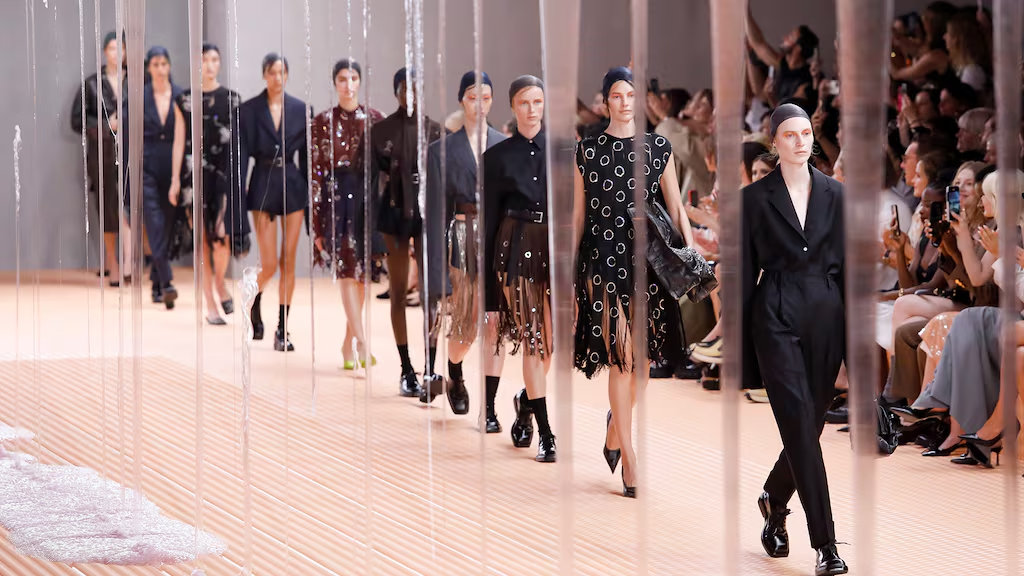

We have all witnessed this specific moment of wardrobe deflation Affordable Fashion Finds That Look Luxurious. You spend weeks saving up for a highly praised, designer label piece—perhaps a heavy knit sweater or a pair of structured trousers that everyone online claims will completely transform your style. You finally order it, unpack the premium box, pull it on, and look in the mirror, only to find that you look… completely ordinary. Fashion The fabric feels a bit stiff, the shoulders sit weirdly against your collarbone, and the overall effect is flat. Conversely, we’ve all seen that one person who walks into a room radiating an effortless, magnetic elegance. They look like they own a private art gallery or just stepped off a train in Milan. When you finally ask where they got their crisp white shirt or slouchy trench coat, they laugh and name a basic, budget-friendly high-street shop or a local thrift store.
This is the ultimate, liberating truth of the modern fashion landscape: The global luxury market has spent decades selling a massive lie, confusing the price of a garment with its actual aesthetic value. In our hyper-connected world, looking refined, intentional, and high-end has absolutely nothing to do with how much money is sitting in your bank account. It is entirely about understanding the structural physics of clothing—how a fabric moves under light, how a shoulder seam frames your torso, and how small, disciplined styling habits can completely trick the eye.
Cheap luxury is a skill. It is an art form practiced by the smartest shoppers who refuse to let corporate branding dictate their personal worth. When you master the hidden codes of design construction, you stop consuming clothes passively and start curating a wardrobe that feels deeply authentic, incredibly polished, and wonderfully sustainable.
The Tailoring Trick: The Underused Superpower of a Perfect Fit

If you take only one rule away from this guide, let it be this: A fifty-dollar pair of trousers that has been perfectly tailored to your exact height and waist will always look infinitely more expensive than a thousand-dollar pair of designer pants straight off the rack. Mass-market fashion brands manufacture clothing for a mathematical average—a hypothetical body double that does not actually exist. They leave extra fabric in the waist, drop the crotch, and create generic hems to avoid alienating anyone. When you wear these garments unaltered, they bunch up at the ankles, gap at the lower back, and visually drag your entire silhouette down.
Finding a local, independent dry cleaner or tailor who can adjust your hems and sleeves is the ultimate style cheat code.
- The Hem Rule: If your trousers drag on the floor or pool in messy folds over your shoes, they instantly look cheap. Ask your tailor to hem them to a “no-break” or a slight cropped break right at the ankle bone to create a clean, vertical line.
- The Sleeve Rule: Blazer and coat sleeves should stop precisely a quarter-inch above your wrist bone, allowing your watch or a sliver of your shirt cuff to peek through.
- The Investment Ratio: If you buy a beautiful linen blazer on sale for forty dollars and spend another twenty dollars having a tailor nip in the waist, you have just created a sixty-dollar bespoke garment that mimics the clean, structured look of high-end tailoring.
Fabric Literacy: Decoding Which Materials Tell a High-End Story

The human brain processes luxury through touch and sight long before it ever notices a brand tag. When you are shopping on a tight budget, you have to become a selective fabric critic, learning which affordable materials naturally mimic luxury and which ones instantly ruin an outfit.
The greatest enemy of affordable fashion is synthetic shine. Cheap polyesters, low-grade nylons, and flimsy satin blends reflect light in a harsh, plastic way that screams low quality. They wrinkle easily, retain odor, and cling statically to the body. Instead, look for materials that absorb light softly or possess a natural, irregular texture.
1.Prioritize Weight and Substance:Step 1.
When browsing budget racks, pick up the garment and feel its physical weight. High-end clothing feels substantial. Look for tightly woven cotton twills, heavy-gauge ribbed knits, and structured linen-viscose blends that have enough body to hold their own shape without collapsing.
2.Embrace the Matte Textures:Step 2.
Choose materials with flat, matte finishes. A matte cotton-poplin button-down or a soft brushed-cotton tee looks inherently more elevated than synthetic silk alternatives. If you want shine, choose high-quality modal or Tencel blends, which drape with a liquid fluidity reminiscent of expensive washed silk.
3.Inspect the Interior Architecture:
Turn the garment completely inside out before heading to the register. Look at the seams. Are there loose threads everywhere? Are the seams single-stitched and pulling apart, or are they cleanly bound? High-end clothing features neat, straight stitching. Checking these internal details ensures your budget buy will survive the wash without losing its shape.
The Monochromatic Anchor: Designing Around Low-Arousal Palettes

There is a very clear reason why the world’s most elite fashion designers continuously return to palette choices that feel quiet, restrained, and calm. Neutral colors—deep charcoal, midnight navy, warm oat, rich cream, espresso brown, and stark, clean black—are visually low-arousal. They don’t scream for your attention. This lack of visual noise tricks the brain into assuming a garment is far more valuable than it actually is.
When you build an outfit around loud prints, neon dyes, or overly complex patterns at a lower price point, the printing flaws and misalignment at the seams become glaringly obvious. But when you style an entire look using varying shades of the same neutral family—such as an oat-colored knit paired with cream trousers and a beige trench—you create an intentional, cohesive column of color that feels incredibly premium.
Monochromatic dressing also masks the cheap design work giveaways of budget fashion, such as plastic buttons or simple zippers, by melting them into a sleek, unified silhouette.
Structural Integrity: The Visual Power of Architecture over Slouch

Luxury style is fundamentally an exercise in structural contrast. A great outfit always balances soft, fluid elements with sharp, architectural lines. If your entire wardrobe consists of slouchy leggings, oversized hoodies, and unstructured cardigans, your look can easily cross the line from relaxed to unpolished.
To elevate your daily look, invest your budget into what stylists call “The Framework Pieces”—garments that hold their own shape even when they are hung up on a hanger.
- The Blazer: A single, well-tailored blazer with a defined shoulder line can do an immense amount of work for your style. Throw it over a basic ten-dollar white t-shirt and vintage jeans, and you instantly look put together.
- The Outerwear: A structured, double-breasted trench coat or a sharp wool-blend overcoat acts like an elegant shell, hiding whatever casual layers you happen to be wearing underneath.
- The Hard Accessories: Apply this rule to your accessories as well. A slouchy, unlined canvas tote bag can look messy. A structured, boxy crossbody bag with clean lines and minimal, brushed-gold hardware adds a sharp punctuation mark to your outfit, making everything else you are wearing look intentional.
Accessory Minimalism: The “One High, One Low” Discipline

Accessories are the ultimate playground for affordable fashion execution, but they are also where most budget-conscious shoppers make their biggest mistakes. The temptation is to over-accessorize—stacking on multiple cheap rings, wearing loud statement necklaces, or carrying bags covered in fake metallic logos. This creates visual clutter that ruins the clean lines of your clothing.
Instead, adopt a strict discipline of accessory minimalism. If your outfit is simple, you only need one or two polished details to elevate it.
- The Belt Trick: Swap out the flimsy, cheap plastic belt that comes attached to your high-street dresses or trousers. Replace it with a solid, smooth leather belt featuring a small, classic brass buckle. This single swap alters the focal point of your waistline entirely.
- The Jewelry Edit: Ditch the heavy, chunky costume jewelry that tarnishes after three wears. Look for delicate, sterling silver or gold-plated vermeil hoops and thin chain necklaces. These understated pieces catch the light beautifully and mimic the look of fine heirloom jewelry without breaking your budget.
- The Shoe Polish: Keep your affordable footwear immaculate. A cheap pair of pointed leather flats or clean, white leather sneakers will look remarkably expensive as long as they are free of scuffs, dirt, and worn-down heels. Regular maintenance is worth far more than a designer logo.
The Confidence Premium: The Irreplaceable Final Layer

You can execute every single design strategy in this guide down to the absolute millimeter—you can find the perfect linen blend, tailor your hems beautifully, and wear a flawless monochromatic cream look—but if you move through the world looking uncomfortable, self-conscious, or weighed down by your clothing, the illusion will vanish.
The ultimate secret to looking expensive is a complete refusal to care about the validation of a luxury brand tag. True style is an internal posture. It is the deep, quiet confidence of knowing that you have curated an outfit that honors your body shape, respects your financial boundaries, and expresses your authentic self.
When you stop buying clothes out of panic or trendy social media pressure, you reclaim your personal power. You realize that your value isn’t something you purchase at a boutique counter; it is something you project from within. Wear your affordable finds with zero apologies, stand tall, move with ease, and watch as the world assumes you spent a fortune on a wardrobe that was simply built with absolute intention.
FAQs
1.What makes affordable fashion look luxurious?
Affordable fashion looks luxurious when it has good fit, quality-looking fabric, clean tailoring, neutral colors, and simple styling. Small details like structured shapes and polished accessories also help create a high-end appearance.
2.Can budget clothing really look expensive?
Yes, budget clothing can look expensive when it is chosen carefully. Pieces that fit well, hold their shape, and have a refined design can look just as stylish as higher-priced items.
3.What colors make clothes look more luxurious?
Neutral shades such as black, white, beige, cream, taupe, grey, and navy often look more luxurious because they create a timeless and polished appearance.
4.Which fashion pieces should I invest in first?
Outerwear, shoes, handbags, and tailored basics are often worth investing in first because they can elevate many different outfits and usually get a lot of wear.
5.How can I make cheap clothes look better?
You can make cheap clothes look better by tailoring them, styling them simply, choosing the right accessories, and keeping the outfit balanced. Even small adjustments can improve the final look.



Leave a Reply