

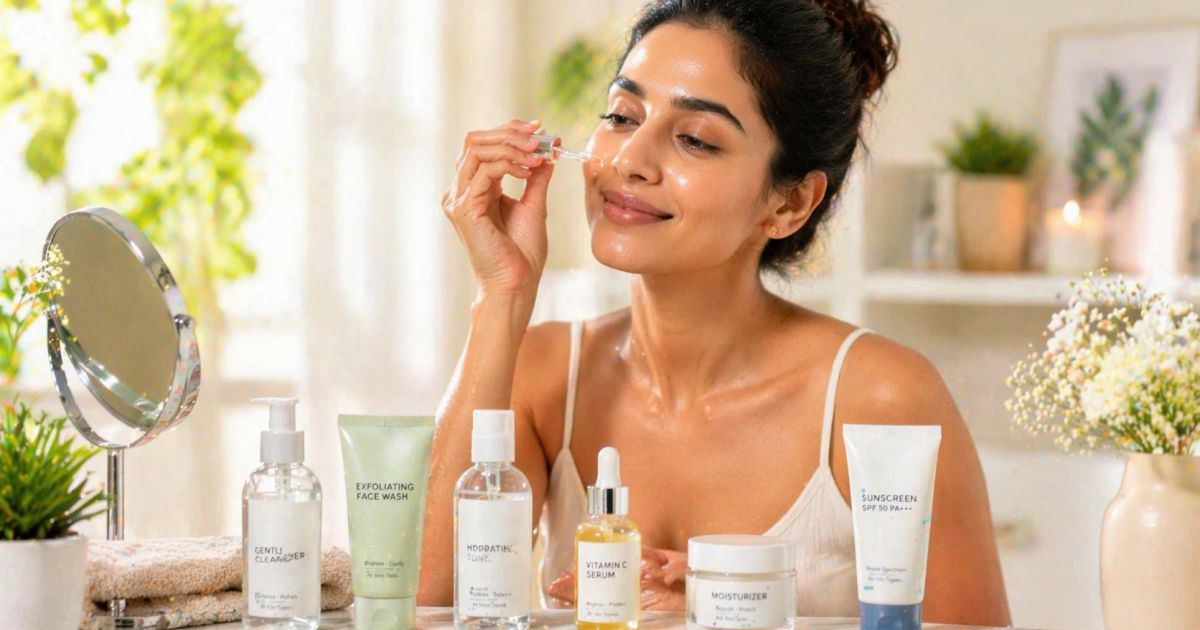

The multi-billion-dollar global beauty industry is fueled by a very specific, carefully engineered myth: that your face is a problem to be solved, and that the solution is always hiding in the next expensive bottle, the next viral ingredient, or a convoluted twelve-step evening ritual.
But if you strip away the predatory marketing and the heavily filtered social media aesthetics, real skin health is incredibly unglamorous. Instead, an authentic approach to beauty is about supporting your body’s largest organ so it can function exactly how nature intended.
When you stop fighting against your biology and start working with it, your daily routine stops feeling like a chore and transforms into a grounding ritual of self-care. Here is a comprehensive, scientifically sound, and entirely realistic guide to building a beauty routine that actually fits your life.
1. The Anatomy of Skin: Decoding Your True Beauty Blueprint

Before you spend a single dime on serums or treatments, you have to play detective with your own face. Your skin barrier is a complex ecosystem affected by genetics, stress levels, hormones, climate, and age. If you treat your face based on what is trending online rather than what is actually happening in the mirror, you will inevitably end up with a broken skin barrier.
To build a flawless routine, you must accurately categorize your skin’s current state—keeping in mind that this can change drastically between winter and summer:
- The Dry Profile: Your skin lacks natural oils (lipids). It often feels uncomfortably tight after washing, flakes easily in cold weather, and can look slightly dull because it struggles to retain moisture.
- The Oily Profile: Your sebaceous glands are overactive, producing excess sebum. You notice a visible shine across your entire face a few hours after cleansing, and you are far more prone to blackheads and acne breakouts.
- The Combination Profile: The classic split-personality skin. Your forehead, nose, and chin (the T-zone) produce excess oil, while your cheeks and jawline remain dry or completely normal.
- The Sensitive Profile: Your protective barrier is easily compromised. It turns red at the slightest provocation, stings when you introduce new products, and reacts poorly to synthetic fragrances, harsh weather, or hard water.
2. Back to the Basics: The Essential Beauty Steps

You do not need an army of products to achieve radiant skin. In fact, dermatologists consistently warn that using too many active ingredients at once can cause contact dermatitis and severe inflammation. A highly effective, bulletproof routine requires only three foundational steps.
Step 1: Cleanse with Intention
Cleansing is your daily reset button. It clears away the accumulated grime of modern life—airborne pollution, sweat, microscopic bacteria, old sunscreen, and makeup.
- The Golden Rule: Ditch any cleanser that leaves your face feeling “squeaky clean.” That tight, squeaky sensation is the sound of your protective acid mantle being stripped away.
- The Technique: Use lukewarm water—never hot, which dilates capillaries and strips moisture—and massage a gentle, non-foaming or lightly foaming cleanser into your skin using the soft pads of your fingers for a full 60 seconds. This gives the ingredients time to actually break down surface oils.
Step 2: Hydrate and Lock
Moisturizer is non-negotiable for every single human being, including those with oily skin. When oily skin is dehydrated, it panics, assuming it is under attack, and produces more oil to compensate.
- Humectants vs. Emollients: If your skin is oily or combination, look for humectants like hyaluronic acid or glycerin in lightweight, water-based gel formulas that hydrate without clogging pores. If your skin is dry, you need rich emollients and ceramides to physically rebuild the lipid barriers that prevent water from evaporating into the air.
- Timing: Apply your moisturizer within three minutes of washing your face, while your skin is still damp. This traps the ambient surface moisture directly into the stratum corneum.
Step 3: Protect (The Ultimate Anti-Aging Secret)
If you do not wear sunscreen daily, every other dollar you spend on skincare is completely wasted. Up to 80% of visible skin aging—fine lines, hyperpigmentation, loss of elasticity, and deep wrinkles—is caused by daily, low-grade exposure to ultraviolet (UV) radiation.
- The Indoor Myth: UVA rays penetrate clouds and standard glass windows. Whether you are working in an office near a window or walking your dog on a gray, overcast day, your skin is absorbing damage.
- The Application: Find a broad-spectrum sunscreen with an SPF of at least 30 that you enjoy wearing. Apply a full nickel-sized amount to your face and neck every single morning as the final step of your routine.
3. Slow Beauty: Why Patience Beats Instant Gratification

We live in a culture obsessed with immediate transformations, but your biology operates on its own timeline. The outermost layer of your skin takes roughly 28 to 40 days to completely renew itself, and that cellular turnover process slows down even further as we age.
When you introduce a new active ingredient—like Vitamin C for brightness or Retinol for texture—you cannot judge its efficacy after three days. Frequently swapping products because you don’t see an overnight miracle keeps your skin in a perpetual state of shock, leading to irritation, redness, and breakouts. Give any new product at least six weeks of consistent, daily use before deciding whether it earns a permanent spot on your vanity.
4. Inside-Out Wellness: Feeding Your Skin’s Natural Beauty
What you put on your face matters, but your skin is ultimately nourished by the blood supply running underneath it. Your lifestyle choices write themselves directly onto your complexion.
Sleep, Stress, and Cortisol

There is profound medical truth behind the concept of “beauty sleep.” When you fall into deep, slow-wave sleep, your body undergoes an intense cellular repair phase, releasing growth hormones that fix damaged tissues and synthesize collagen.
Conversely, chronic psychological stress floods your system with cortisol. Cortisol breaks down collagen fibers, compromises your immune system, and triggers your oil glands to produce a thicker, stickier form of sebum that causes painful, deep cystic acne breakouts.
Cellular Nutrition
Your skin cells are built out of the nutrients you consume. To maintain a vibrant, resilient complexion, focus on fueling your body with dense, real-food nutrition:
- Healthy Fats: Omega-3 fatty acids found in wild salmon, walnuts, chia seeds, and avocados act as natural internal moisturizers, keeping your cell membranes fluid and strong.
- Antioxidants: Vitamins C and E found in dark leafy greens, berries, and citrus fruits help neutralize the free radicals generated by UV light and city pollution.
- Hydration: While drinking a gallon of water won’t instantly cure dry skin, systemic hydration keeps your metabolic processes running efficiently, allowing your body to flush out toxins and deliver nutrients to the skin surface more effectively.
5. Streamlining the Vanity: The Beauty of Minimalist Skincare
The cosmetic market is saturated with specialized products: eye creams, neck creams, sheet masks, lip scrubs, essence waters, and morning toners. It is incredibly easy to get sucked into the consumer trap of believing you need them all.
In reality, many of these products are simply variations of standard moisturizers repackaged in smaller jars with higher price tags.
By focusing your budget on a few incredibly high-quality, well-formulated basics rather than dozens of cheap, trendy items, you protect both your wallet and your face from chemical overload. A minimalist approach makes it drastically easier to remain consistent over months and years.
6. The Psychological Shift: Finding True Beauty Beyond the Filters

We are bombarded daily by images that have been scrubbed of reality. Modern smartphone cameras automatically apply subtle smoothing filters, digital editing software erases pores, and professional studio lighting creates a level of radiance that is physically impossible to maintain in the real world.
Healthy skin is not perfect skin. Healthy skin has character; it displays the lines of your laughter, the warmth of your expressions, and the unique reality of your DNA.
When you shift your perspective from striving for artificial perfection to focusing on metabolic health, your beauty routine stops being a punishment for your perceived flaws and becomes a daily celebration of your health, your resilience, and your life.
FAQ’S
1. What is the first step in a beauty routine?
The first step is cleansing your face to remove dirt, oil, and impurities.
2. How often should I moisturize my skin?
You should moisturize twice a day, once in the morning and once before bed.
3. Why is sunscreen important in a beauty routine?
Sunscreen protects your skin from UV damage, premature aging, and dark spots.
4. How long does it take to see results from a skincare routine?
Most people notice visible improvements within 4 to 8 weeks of consistent use.
5. Can I build an effective beauty routine on a budget?
Yes, a simple routine with a cleanser, moisturizer, and sunscreen can be highly effective without being expensive.




Leave a Reply